in brieflive
15.07

Noise in the White Cube

Aros: »Unruly – the Body in Punk«
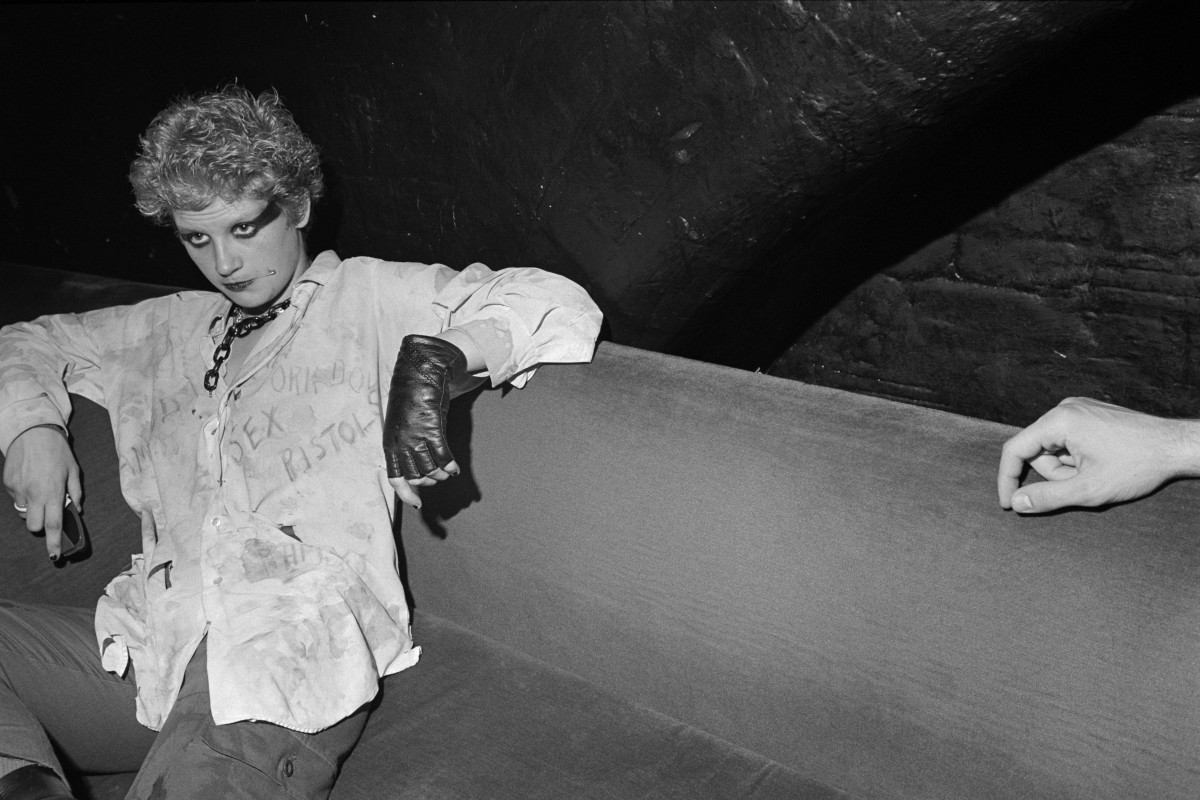
© Karen Knorr & Olivier Richon, Vortex 6 from the Punks series, 1976 - 1977, gelatin silver print on paper,18,7 x 28,2 cm, Tate. Courtesy of the artists.

The first thing that hits you at Aros' Unruly – the Body in Punk isn't dog collars, leather jackets or fishnet stockings. It's the sound. It rumbles through the galleries. After all, what is punk doing in a museum? Punk was never made for museums. It's dirty, loud and ephemeral. It thrives on amateurism, mistakes and resistance. One might fear that the white cube would turn three-chord fury into cultural history and noise into background music. Curator Marie Arleth Skov has created an exhibition in which sound doesn't merely illustrate history – it propels it. Raw guitars, piercing saxophones, flickering Super 8 films and concert footage merge into a rush of noise, images and bodies.

Unruly is not a comprehensive history of punk but a sharply focused snapshot of a culture in which sound and the body were inseparable. Punk's godmothers appear alongside Danish bands such as Lost Kids, Pussy Punk and Sods in previously unseen footage from a legendary punk happening in Copenhagen. A leather drum kit by Käthe Kruse of Die Tödliche Doris stands as a sculpture bearing the dry title In Leder, while Cornelia Schleime's video reveals the vulnerability and poetry that also inhabited punk rebellion. The contrast with Erik Satie's stripped-back piano music is exquisite. Walking through the exhibition feels like stepping inside a three-dimensional fanzine. Everywhere, it celebrates misfits and those who never asked for permission. Leopard-print cushions, raw materials and tactile installations make you feel as if you could almost touch punk itself.

In art museums, sound is often reduced to atmosphere. Here, it becomes a material on equal footing with fabric, video and the body. Noise is treated as an artistic method rather than a soundtrack. Fifty-year-old noise still sounds astonishingly contemporary as it resonates with the exhibition's newer works. You feel it vibrating through your body. Instead of muting the world, the museum becomes an amplifier.

Can rebellion survive inside a museum? Unruly shows that punk's energy does not necessarily disappear when it enters an institution. Only two things are missing: the chance to experience the exhibition at four o'clock in the morning – and a lavish catalogue bound in latex.

English translation: Andreo Michaelo Mielczarek

in briefrelease
11.08.2025

Voices From a Bygone Era

Sofie Birch & Antonina Nowacka: »Hiraeth«
© PR
© PR

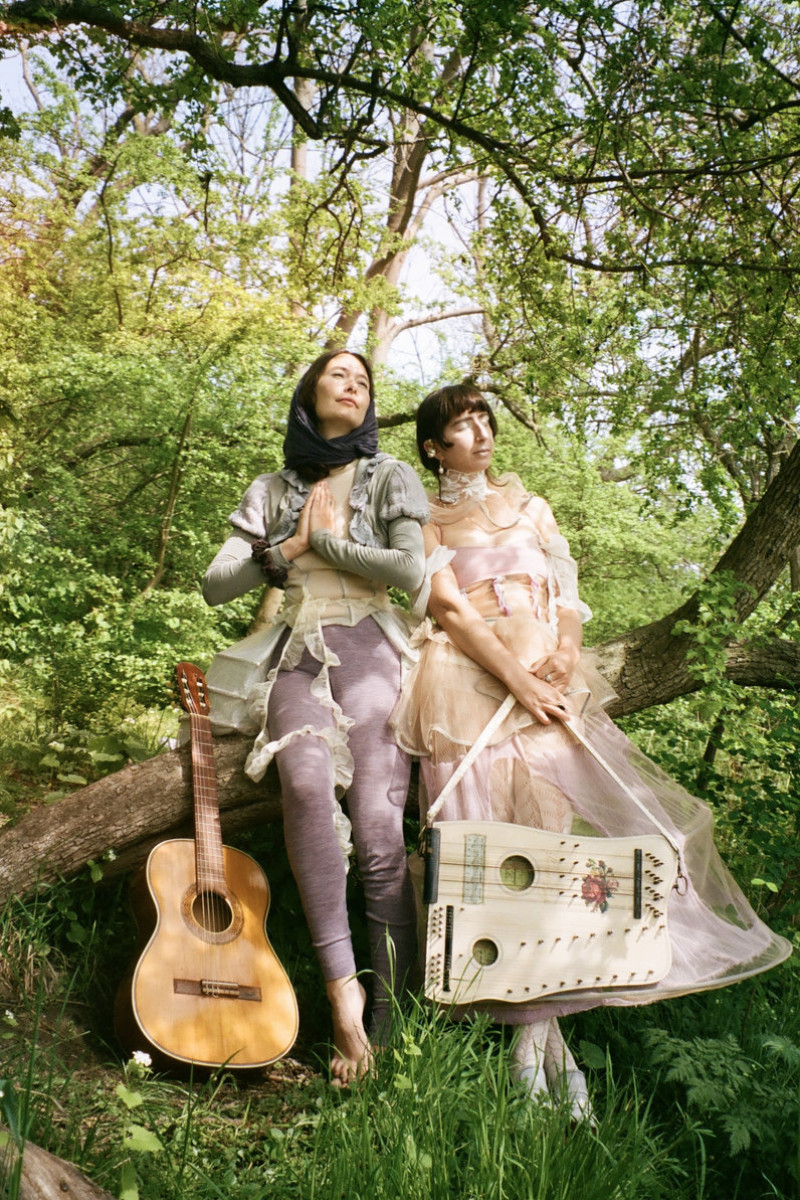
While Sofie Birch and Antonina Nowacka’s joint debut album Languoria, with its synth-laden sound, felt like a dream of another world, their second album comes across more as a window into a bygone time. The electronic elements have stepped into the background in favour of acoustic timbres from sitar, guitar and harp, lending the music a warmer, more grounded character. A fine example is the title track, where a gently trickling stream forms a backdrop for a relaxed dialogue between sitar, guitar and voices that shift between singing and humming. There’s a clear connection to the simple melodies of folk music and those little fragments one might find oneself humming in the kitchen while the kettle boils. It is precisely this personal and inviting tone that makes the composition so effective. The track »Nøkken« likewise testifies to the strength of Birch and Nowacka’s songwriting. With its sparse instrumentation, gentle melody and carefully balanced reverb, the piece brings out the best in their voices and appears almost weightless – transparent and ephemeral.

Together, the Danish-Polish duo create music for those who dream of another time and place – not because they necessarily wish to escape their present reality, but because the quiet moments of daydreaming are full of calm, comfort and enchantment. At times, however, the sense of security takes over slightly, and one misses something to challenge the stillness – like the more prominent synths did on their debut. But for those in the mood for unpretentious beauty and quiet reverie, Hiraeth remains a strong release from two continually compelling voices in the ambient genre.

English translation: Andreo Michaelo Mielczarek

»Music is the infinite sound of humanity, in all of its manifestations. It is the essence of who we are, what we fear and what we hope for. Nobody owns music, and yet it is absolutely who you are, the very DNA of your soul.«

Seb Doubinsky is a bilingual French dystopian fiction author and academic. His »city-states cycle« has put him on the map of notable authors of the genre. He has been long-listed for an Arthur C Clarke award, won the Foreword Reviews bronze award for Missing Signal and his latest novel is short-listed for the 2025 Foreword Reviews award. He lives in Aarhus, Denmark, where he teaches French history, literature and culture at the university.

© Mateusz Szota

»For me, music is a particular engine for diversity, identity, individuality, and community. Music has an immediate ability both to create and strengthen safe spaces and to expand and tear apart the boundaries of existence.«

Artist, curator, and educator Jacob Eriksen works between Struer and Berlin. He is head of Sound Art Lab, festival director of Struer Tracks, director of studies at 89 Sound Art School, and teaches Sound Studies and Sonic Arts at UdK Berlin.

in brief
11.07.2025

Fata Morgana Between Two Continents

Niels Lyhne Løkkegaard & Michael Pisaro-Liu: »Fata Morgana«
© PR
© PR

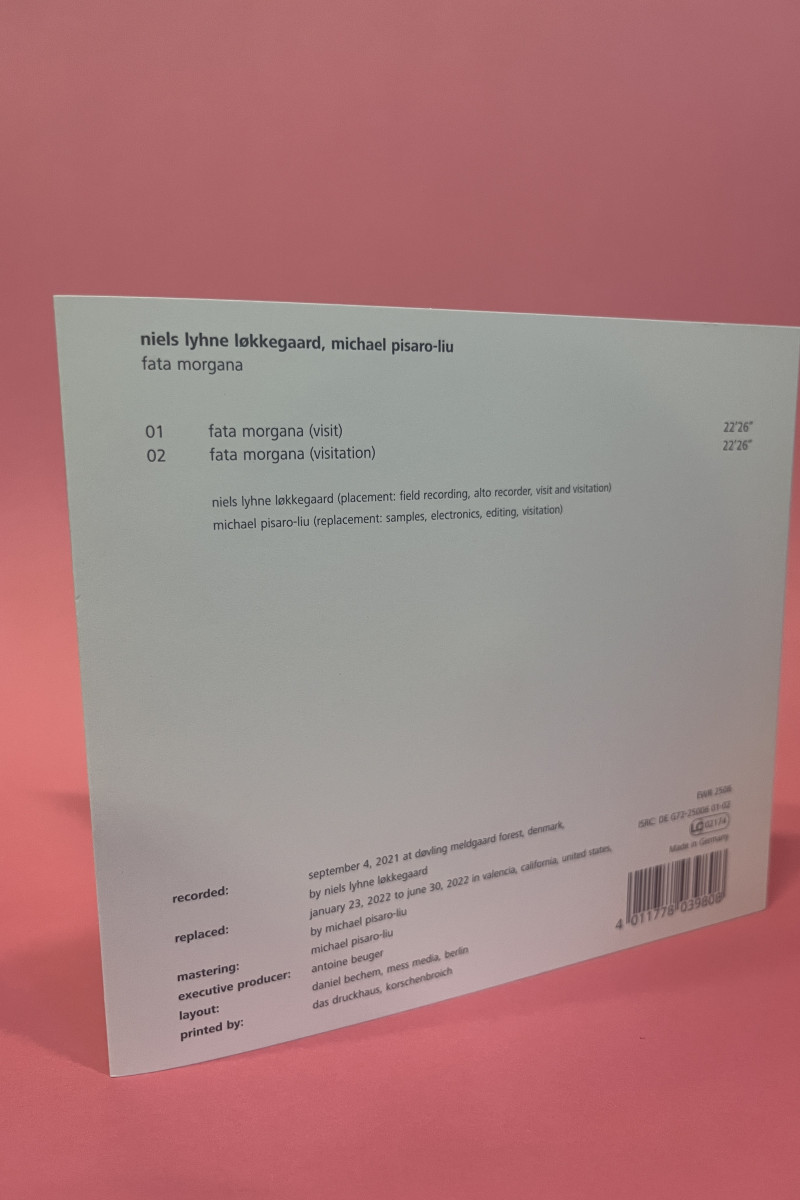
Back in the day, people watched Beverly Hills 90210 simply because it filled the flow-TV schedule. Artist Niels Lyhne Løkkegaard, too, spent his youth wandering through those virtual Californian landscapes. In the project Fata Morgana, Løkkegaard and American composer Michael Pisaro-Liu explore this strange experience between place and fiction. With the alto recorder as their weapon, they invite us both home and away. And, as a nostalgic homage to bygone media realities, the project comes with an A-side and a B-side. It begins with »Visit«: the crackle of forest floor near Løkkegaard’s childhood home in western Jutland, recorded in 2021. The microphone is placed somewhere, a few steps are taken – and then silence... Far away, the alto recorder begins a melody surrounded by birdsong. This homely soundscape is woven into the listener’s own sense of place. Was that a car driving by – here? Or there?

On the B-side, »Visitation«, Pisaro-Liu repositions the flute piece in California in 2024. The tension rises; the melody is visited and haunted from the other side of the globe. It is disturbed and distorted by electric signals, siren tones, interfering noise, and fragments of American voices murmuring things about »fever dream« and »not anything in particular.«

For indeed, there isn’t really anything. It’s classic Løkkegaard: an imagined world unfolding in the listener’s mind. It could have been done in less than 2x22 minutes, but the idea is strong, simple, and well executed. Like the sonic version of a cartoon mirage shimmering falsely in the sharp Californian sunlight.

English translation: Andreo Michaelo Mielczarek

© Malthe Ivarsson

»For me, music is the light that streams in through our windows and touches the human mind. Music is community – something we create together. Music is the other language – the one that can be spoken when all words and conversations have been worn to pieces.«

Mark Solborg is a Danish-Argentinian guitarist, composer, and improviser, educated at institutions including the Rhythmic Music Conservatory and New School University in New York. He has released 28 albums of his own works and collaborated with figures such as Evan Parker, Susana Santos Silva, and Herb Robertson – often on the artist-run label ILK, which he co-founded. His music has been performed in 23 countries and involves musicians from 15 nations. Projects such as TUNGEMÅL and BABEL explore the role of the electric guitar in acoustic spaces, and his practice also includes collaborations with theatre, film, and visual art. Solborg is a recipient of a Reumert Award, has been honored by the Danish Arts Foundation, and in 2024 was nominated for a Danish Music Award as Composer of the Year. He is currently releasing the album Confluencia.