in briefrelease
04.02

Poetic Nocturnal Rummaging

Bent Sørensen: »12 Nocturnes & Piano Concerto No. 3, La sera estatica«
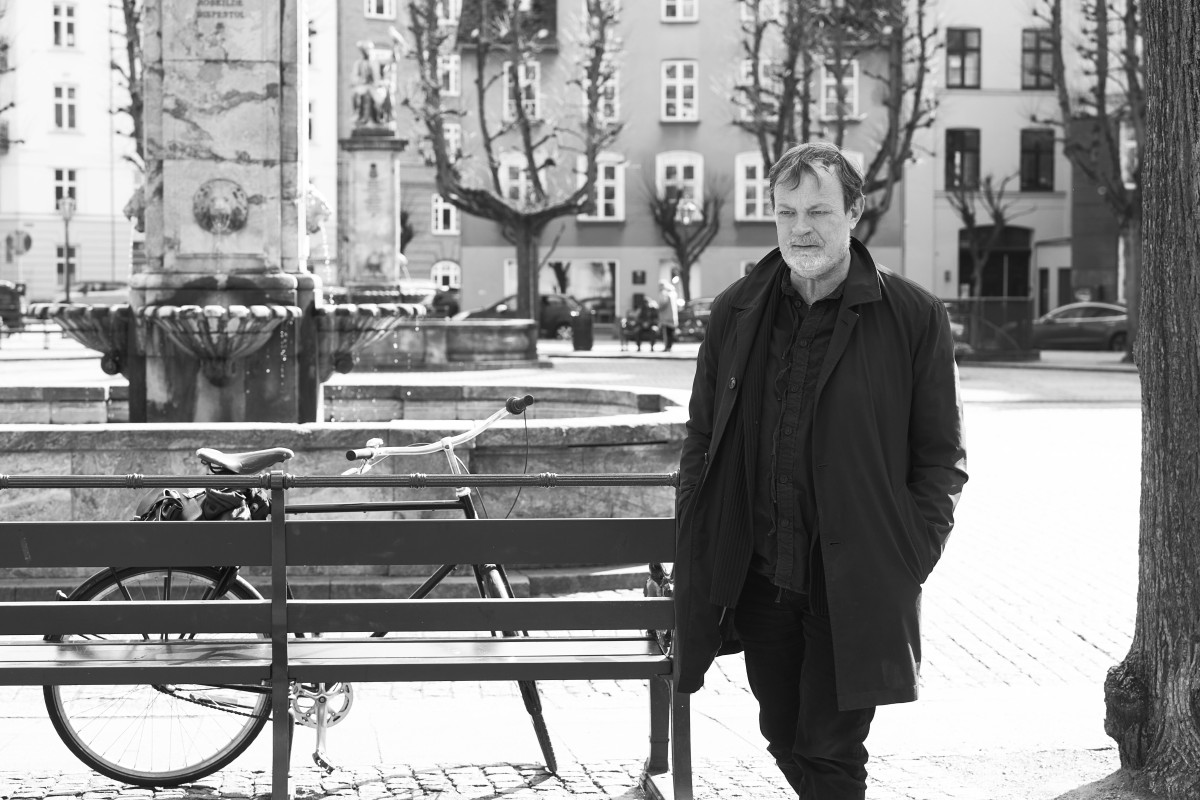
Bent Sørensen. © Peter Christian Christensen

Why is it that one can always recognize a lullaby? This musical archetype, circular and hushed, sung into us with mother’s milk. Composer Bent Sørensen’s solo piano cycle 12 Nocturnes is a tribute to the night’s musical cultural heritage. The nocturne – a nocturnal, lyrical composition – merges with, among other forms, lullabies and cantatas in a poetic narrative from sunset to sunrise about what is close at hand and yet unfathomable: that the sun rises, that children are born, that stars can be glimpsed through small windows on earth, that the piano can create worlds with twelve tones.

Bent Sørensen wrote the twelve short nocturnes between 2000 and 2014 for pianist (and wife) Katrine Gislinge. They have previously been released digitally. Now they appear as a studio recording paired with Piano Concerto No. 3, La sera estatica. The premiere of this “ecstatic evening” stands in contrast to the nocturnes’ simple, balanced forms. With a dramatic opening, multiple orchestral groups, and crackling storminess in the soundscapes, the dreamy nocturnal universe is ruptured by a surging ardor that unfolds in two parts, where purer melodic lines gradually take over the second – complete with a distinct (night?) bell.

Yet the piano concerto’s sovereign quality does not quite come into its own when presented as a postscript to the nocturnes’ rounded narrative. The two elements work best separately, so that the ecstatic evening for full orchestra does not puncture the magic of stars scattered blinking across the piano’s staccato attacks, or Sigrid’s nocturnal dances and lullabies. There is ample drama in the beautifully conveyed single night – for even the child Sigrid will one day no longer be sung to sleep.


© PR
© PR

Danish composer Sofus Forsberg has died at the age of 56. With his distinctive blend of melodic sensibility, electronic processing and rhythmic precision, he created a musical world that moved effortlessly between IDM, pop and the avant-garde.

© Simon Weyhe

»Music for me is my hobby, my job, my outlet, my mood, an endless source of discovering new music and new, old music, some of the best and can be some of the worst. And I love it!« 

Track72 aka Tue Track aka Anders Lundby Brixen. Producer, DJ, rapper and more. Known for his role in the trio Malk De Koijn, which since the mid-1990s has created a personal universe in Danish hip-hop. Has performed in Ponyblod, Xtra Naan, Track Abdullah Rock, Booty Cologne and others.

© PR
© PR

On Wednesday, 5 August 2026, it happened again: a chord in John Cage’s Organ2/ASLSP (As Slow as Possible) changed after two and a half years. Classic FM reports.

The work was written by the American avant-garde composer John Cage in the mid-1980s. The score consists of eight pages of music, and, as the title suggests, the instruction is to play it »as slow as possible.«

»What music is to me? Where have the great feelings gone?«.

Gellért Szabó is a composer, conductor and performer based in Leipzig, Germany. His work combines contemporary composition with influences from free improvisation, noise and the expressive richness of the late nineteenth century. He is the founder and artistic director of the 23-piece Ideal Orchestra, an ensemble dedicated to large-scale experimental music of sweeping emotional intensity. Alongside this work, Szabó performs internationally with his solo project Radical Radio Show, exploring symphonic textures and immersive sound worlds through a single electric guitar and live electronics. His music is driven by a search for intensity, vulnerability and uncompromising emotional expression.

© Christoffer Askman

From the Culture Yard in Helsingør, ships glide past Kronborg Castle through the narrow waters of the Øresund – a reminder of the trade routes that, for centuries, have carried goods, people and power between the Nordic region and the wider world. It is an apt point of departure for the Passage Festival, and for Marie Dahl's vocal work Silk. Sugar. Sand, which explores the intertwined histories of three materials.

Silk. Sugar. Sand is a vocal performance in three acts tracing the historical journeys of these materials through colonialism, the global economy and geopolitics. Five singers from Ars Nova Copenhagen perform within a minimalist scenography consisting almost entirely of coloured light and three sets of costumes that transform throughout the performance: first silk dresses, then crinoline-like structures evoking sugar loaves, and finally grey stone-like forms suggesting accumulations of sand.

The work's central device is to translate the physical properties of these materials into vocal expression. At one moment, the elasticity of silk becomes soft, flowing polyphony; at the next, a cocoon-like electronic crackle. Sugar's crystalline structure is rendered as sharp vocal attacks – brief, whip-like cracks – as well as sweet, intimate whispers, while sand creaks and rustles, resonating with a libretto about economy and domination, violence and desire.

The performance has no conventional narrative, and the five singers portray no distinct characters, moving somewhat stiffly across the stage, as performers often do when their primary focus is on the voice. Comparisons with Hotel Pro Forma's Flammenwerfer are difficult to avoid. There, the production's rigorous aesthetic was counterbalanced by C.F. Hill's wildly expressive visual universe and Blixa Bargeld's deeply vulnerable stage presence. Those qualities are missing from Marie Dahl's carefully controlled staging, which could have benefited from more of the sensitivity and chaos that also form part of Kirsten Dehlholm's artistic legacy.