in brieflive
29.10.2025

What Do the Mad Want With an Opera House?

OperaHole: »screen (mad scenes)«
© PR
© PR

Denmark is lacking opera houses, a recent call in Politiken declared. And indeed: with only a single major, rather conservative opera house, we don’t quite make our mark on the grand stage. On the other hand, we can boast a flourishing opera life on the stages outside the established institutions. And with the Copenhagen music collective OperaHole, a new player has now entered the field.

Last week, the two singers and artistic directors Litha Ashforth and Daniel Rosenberg, both raised in the United States, presented OperaHole’s first production: a kind of surprise egg consisting of Rosenberg’s own character study recursion for two actors, the mad scene from Donizetti’s Lucia di Lammermoor, and Peter Maxwell Davies’ 8 Songs for a Mad King – all three performed in one continuous flow in a white commercial film studio.

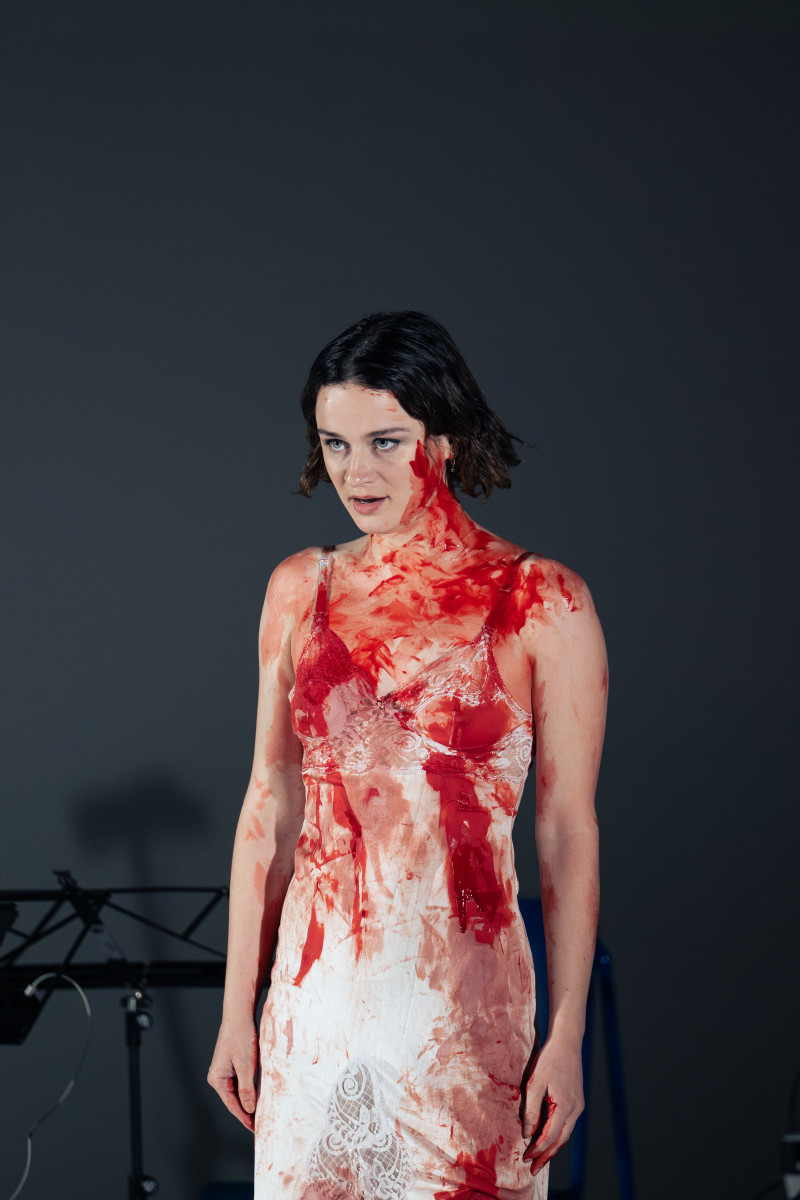
What was interesting, of course, was the juxtaposition of a short play, a classical scene, and one of the most abrasive monodramas of the last 60 years. The thematic common denominator was madness: Rosenberg, a so-called spieltenor with a wide range and comic talent, first skewered devilish variations of latte-drinking Copenhageners in his play, before coloratura soprano Ashforth slipped in wearing a white chemise soaked in blood and sang Donizetti with nimble desperation and a soft sweetness, accompanied by flute and piano.

Finally came the monodrama with Rosenberg as the mad king, staged as a social-media workshop in which the performance was commented on in a livestream (LeaHan1997: »Not this again«!) and screenshots were pasted together into memes in real time. It was spirited – musically as well – but insular, and the work itself disappeared in the process.

Once the collective’s youthful enthusiasm for new media has settled, OperaHole nevertheless looks like a strong contender to carry on our tradition of playful underground opera.

English translation: Andreo Michaelo Mielczarek

© PR

»For us, music is... magic? Aside from the fact that we are huge fans of silence, the closing line of one of our upcoming singles perfectly captures our relationship with music: 

'Music feels like magic to me / A superior art form in a marketplace / Trying to find an empty space'. 

That is what it can feel like as a songwriter and performing musician. We try to hold onto an almost childlike infatuation with music, yet the art form we work in – alternative-leaning pop-rock – was created and has evolved 'in a marketplace' driven by powerful economic forces. As a romantic, that can sometimes be a bit disheartening...«

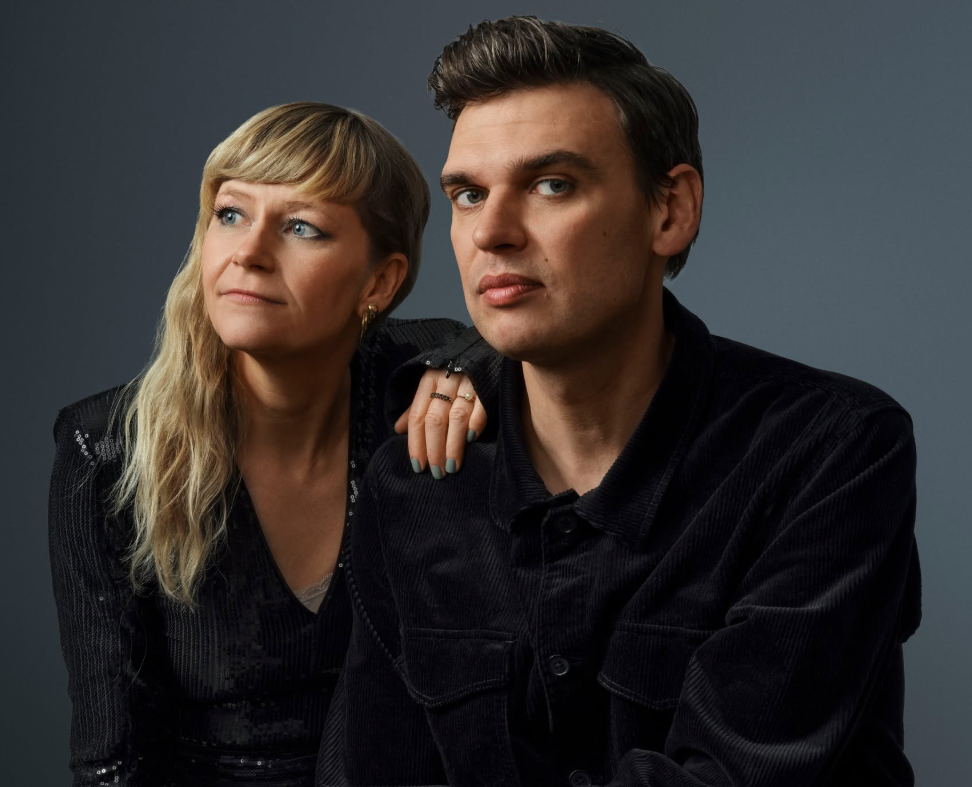
Late Runner consists of Asger Tarpgaard and Tanja Forsberg Simonsen, both formerly of the bands Superheroes and Private.

© PR
© PR

It was officially confirmed only recently that Icelandic avant-garde star Björk is visiting Bielsko-Biała today. After keeping it under wraps until the last moment, the organizers of the Wędrujący Festiwal (Wandering Festival) have revealed that Björk is the artist closing out the festival's grand finale.

© Kåre Viemose

»Recently, I discovered that when a couple of thousand people clap their thick gloves in minus 30 degrees, it sounds like the softest techno – a freezing space where the cold air turns into a wave of warmth, and we, in a moment of collective devotion, become one with the rhythm, one with the invisible bond that connects us in the warmth of silence. Music is not just sounds, but a vain attempt to capture the infinite, which has always been and always will be.«

Andreo Michaelo Mielczarek has been the editor-in-chief of Seismograf since 2021. He is also a music critic and cultural journalist at Kristeligt Dagblad and Århus Stiftstidende/Avisen Danmark and has over the years written to publications such as Kunsten.nu, Glissando (Poland), Neural (Italy), Raw Vision (UK), Nutida Musik (Sweden), Kunstkritikk (DK/Sweden), Iscene.dk, B.T., and Jazz Special. He is the author (together with Lars Muhl) of the book HVA' SAA! En guidet rutsjebanetur gennem Aarhus – før, nu og i fremtiden (2024) and has also contributed to the anthology on music criticism Man skal høre meget (ed. Thomas Michelsen and Claus Røllum-Larsen, 2024). He is a founder and partner in the Polish-Danish cultural organization Kultur(a), and wherever there is a piano, he will be there, eager to coax a melody from it.

© Aria Leth Schütze

»For me, music is an opportunity for transformation.«

Aria Leth Schütze is based in Copenhagen and is the creative force behind the music projects Alto Aria and Samler På Dig. They are a co-founder of the record label Rhizome and a co-editor of the music magazine Passive/Aggressive. Their practice brings together electronic and acoustic music in an exploration of transformation.
 

© PR

»For me, music is the art form that – if measured in hours and minutes – occupies by far the greatest part of my life. I cannot sing, nor can I play an instrument, but I can listen – as a happy amateur – while cycling, on the dance floor, and, above all, at the office. I almost always work – that is, write – to music.« 

Mikkel Krause Frantzen (b. 1983) is an associate professor at the Department of Arts and Cultural Studies, a literary critic for Politiken, and the author of several books in English and Danish, such as En fremtid uden Fremtid (2018), Klodens Fald (2021), and Slutspil (2024).