
Trentemøllers tryllestøv
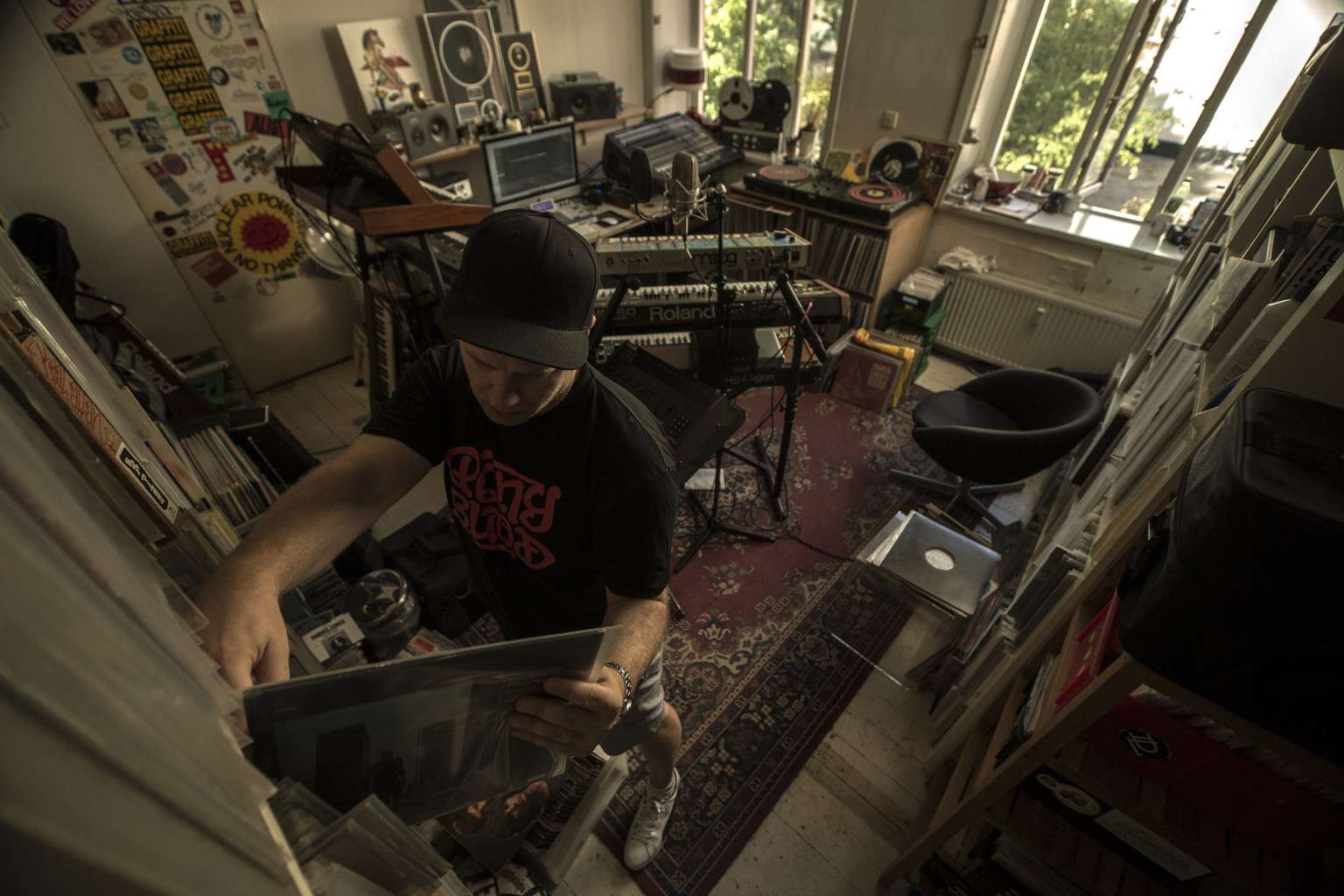
Den danske Godfather af moderne elektronisk musik er ude med et formidabelt album – alt er skrevet og produceret af ham selv og partneren Lisbet Fritze, som optræder med sin angeliske og uimodståelige vokal. Ligesom Buster Oregon Mortensen (Busters Verden, red.) kan Trentemøller noget andre ikke kan, han har nemlig lært at trylle og med magiske formularer og tryllestøv har han skabt 14 skarptslebne skæringer.
Trentemøller mikser atter bastunge beats med svævende lethed og leger med grænserne for, hvordan han med uortodokse midler både kan skabe genklang hos et bredere publikum og samtidig dupere musiknørder verden over. Lytteren kommer med på indre rejser gennem alt fra »Glow«, der inviterer til clubbing med Autecre, »No More Kissing in the Rain«, som er en Trente-elektronisk fortolkning af indiepop a la Raveonettes samt en goth-industrial portal til den legendariske film Spawn: Nummeret »Dead or Alive«. Twin Peaks-mysticisme skinner igennem på »In the Gloaming«, imens man med »Drifting Star« drømmer sig væk i evige solnedgange.
Memoriams eklektiske tidløshed gør, at den på ingen måder er trendy men derimod langtidsholdbar og ville fungere forrygende som soundtrack til en film, TV-serie eller spil. Der er noget til Generation X, hipsterne, Jomfru Ane Gade og kosmopolernes natteravne. Uden tvivl en udgivelse, som vil vinde indpas i mangen en vinylsamling, være baggrundstæppe på tjekkede kaffebarer og gøre sit indtog på mixerpulte i underjordiske natklubber.
She Makes the Music Vibrate Like a Living Organism
When I first listened to the Danish violist, singer, and producer Astrid Sonne’s new album, Great Doubt, I honestly wasn’t quite sure what to make of it. I immediately noticed how extraordinary Sonne’s viola sounds on the album – such a powerful presence that it almost feels like a deeply complex living organism, breathing, feeling, and moving dramatically through the album’s nine songs.
My favourite track was without a doubt »Almost«, where Sonne’s fragile, subtly intense voice is accompanied solely by the viola’s minimalist pizzicato melody, which reminds me of a forgotten composition from Japanese new age pioneer Hiroshi Yoshimura’s masterpiece Green.
On most of the tracks, however, voice and viola are also joined by electronic rhythms, piano chords, and synth figures which, in contrast to the viola’s organic, vibrating sound, initially struck me as almost plastically artificial. To me, it sounded as if the viola and the electronics were being transmitted from two very different universes, unable to fully coexist. There was something about the contrast that felt slightly… uncanny.
Yet with repeated listens, everything begins to make sense. Sonne’s coolly understated voice is the glue that binds the entire soundscape together, as if it itself exists in the porous space between the viola’s raw natural force and the electronics’ tamed purity. I like it more and more – and perhaps I may even come to love it. Great Doubt is an album that, despite its modest running time of just 26 minutes, demands immersion and reflection – and ultimately rewards the listener for it.
What a Dial Tone Tells Us About Life
Crazy about phones? Then listen up. For British artist Beachers spent a day in his London office, and with his smartphone, recorded the sound of a landline waiting for you to dial a number after lifting the receiver. An innocent, yet somewhat insistent sound: Use me, beep-beep-beep-boop, now!
He cut up the recording, panned it around, shifted the pitch here and there, and dabbed it with delays. Turned it into musical material, in other words. And from the effort, Off the Hook grows small tones and harmonies like those from a self-built organ. But the office noises follow along, making the little album feel oddly haunted.
There are white creaks, maybe from a chair. Treble screams like distant, escaped parakeets. Short keystrokes, mysterious silences. After the harmonic organ opening, Beachers lets a deep bass rumble beneath chopped-up beeps. Layers are added, or sudden shifts occur. It’s not meant to be perfectly polished; you’re meant to feel that a human is playing with the digital.
Patiently, small pulses build, maybe even a beat. Listen to the hidden parties and drives of everyday life, the music seems to say—but also: see what we can do to pass the waiting time while forgetting what we’re actually waiting for—someone to pick up, the boss to let us off, death catching up to us.
In the end, only the raw recording is heard. A minute of beeps, boops, and random noise. As if each motif bows to its audience. What a strange release, nostalgically so in its way. And how creative.
Cortini – the Electronic John Williams
Alessandro Cortini is best known as a member of Nine Inch Nails, and as I discreetly listened in on conversations before the concert, it was clear that several people had shown up because of the connection to the famous band and its noisy, confrontational music – music that is worlds apart from the feather-light ambient universe that characterises most of Cortini’s solo work.
At ALICE, however, we were presented with a very different side of Cortini: Cortini the film composer. The artist was positioned far out at the edge of the stage, where he could tinker with his synthesizers in peace without stealing attention from the film projected onto the back wall of the stage. Contrasting, tactile images slowly sliding into and out of one another. Abstract, amorphous shapes that at times resembled misty memories from the real world: raindrops on a car window, a city seen from above, stars in the night sky; tar, metal shavings, crushed crystal.
Cortini reminded me of a kind of electronic John Williams, enveloping the images in an unusually grand, almost symphonic universe that elevated the black-and-white light forms into hieroglyphs of infinite wisdom. The atmosphere was so sacral and gripping that, with closed eyes, one could easily forget that Cortini was not singing Michelangelo’s paintings from behind the organ in the Sistine Chapel, but instead setting analogue synth tones to what looked like an image of a granite block. Some of the Nine Inch Nails fans, I could hear, were slightly confused by the emotionally charged, almost romantic aesthetic, but I myself truly admired Cortini for his uncompromising maximalism. There was no affected distance or feigned coolness – only pure, unadulterated musical beauty.
Shouldn’t Selvhenter be playing the Orange Stage next year?”
It is not the first time Selvhenter have shown Roskilde how a saxophone can scream. Even the most avant-garde-ready listeners were left gasping for air. It was hard not to let your own lungs empathise with the long passages and unruly energy that the experimental Copenhagen quartet excelled in, wielding an instrumentarium consisting of two drum kits, synth, trombone, saxophone and assorted extras.
And the more the band – positioned in the centre of the Avalon tent, surrounded by the audience – wove their collective patchwork carpet, the more the individual character of the instruments was erased. Selvhenter could just as well have been playing entirely different instruments. You could see Sonja LaBianca standing there, forcing tones out of a wind instrument, yet it sounded more like a harp from outer space. It was astonishing how her saxophone fanfares resembled distress signals beamed into the cosmos. Meanwhile, the drums drove very grounded rhythms: Steve Reich-like pulses colliding with freer passages.
Selvhenter inflated the tent with full-fat punked and jazzy noise. Without pauses (not even when a snare drum went dead and had to be replaced mid-set) and without water for the crowd. Being so close to the musicians was a plus; on their small central stage they looked like giants in a battle arena. This was new music that was deeply physical. For about an hour we breathed together (and perhaps even sweated?) in sync. And it is profoundly good to do something together at a festival.
Selvhenter on the Orange Stage next year. Come on!
It is difficult to keep pace with Masami Akita. The 69-year-old Japanese noise artist, who since 1979 under the name Merzbow has helped shape the genre, released no fewer than a dozen albums in 2025 alone. On a rare mini-tour with stops in Helsinki, Stockholm and Aarhus, he showed that his energy remains intact. At Radar he gathered an audience that had travelled far to experience the godfather of noise – an artist who has consistently insisted on noise as a physical, almost tactile experience. Wearing a bucket hat, Akita constructed his trajectories with clear architectural precision. Layer upon layer of distortion and feedback took shape and struck like a brush of metal: hard, cutting, physical – uncompromising, yet at the same time remarkably nuanced.
Akita worked not only with electronics, but also with homemade metal instruments – first a banjo-shaped device, then a square musical saw – lending the sound a raw, tangible materiality. Everywhere, microscopic shifts in texture emerged, small fissures of tone within the massive pressure.
The opening set by frã (Francisco Moura) began the evening with a more fragile, yet persistent electronic texture, a precise counterpoint to Merzbow’s compact blocks of sound. Some might have wished for a gentler entry into the musical year 2026, but the concert underscored the ambitions Radar is currently pursuing.
English translation: Andreo Michaelo Mielczarek