In brief
16.12.2023

Orgel, ynde og bad ass-minimalisme

Organ Sound Art Festival: Hampus Lindwall, Matt Choboter, Ying-Hsueh Chen, Simon Mariegaard, Paulina Rewucka & Neža Kokalj, Ellen Arkbro, Hanne Lippard
© Daniel Oxenhandler

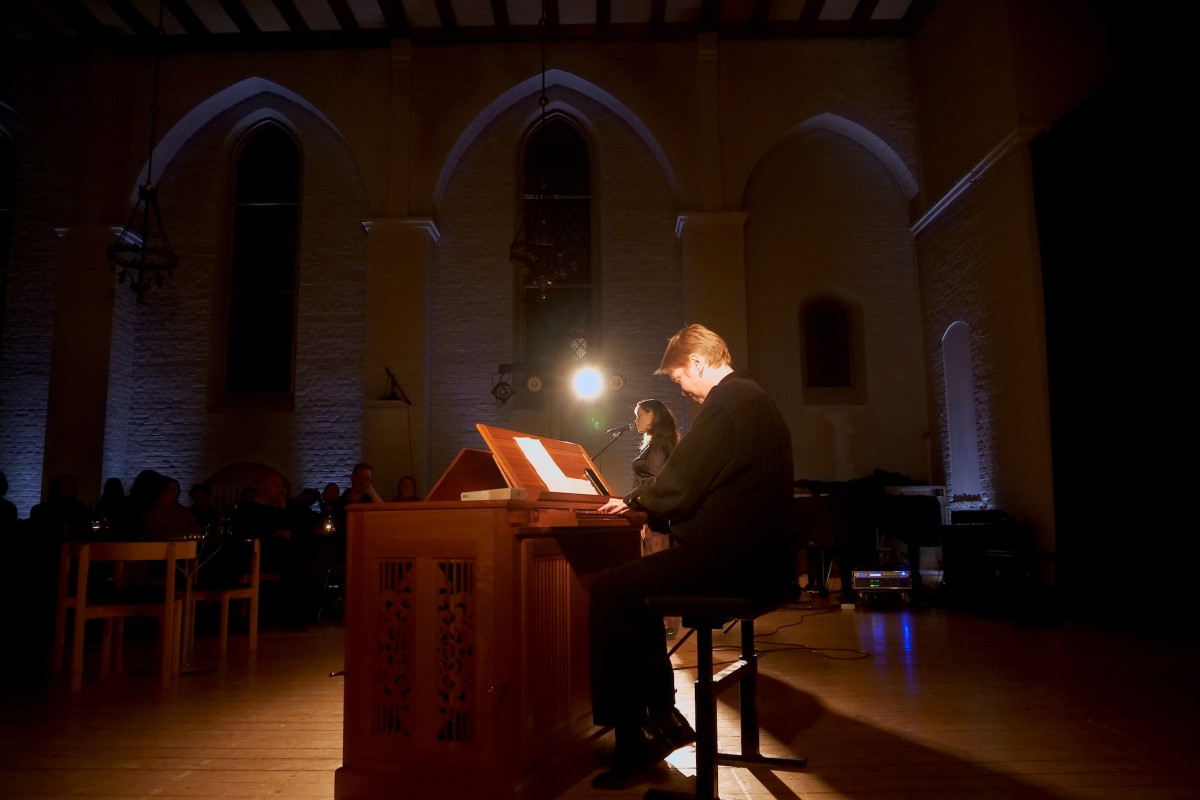
Det er muligt, at julen er hjerternes fest, men det er bestemt også orglets. Mange støder i løbet af december på kirkeorglets mægtige klang i forbindelse med julens mange kirkekoncerter, men i Koncertkirken på Nørrebro er december blevet en helt særlig slags fest med orglet som hovedperson og med et efter fremmødet at dømme til andendagen af Organ Sound Art Festival ganske dedikeret publikum, fascineret af orglets klang, struktur og mangfoldige muligheder.

Aftenen åbnes af den svenske organist og komponist Hampus Lindwall, der også runder aftenens program af i et trioformat med organist Ellen Arkbro og vokalist Hanne Lippard. Solosættet indledes af værket Unmounted / Muted Noun af amerikanske Phill Niblock, som Lindwall præsenterer som en bad ass-minimalist. En form for bad ass-minimalisme, der egner sig godt til orglets rige væld af klange og overtoner, og med langstrakte droner får Niblocks værk da også hele kirken til at knirke og knage, mens Lindwalls eget Music for Organ & Electronics byder på et kvadrofonisk set-up, hvor publikum opfordres til at sætte sig i midten af kirken for at lade sig omslutte af både orglets klang og de elektroniske toner.

I det hele taget er det en aften, hvor publikum opfordres til at flytte sig meget efter, hvad det enkelte værk kræver. I det efterfølgende bestillingsværk, And Then There Were The Sounds of Birds, af den herboende canadiske komponist Matt Choboter, må publikum trække helt ud til siderne for at give plads til to ekspressive dansere, der sammen med to orgler, et præpareret flygel, percussion og elektroniske collager skaber et både melankolsk, legende og meget fysisk rum, der kredser om fugles stemmer og bevægelser. Orglet indtager her en mere tilbageholdende rolle, men værket synes samtidig at indkredse et paradoks ved netop orglet som et instrument, der med sin klang stræber mod det sfæriske, men som samtidig er ladet med en tyngde, som også kommer til udtryk i danserne, der snart nærmest svæver, snart falder klodsede til jorden, samtidig med at de indgår i symbioser med de instrumenter, der er fordelt ud i hele rummet. 

At udforske orglet er således også at udforske rum for musikken, både for komponist, performer og publikum, og på sin vis bliver det næsten en del af aftenens oplevelse, at vi, mens vi drikker ud og snakker om aftenens koncerter, er vidner til det franske ensemble Pancrace, der omdanner hele salen til en sand orgelbyggeplads for at gøre klar til deres koncert den efterfølgende dag. Nysgerrigheden bliver i hvert fald vakt på mere. 

© Mishael Oladipo Fapohunda

»As Bertolt Brecht once wrote: 'In dark times, will there also be singing? Yes · there will be singing, about the dark times'.«

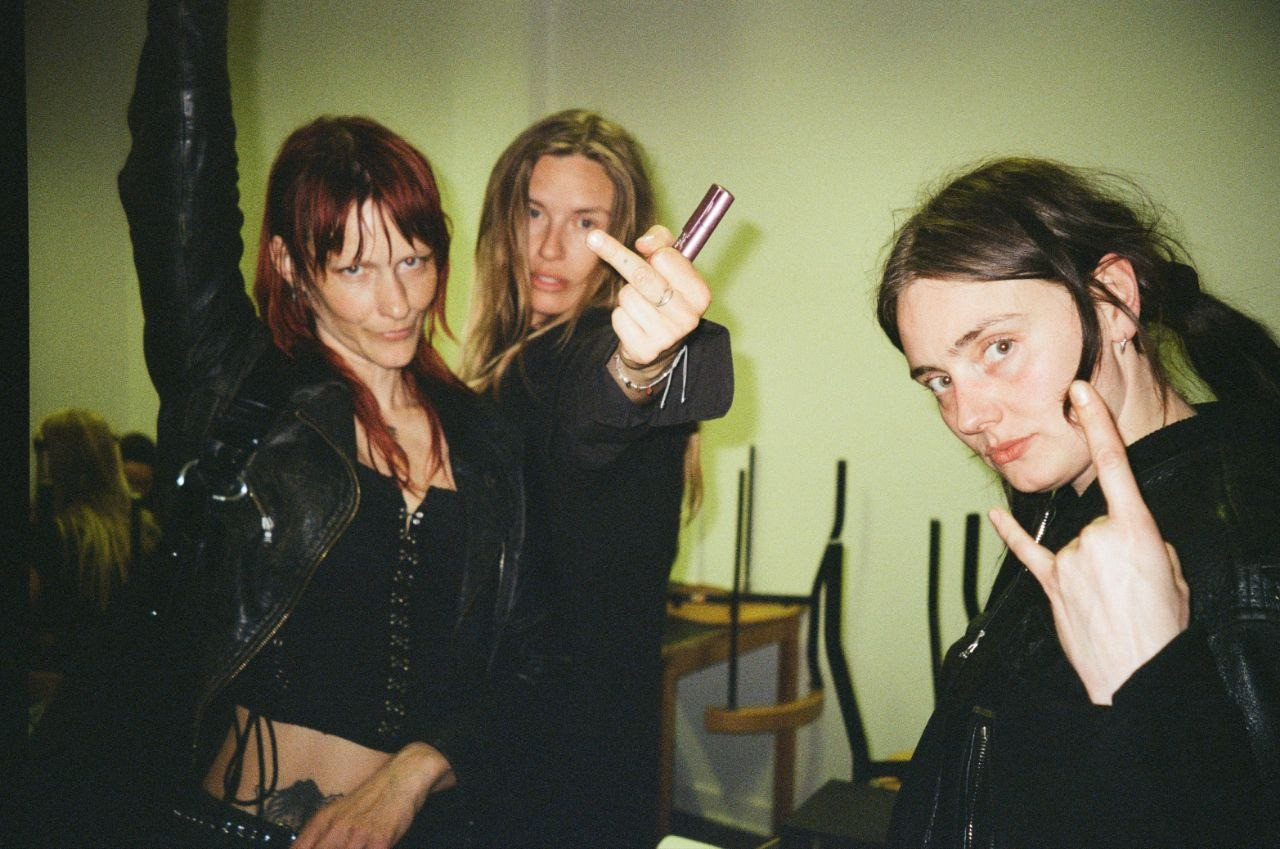
SLIM0 is a Copenhagen based doom/grunge/punk trio consisting of Mija Milovic (guitar), Lena Milovic (guitar) and Simin Stine Ramezanali (drums). The vocals of all three members can be heard throughout, the voice being a central element to the band's practice. SLIM0 uses minimal, albeit feisty arrangements to convey a strong sense of ominousness. Through crashed cymbals, distorted guitars and voices in unison, they present a full body of work hailing from personal takes on classic punk/rock tropes with SLIM0 as the omniscient narrator. Their debut album FORGIVENESS was released in October 2024 via 15 love. 

© PR

Cecilie Penney (b. 1990, Denmark) will be presenting the exhibition Rest and Routine – Duet for Sanatorium and Modern Hospital at Nikolaj Kunsthal from February. She is a visual artist and electronic composer working across sound, installation, video, and text. Her practice explores how infrastructure and cultural norms shape human behaviour, and how emotions and empathy unfold within structural, linguistic, and technological systems.

In recent years, Penney has focused in particular on the Scandinavian healthcare system and on how patients navigate institutions that can be difficult to access and understand. Through a conceptual approach, she examines how patients are often expected to conform to rigid frameworks that fail to accommodate individual needs. By creating imagined or alternative worlds, Penney explores new possibilities for healing and transformation within bureaucratic systems, while inviting reflection on how systemic change might emerge from emotional insight and collective rethinking.

Penney holds an MFA from the Royal Danish Academy of Fine Arts in Copenhagen and a BFA in Fine Art Photography from HDK-Valand in Gothenburg.

© Søren Lynggaard
© Søren Lynggaard

It is difficult not to read a great deal into trumpeter, composer and all-round musical visionary Palle Mikkelborg’s new solo album Light. He has long since passed retirement age, withdrew from touring in 2024, and with this release has presented something that very much feels like a kind of farewell.

The opening track, Per Nørgård’s »At tænde lys« (»To Light a Candle«), is pure Mikkelborg: his lyrical, elevated and elegiac solo trumpet, in both form and expression, speaks directly to the listener’s heart. Elsewhere, he draws on old soundscape recordings, combining them with piano and trumpet. The interplay between the old and the new creates a compelling mystique and casts a subtle, unsettling shadow over the music.

»Capricorn« perhaps stands out most strongly: a tender and romantic reimagining for solo piano of one of his own pieces, like a loving glance back at bygone times and former triumphs. And then, of course, the closing track, Thomas Laub’s »Stille, hjerte, sol går ned« (»Be Still, Heart, the Sun is Setting«), where Mikkelborg’s melancholic trumpet is joined by Jakob Bro’s guitar, Helen Davies’ harp and Thomas Lis’s choral soundscape. Together they create a piece of music that truly feels like a farewell, marked by both uncertainty and sorrow, but also acceptance and gratitude.

All in all, Light is the perfect distillation of Mikkelborg’s musical life – a cavalcade of the qualities that have always defined him as a musician: light, colour, life, mysticism, love. Whether this will be the final release from Mikkelborg’s hand, I do not know, but if it should prove to be the case, few swan songs have ever sounded so beautiful.

In brieflive
22.01

»Is He Going to Play Three Pianos?«

August Rosenbaum: Klaverkoncert
© Josefine Seifert
© Josefine Seifert

»Is he going to play three pianos?« a boy asks. »Maybe he’s learned to play with his feet?« says an adult man. The audience on their way into the DR Concert Hall’s main auditorium comment on the setup for August Rosenbaum’s piano concert. Three Steinway grand pianos lined up is truly peculiar – actually comical.

When the concert began, I imagined I could hear differences between the instruments, though I would probably fail a blind test. Apart from a bit of playing with staccato on one piano and pedal on another, the setup was, frankly, underused. The piano playing was lacking, dominated by a single approach: pedal pressed all the way down, an active right hand primarily in the middle register, a left hand with a muted accompaniment, and a great deal of repetitive technique.

It felt like a gravity Rosenbaum could not escape. No idea or direction could break free; one always returned to the same place.

When there are two grand pianos for a concert, one of them is usually prepared. Rosenbaum had three (!) without using a single screw, coin, or ping-pong ball. Shouldn’t that be a criminal offense? Nor were any extended techniques employed, such as clusters or playing with the back of the hand.

The light show was charming, at times impressive. Still, it takes more goodwill than I possess to call the evening an audiovisual concert, as the program text told me it was. On the way out, I heard another man say, »It was actually quite exciting to hear him play.« I didn’t think so.

English translation: Andreo Michaelo Mielczarek

In briefrelease
21.01

Bumblebees Come With Punk

Smag På Dig Selv: »SPDS«
© PR
© PR

Smag På Dig is pretty punk. True, the instruments most commonly associated with the genre have been replaced by saxophones, and yes, the music sounds markedly different from what one would normally link with punk. Nevertheless, with their debut release SPDS, tenor saxophonist Oliver Lauridsen, baritone and bass saxophonist Thorbjørn Øllgaard, and drummer Albert Holberg have created a bona fide, high-energy punk album – packed with fun, mischief, seriousness, and anger.

The style is established from the very first track. The trio plays catchy, often pop-inflected melodies built on Øllgaard’s thunderously deep saxophones, Holberg’s tight drumming, and Lauridsen’s high-energy, lyrical tenor sax. Particularly effective is »Middelklassen avler kun skeletter«, which has a comparatively darker tone, a bass sax buzzing like a fat, murderous bumblebee, and a stronger focus on atmosphere than many of the other tracks – without sacrificing melody.

At the other end of the spectrum are tracks like »PGO HOT 50«, with its stomping tempo, cowbells, and an epic sax guyfrom hell, and »Negirî«, which, with Luna Ersahin on vocals and saz in the eleventh hour, lets the horns step into the background – not to mention Thorbjørn’s angry poems, addressing everything from globalization, climate change, and war to the art academy and one’s own worth as a human being. Impressively, it all hangs together; everything works in its diversity. And it convincingly illustrates the age-old punk dictum that you can be angry and still have fun at the same time.