


Here, Music Is Allowed to Go Wrong
Next year, Endless Gratitude will celebrate its twentieth anniversary. For almost two decades, the festival has stood for a wealth of musical experiences, with a common denominator that seems to be concerts by artists who continually experiment with form and content. In some cases because they are not yet entirely familiar with their own artistic voices, and in others simply because that is how their working methods operate.
That grassroots feeling is still what prevails at Endless Gratitude. And it is what made my three days at Kildevæld Kulturcenter at Østerbro, where the Festival of Endless Gratitude took place something quite special. The feeling that you are not buying a ticket to a perfectly polished programme of musical experiences, but rather to a living workshop, a melting pot full of works in progress.
Sublime, naïve, absurdist lyrics about everything from sleepy snakes and drowning to drinking tea together and hitting your conversation partner over the head
Absurdist pop songs and robot music
Over the festival’s three days and 16 concerts in total, two stood out in particular: the New Zealand absurdist-folk duo Slightly Imperfect and the American electronic musician Victoria Keddie.
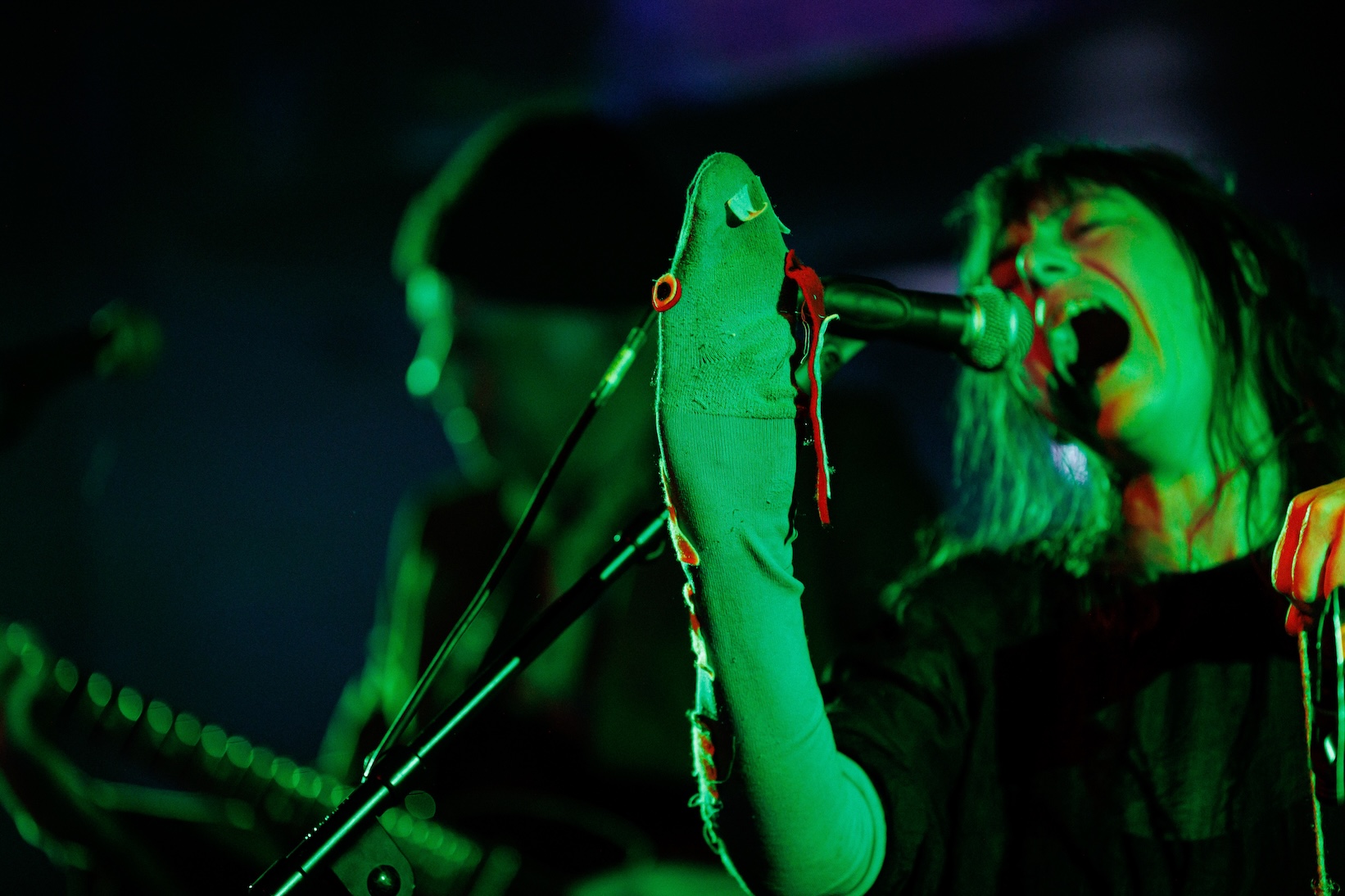
Half of Slightly Imperfect consists of Greg Malcolm, who had already appeared at the festival the day before with a solo set. The other half – Malcolm’s partner Jenny Ward – completed the duo, and together they performed songs by the Scottish poet and musician Ivor Cutler. To say that they merely performed them, however, would be something of an understatement. Cutler was a poet first, and his music reflects this: sublime, naïve, absurdist lyrics about everything from sleepy snakes and drowning to drinking tea together and hitting your conversation partner over the head. Early British psychedelic whimsy, but presented in Cutler’s originals with a very sparse musical approach.
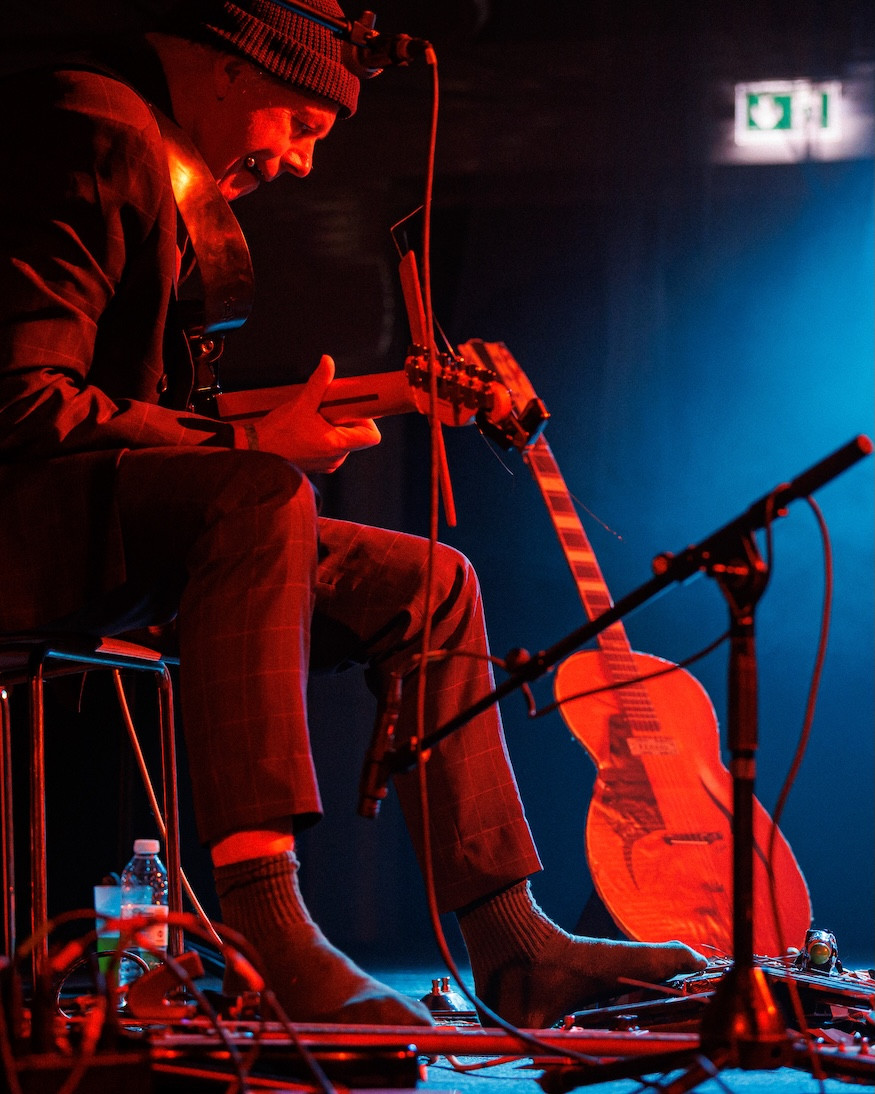
Slightly Imperfect corrected this, with Malcolm’s guitar serving as the recurring melodic anchor, while Ward’s many toy instruments and other small contraptions – an otamatone, a whirly tube, a teacup with a teaspoon, and so on – completed the colourful sonic universe worthy of Cutler’s lyrics. Both members sang, often in duet. They had an obvious love for the source material, and their music conveyed a refreshing warmth and straightforwardness, along with a genuine twinkle in the eye. Music that, in its simplicity, is about the small, funny moments that actually matter in life, about the silly thoughts and crazy ideas we share with the people we love. There was an all-encompassing cosiness to the concert that I had not yet encountered at the festival, and which would prove to be entirely unique.
Suddenly, this robotic, high-pitched, noise-adjacent music had become a pulsating, undulating and incredibly fascinating primordial mass of sound
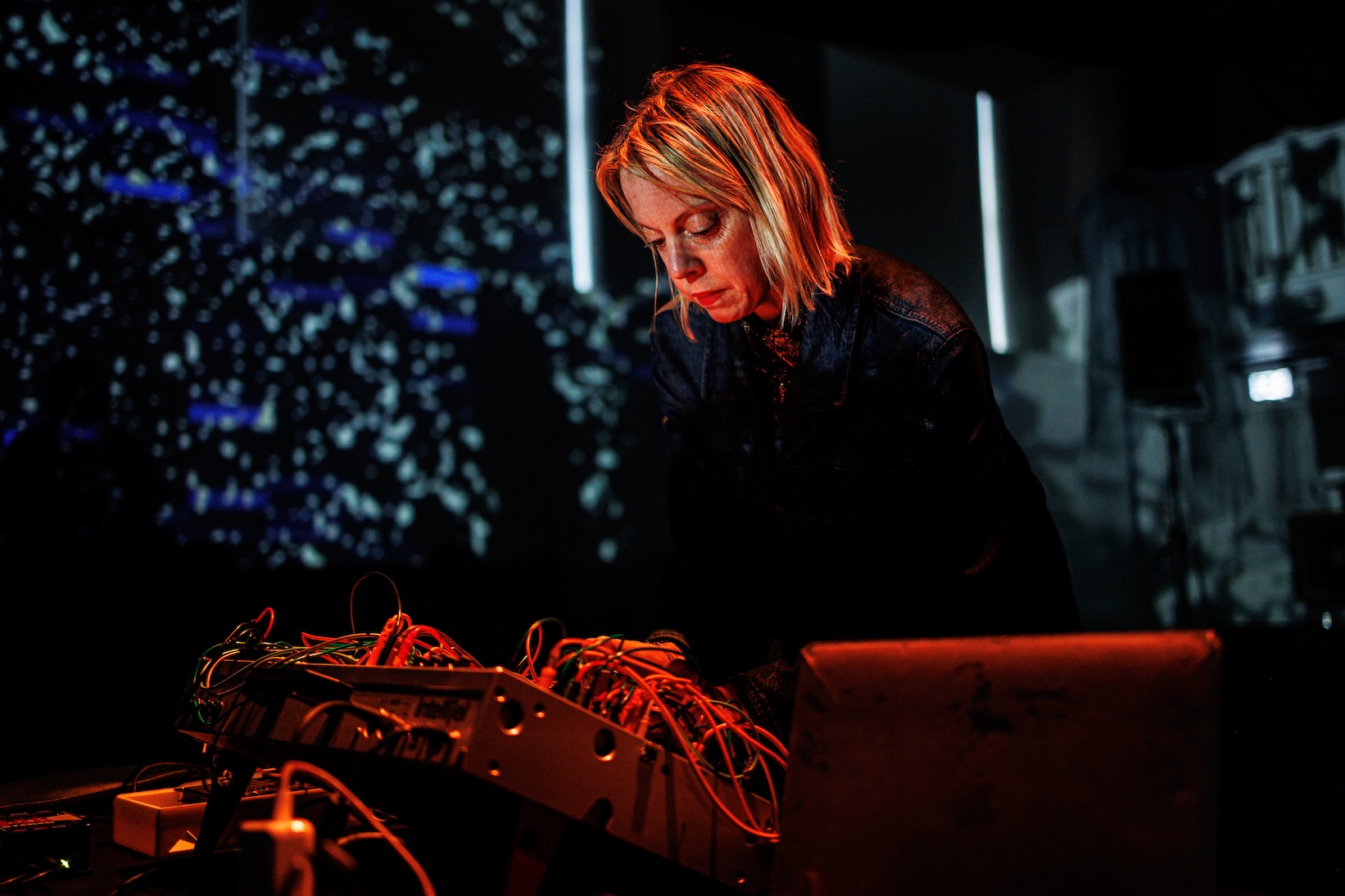
Fortunately, there are many other emotions to encounter at a festival like this. American Victoria Keddie, who performed on the final day, was another absolute highlight. She had created a programme that tracked space debris in the sky above the chosen location, allowing its presence to (de)activate certain elements in her electronic music, entirely by itself and at random. What began as a challenging listening experience gradually became more and more engaging. In much the same way that we humans cannot help seeing faces in everything – the psychological phenomenon known as pareidolia – my brain began to recognise rhythms and human voices that perhaps were not there at all.
Suddenly, this robotic, high-pitched, noise-adjacent music had become a pulsating, undulating and incredibly fascinating primordial mass of sound. Keddie activated my excitement at finding order in chaos, that wonderful feeling when something that initially seemed difficult suddenly becomes remarkably easy, and you finally, without even noticing it, start nodding your head to the rhythm.
When noise begins to make sense
While Slightly Imperfect and Victoria Keddie delivered the festival’s two best concerts, the programme had much more to offer.
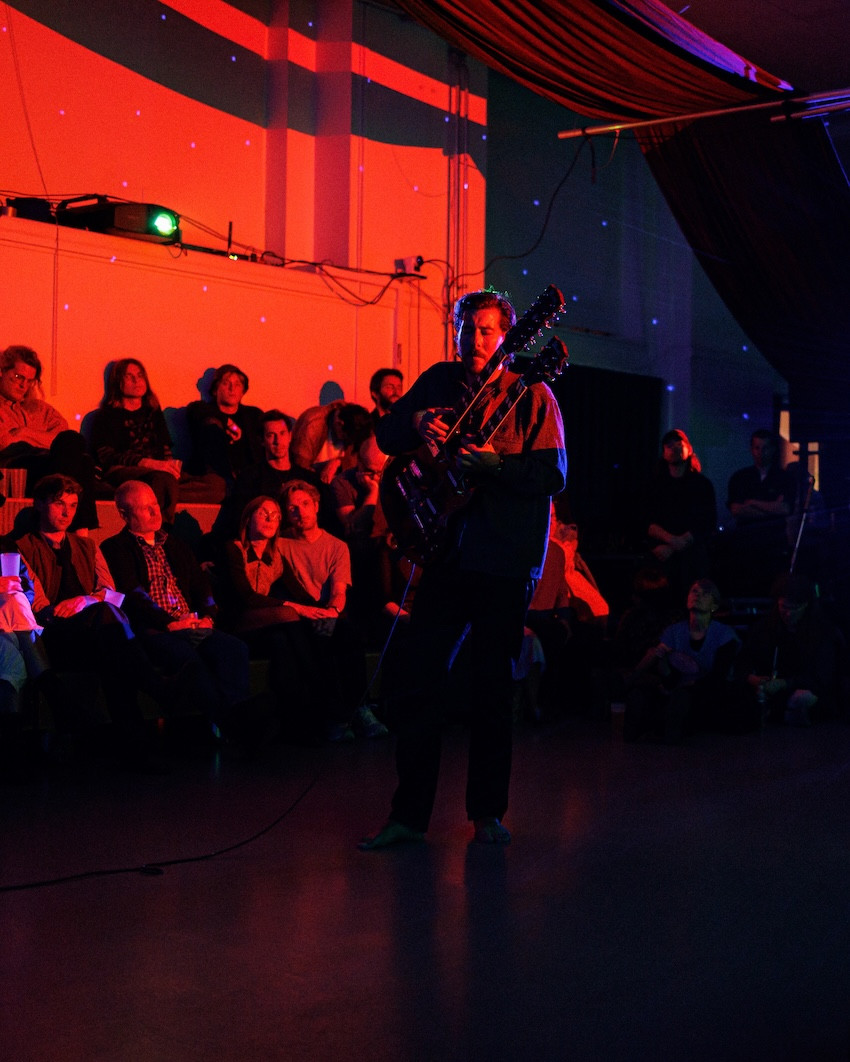
French artist Megabasse, with his double-necked guitar, played tightly woven, circular, almost gamelan-like patterns that sounded like both a glockenspiel and a sitar, and rarely like a conventional guitar. The British-Argentine duo GUSH, whose hard and fast drumbeats were mixed with samples and a lead singer with grumpy televangelist vibes, played primal pop music full of urban angst, sleaze and self-irony. Italian artist NZIRIA combined the high-energy electronic genre gabber with the Neapolitan local genre musica neomelodica, creating an incredibly unsubtle and extremely effective delivery mechanism for heightened moments.
Circular breathing, effects and feedback from the amplifier often made the music sound like a didgeridoo from Hell
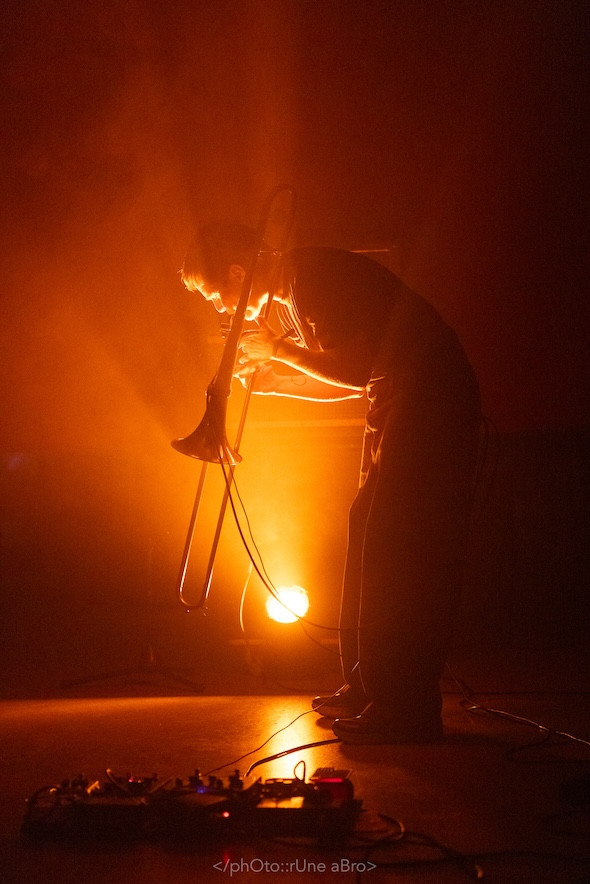
Or Danish trombonist Maria Bertel, who, with effects pedals in front of her and a large amplifier behind her, created a form of textural, deeply bass-heavy drone music punctuated by short rhythmic bursts. Circular breathing, effects and feedback from the amplifier often made the music sound like a didgeridoo from Hell.
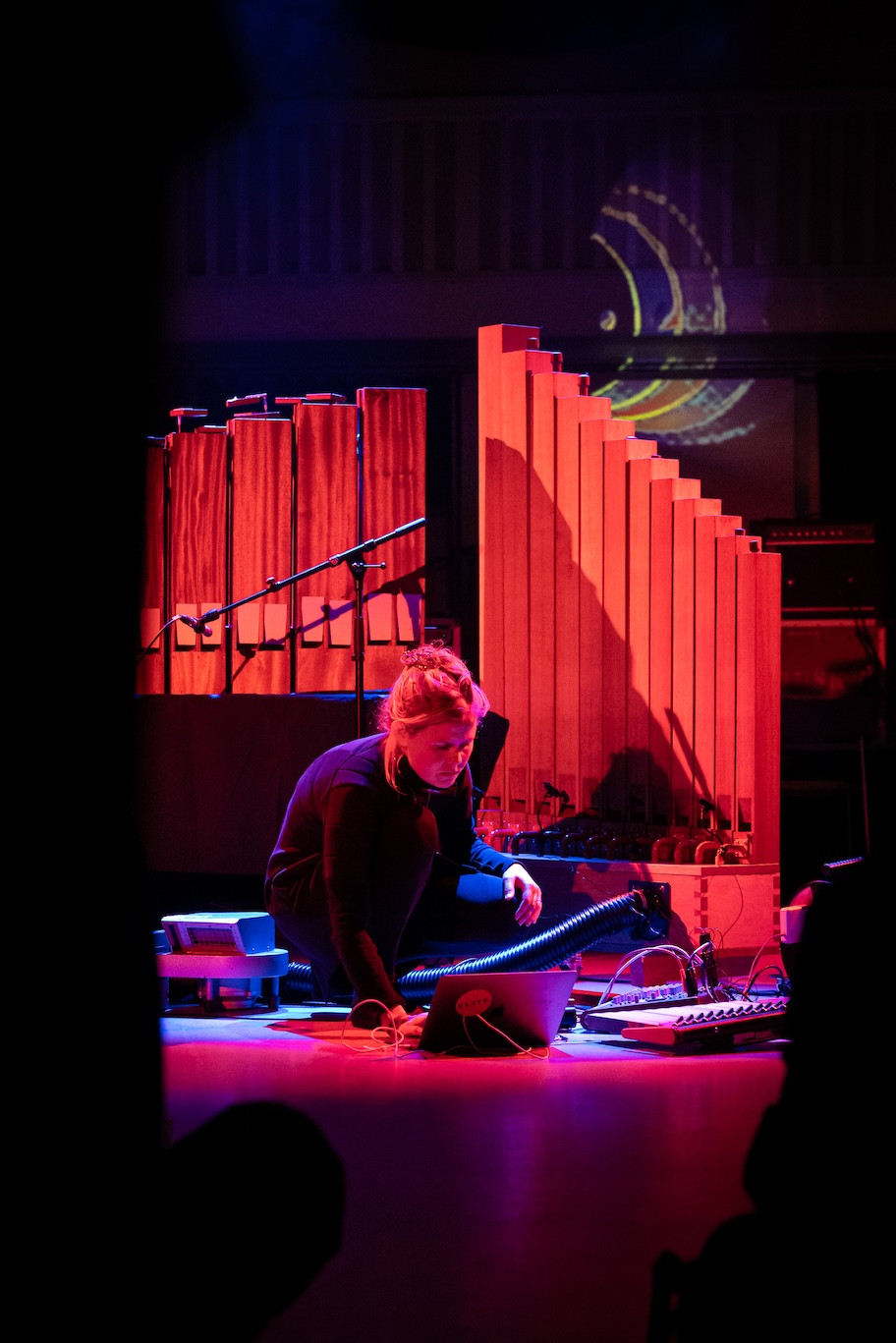
Last but not least, there were the many sound experiments that were also part of the programme: Danish artist Ragnhild May, who caught my interest with her self-built wooden organ constructions in different sizes; Spanish artist Ex Continent, whose crackling soundscape made you really listen, anticipating where the next sound might come from; and American artist Headband, who brought her noisy sonic universe to life with a wealth of surprising samples.
They want anything but the dull, liver-pâté-coloured middle ground
The unfinished has a value of its own
It is in the nature of experimentation that some attempts succeed while others fail. The same was true at the Festival of Endless Gratitude 2026. Not everything can shine in a programme featuring 16 names. What matters is that, as an audience member, I get the sense that this is a risk the festival is willing to take. Something is at stake; artists are given room both to underwhelm and overwhelm. They want anything but the dull, liver-pâté-coloured middle ground, the safety of the predictable. They present art that is not always finished, successful or secure. And they create fertile ground for art in development, in constant dialogue with the artist, with the audience and with the world around it. That is what makes the Festival of Endless Gratitude worth visiting, almost 20 years after its inception.
Festival of Endless Gratitude, Copenhagen, 24–26 September 2026
English translation: Andreo Michaelo Mielczarek