




The Silent Collapse of the Band Collective

»Find your own band,« says Noah Elias Rasmussen, drummer in APHACA, straight into the camera. On the other side sits the entire Danish population – or those of us who tuned in to this year’s New Year’s address on Deadline. The message is impossible to miss: with their sermon on community and solidarity, APHACA, who sensationally had three of Denmark’s eight most-streamed songs on Spotify in 2025, appear as the last hope for a generation on the brink of collapse.
»Find your own band,« says Noah Elias Rasmussen, drummer in APHACA, straight into the camera
It has become something of a generational narrative: the story of bands once again dominating the charts. After a decade in which solo artists such as Gilli, Rasmus Seebach and Kesi have ruled the Danish charts, APHACA’s success has been interpreted as a sign of an acute longing for analogue communities. As social media places the individual under constant strain and artificial intelligence threatens to outcompete human creativity, the rock band can serve as a soothing, nostalgic antidote. For although APHACA’s music is not overtly backward-looking, a utopian nostalgia permeates their sound: the dream of reviving the countercultural ideals of rock bands past in a new struggle for community. And they are not alone in making the band collective pop culture’s new ideal: Guldimund writes songs with his family, Andreas Odbjerg celebrates the collective creative process in Popmanifestet, and in TV 2’s Simon siger, well-known solo artists come together each week in new band configurations.
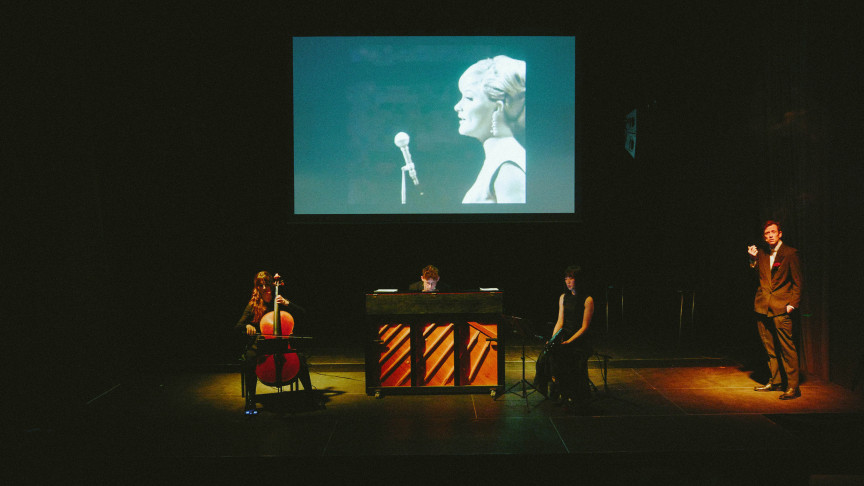
Band fever is raging. And it has reached the experimental music scene, too. In just one year, the playful ensemble K!ART has taken on three very different band roles: as a prog-rock band on Matthew Shlomowitz’s release Explorations in Polytonality and Other Musical Wonders, Vol. 5; as a malfunctioning talk-show house band in Michael Hope’s Late Night Line-Up at Spor Festival; and most recently as a fictional jazz quartet in Sebastian Brix’s The Quartet at KU.BE.
Band fever is raging. And it has reached the experimental music scene, too
But here, the collective spirit that clings to pop culture’s idea of the band is not celebrated but distorted. In the absurd musical drama The Quartet, community is no longer something that unites the musicians. On the contrary, the four seem to play against one another, each trapped in their own solitude. And it is precisely in this alienation that a singular beauty emerges.
A Quartet in Disintegration
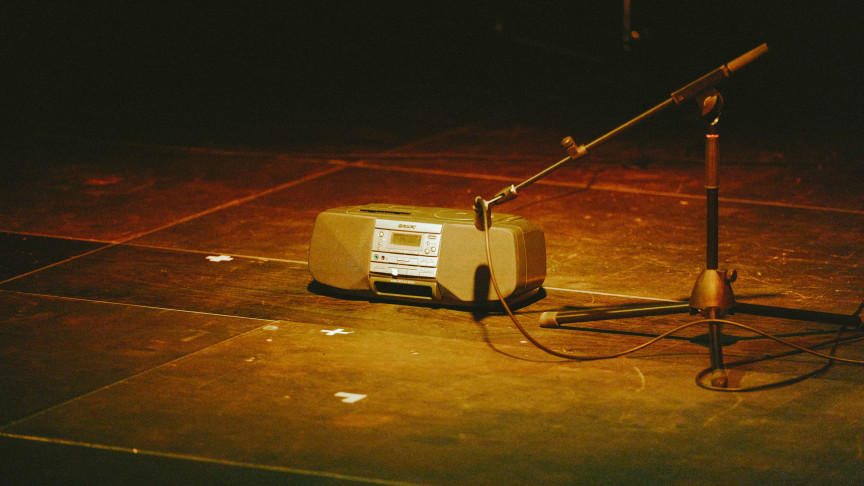
There was something almost sadistic about what composer Sebastian Brix put us through at the beginning of The Quartet. On the darkened stage at KU.BE, pianist Rob Durnin sat with his back to the audience. An almost existential silence spread through the room as we stared into the void. Just as our nervous systems had adjusted to the isolation, we were abruptly torn out of it: a high-energy, big-band-jazz intro blasted from the speakers. An announcer introduced the quartet, but no one appeared. The confusion was complete when the recording instead began looping the same three or four bars endlessly. The announcer, too, had frozen, repeating: »Good morning, good afternoon, good evening, good night.«
And the nightmare only intensified as the recording was gradually slowed down until the music disintegrated into granular sonic ash
The manic tape loop felt like a nightmare version of Groundhog Day, in which you wake up bleary-eyed to the same day and the same shrill trumpets. And the nightmare only intensified as the recording was gradually slowed down until the music disintegrated into granular sonic ash. Rather than setting anything in motion, the concert seemed to cancel itself out. Was this some form of sonic torture we were being subjected to? Absolutely. But also a tantalising purging experience, because now anything could happen.
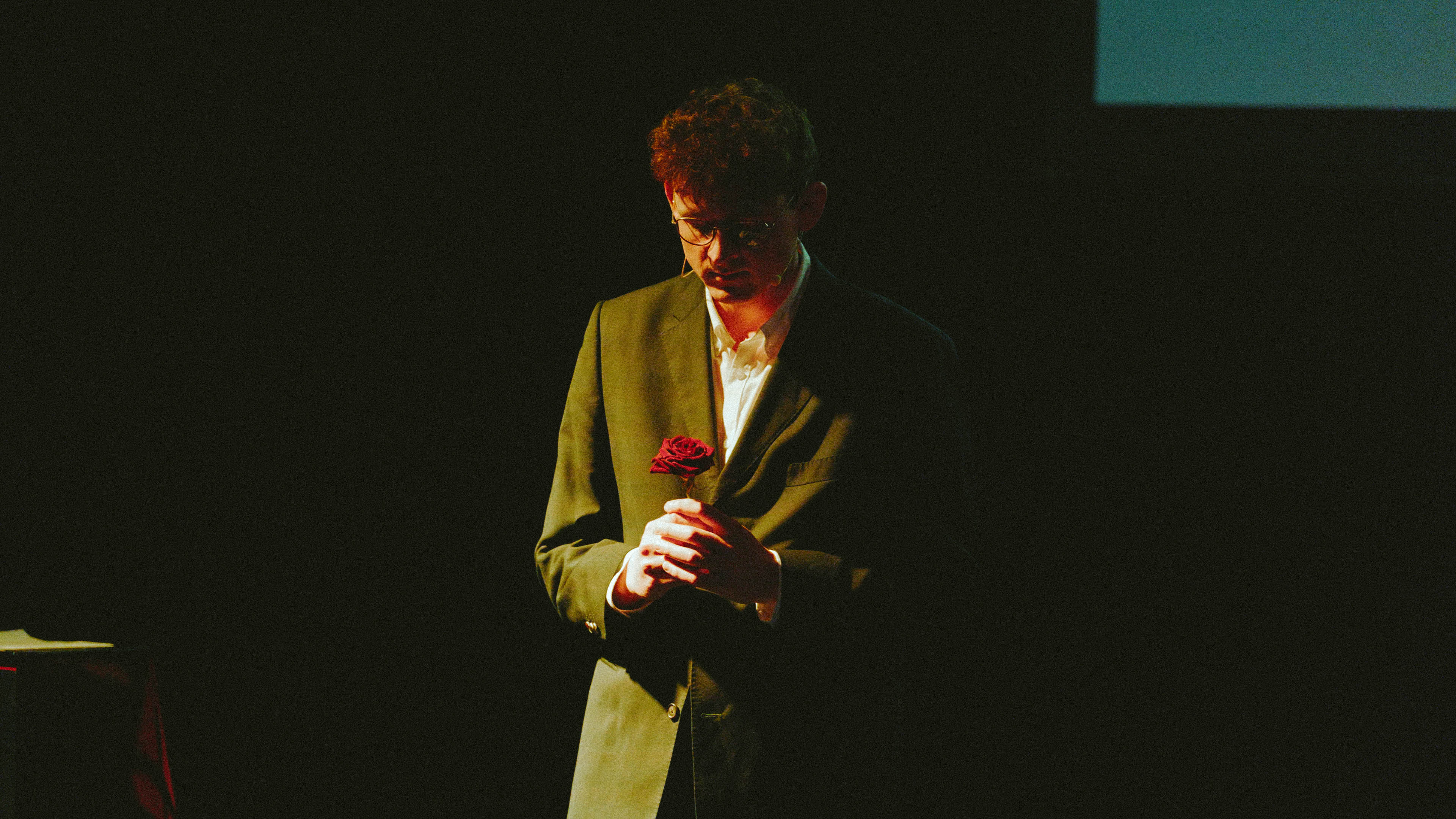
Hope himself entered as a good-humoured David Letterman clone in a suit and tie, but something was wrong
Disguised as a Band
It brought to mind Michael Hope’s Late Night Line-Up at Spor Festival, where K!ART acted as the house band, playing talk-show funk on repeat as though they were a sample rather than the real thing. Hope himself entered as a good-humoured David Letterman clone in a suit and tie, but something was wrong. His gestures had been broken down into a handful of movements that he repeated and combined, as though undergoing a convulsive electroshock treatment.
Here, the alienation was thrust right into the audience’s faces. But on the EP Explorations in Polytonality and Other Musical Wonders, Vol. 5 – featuring works by the Australian composer Matthew Shlomowitz – the shifting of genres is more subtle. The ensemble goes on a musical raid through a world of electric bass, drums, and keyboards; the Captain Beefheart-inspired avant-garde rock sounds, at first glance, more like a final project from a contemporary music conservatory than something a composer has carefully conceived.
K!ART stays in the closet, then. But how refreshing to hear them rattling the door
But the more you listen, the more clearly the score behind the music emerges. The titles reveal quite a bit, too. Take the opening track, »I-vi-IV-V«, the music-theoretical formula for the chord progression in »Æblemand« and countless other songs. A clinical counterweight to the organic sound of a band, directing our attention towards the compositional experiment. Suddenly, the work’s abrupt shifts begin to feel like a gradual stripping away: prog rock is not an expression that comes from within, but a repertoire of stylistic devices that Shlomowitz uses as building blocks in his polytonal undulation of the familiar chord progression. K!ART stays in the closet, then. But how refreshing to hear them rattling the door.
Parallel Solitude
While Explorations in Polytonality and Other Musical Wonders, Vol. 5 revels in exotic and cheeky genre play, The Quartet was permeated by a tortured seriousness. There was no immediate pleasure to be found in the music. Instead, it was a melancholic burden cultivated in parallel solitude.
Yuan tapped the stand and the bottle as though doing the dishes
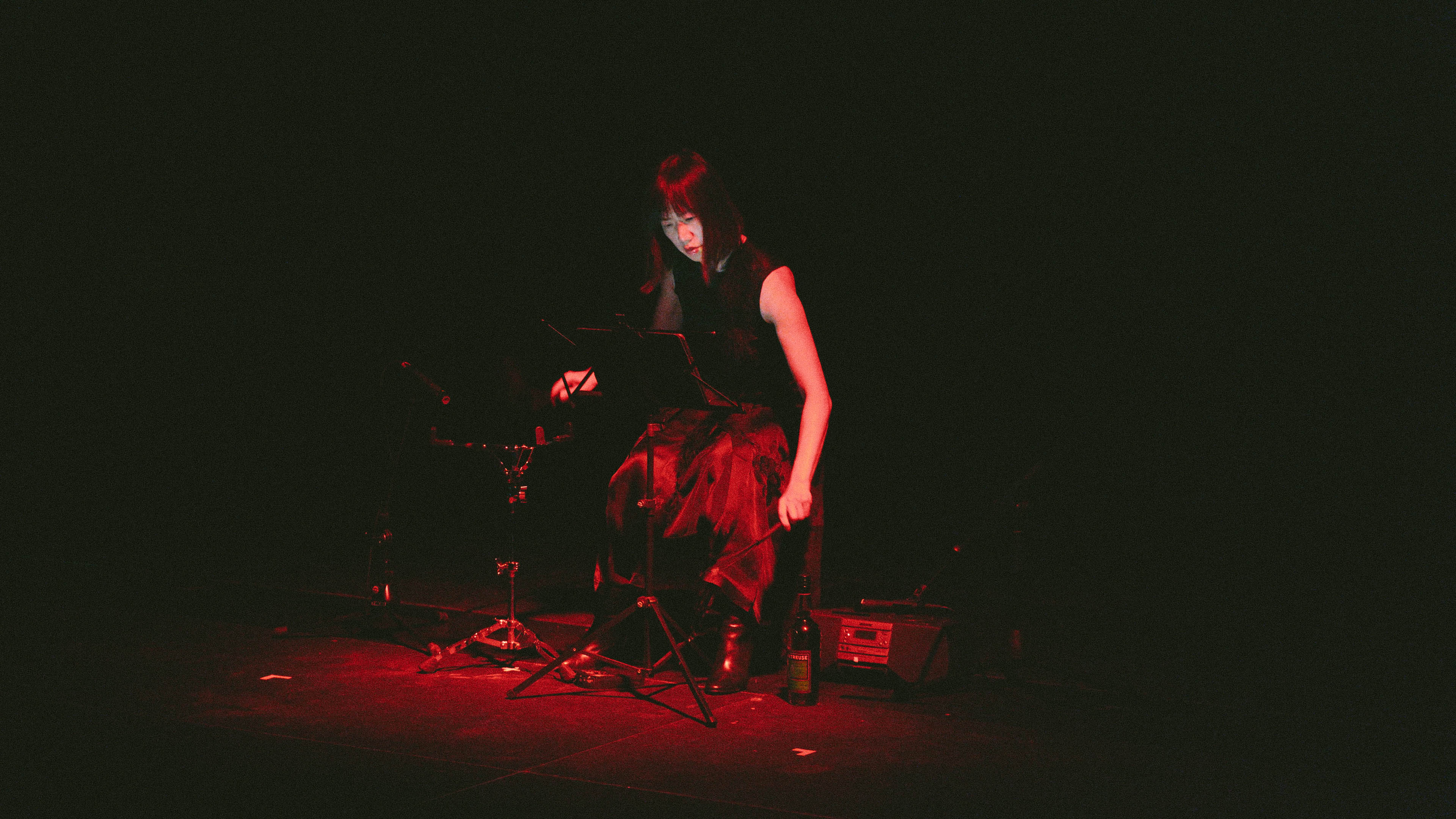
One scene in particular stayed with me. The piano was wheeled aside, revealing an abandoned snare drum, which was soon removed as well. All that remained was the drum stand and a bottle resembling absinthe, which percussionist Hsiao-Tung Yuan began playing nonchalantly with her wire brushes. I immediately felt a wrenching tenderness towards her understated solo: it had nothing to show, nothing to tell. Yuan tapped the stand and the bottle as though doing the dishes.
Brix’s jazz world was not an embracing jam culture in which the individual could seek refuge, but rather a painful experience of being utterly alone within a community. A quiet, almost unbearable coldness.
There was no hope to be found in the band collective. No salvation
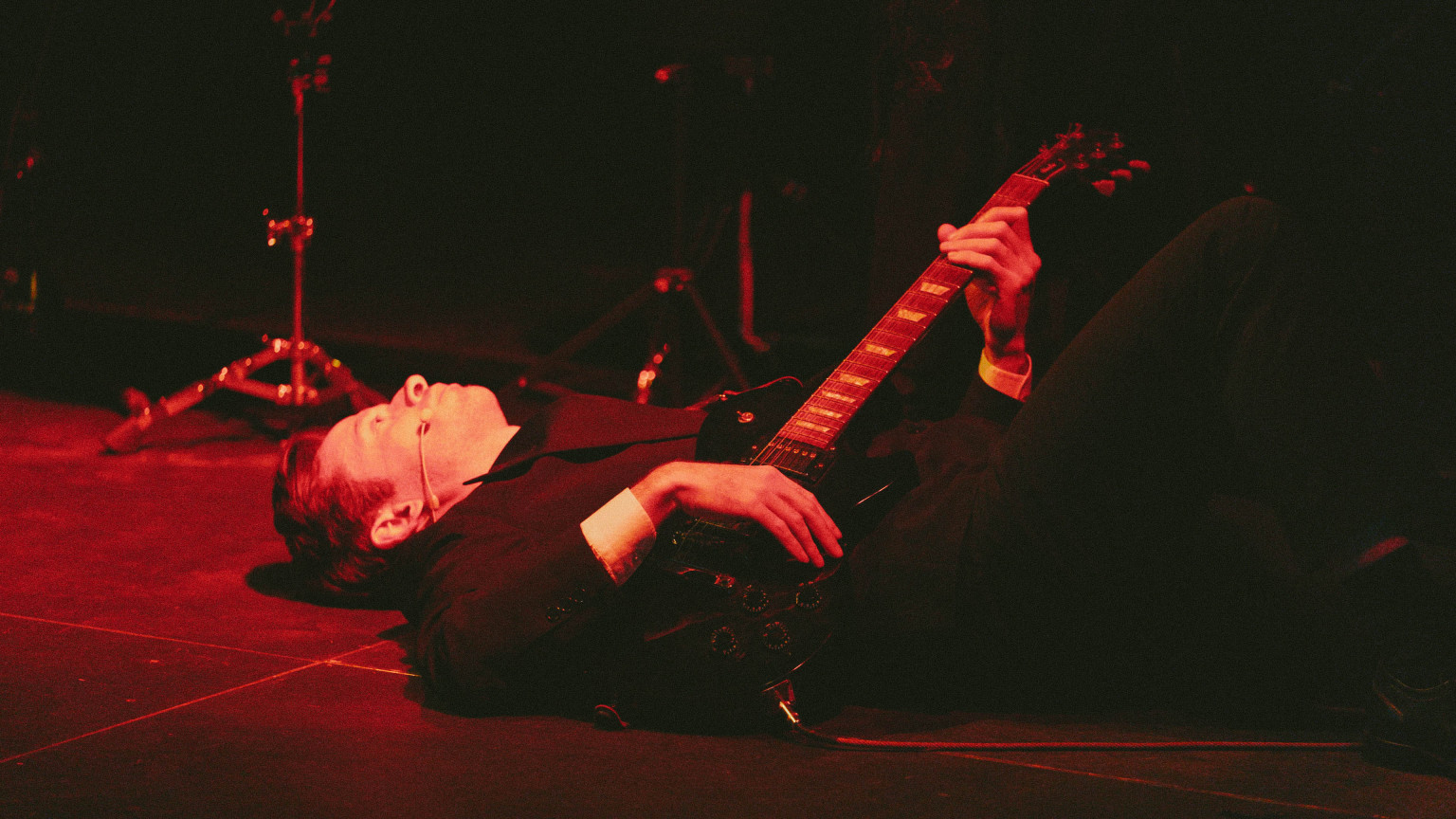
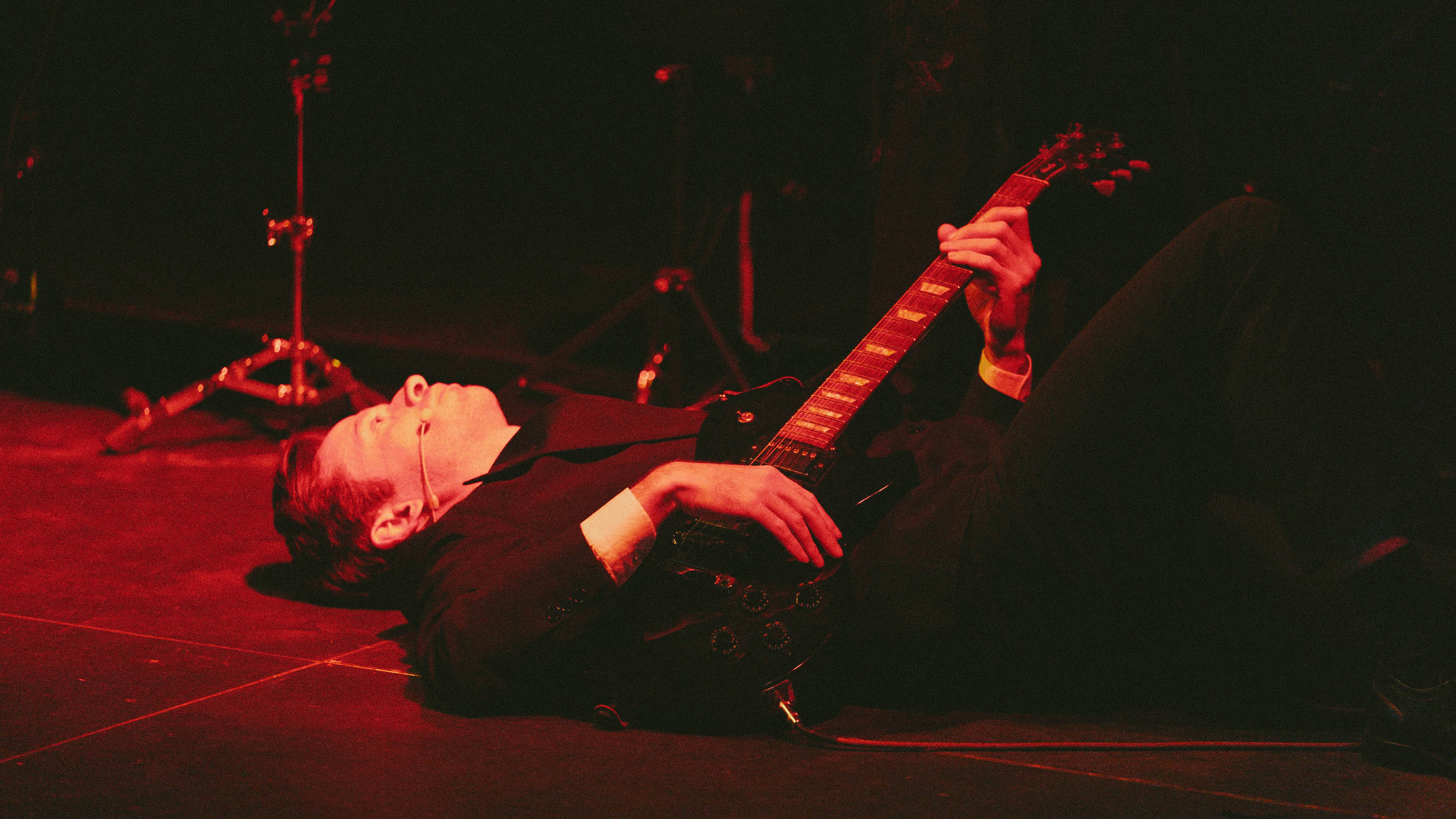
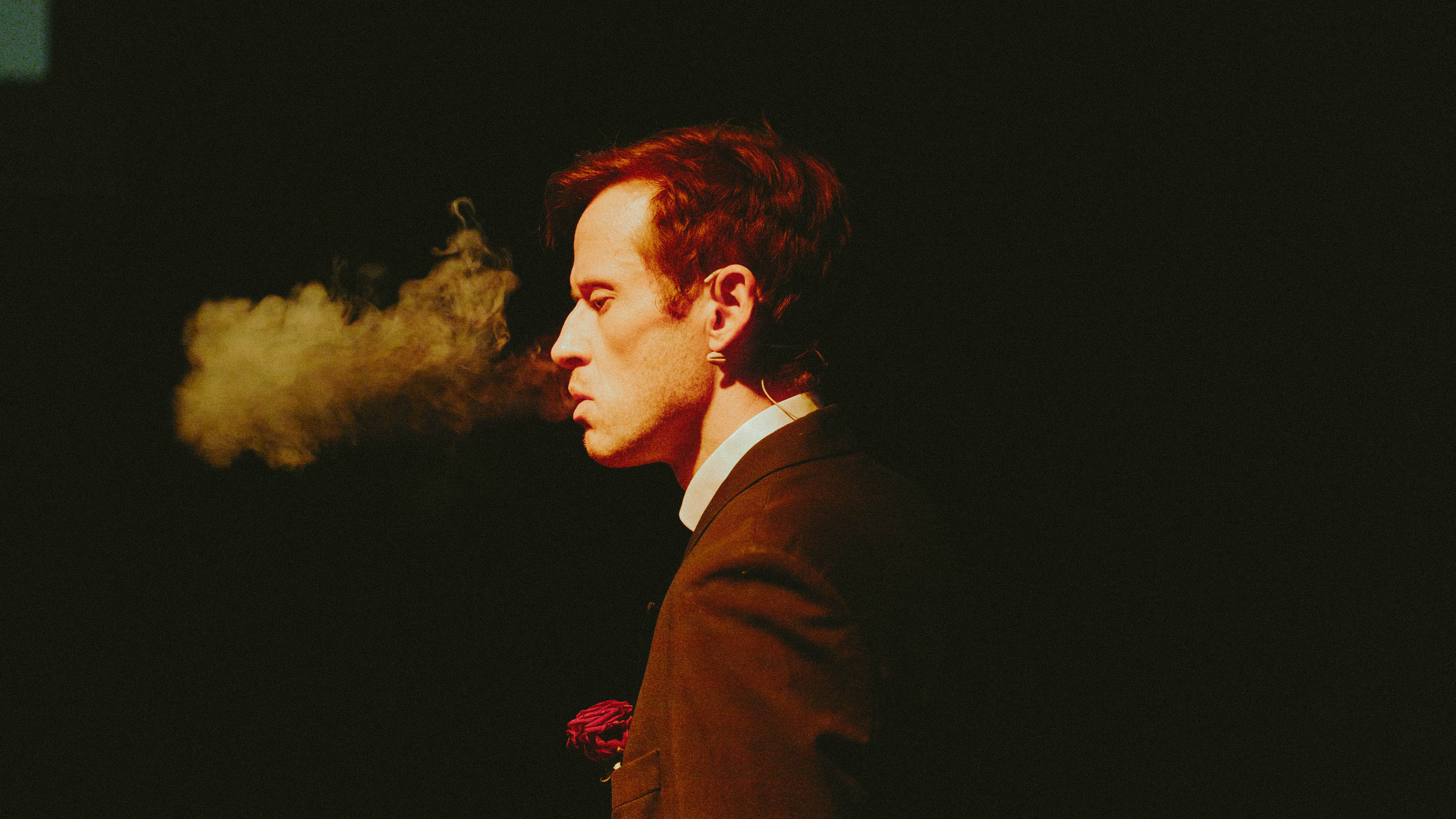
Guitarist Mikkel Schou completed the picture by barely touching his guitar and instead chain-smoking a theatrical cigarette like another Ole Jastrau in the process of destroying himself. There was no hope to be found in the band collective. No salvation. Instead, The Quartet arrived at a captivating, fragile bodegapoetry, in which playing together seemed less an attempt to lift one another up than an expression of silent acceptance. A tacit acknowledgement of the other’s solitude. And perhaps that contains its own peculiar form of edification.
K!ART & Sebastian Brix, The Quartet, KU.BE, 26 October
English translation: Andreo Michaelo Mielczarek