





From Chaos, Ingebrigt Håker Flaten Weaves Musical Patterns

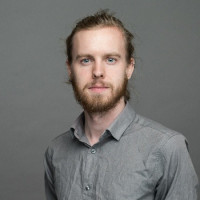
The keyword for this release can already be found in the title of the opening track: »Deluge (deconstructed)«. Here, Håker Flaten takes a Wayne Shorter composition apart like a LEGO set and reassembles it in a way that only occasionally recalls the original. Out of the pieces emerges a short, repetitive guitar motif, around which drums, saxophones, bass, and piano orbit in increasingly fragmented patterns. The melodies gradually become less concrete, the instruments interact less, the intensity rises almost imperceptibly – until everything falls apart and the process begins again. The same approach is used in the third track, »Kanón (for Paal Nilssen-Love)«, where tension and release unfold in waves that propel the music forward. Håker Flaten masters the art of creating dramatic arcs that guide the listener safely through even the most tumultuous passages.
This is not easy listening – we are still in free jazz territory – but there is a strangely compelling balance between chaos and restraint. At first, one is caught by the surprise of the music’s sudden turns, later by the joy of recognition as one begins to sense where the music sharpens and takes shape.
The album closes with »Austin Vibes (tweaked by Karl Hjalmar Nyberg)«, a noisy collage that slowly opens up toward fragments of more conventional horn melodies. Here we get closest to something resembling a classic jazz feeling—and yet not quite. It is still far from easily digestible music. But even when Håker Flaten and his fellow musicians move furthest into fragmentation, they manage to make the difficult-to-understand surprisingly easy to grasp.
English translation: Andreo Michaelo Mielczarek
Kristine Tjøgersen Crafts Unreasonably Beautiful Eco-Poetry
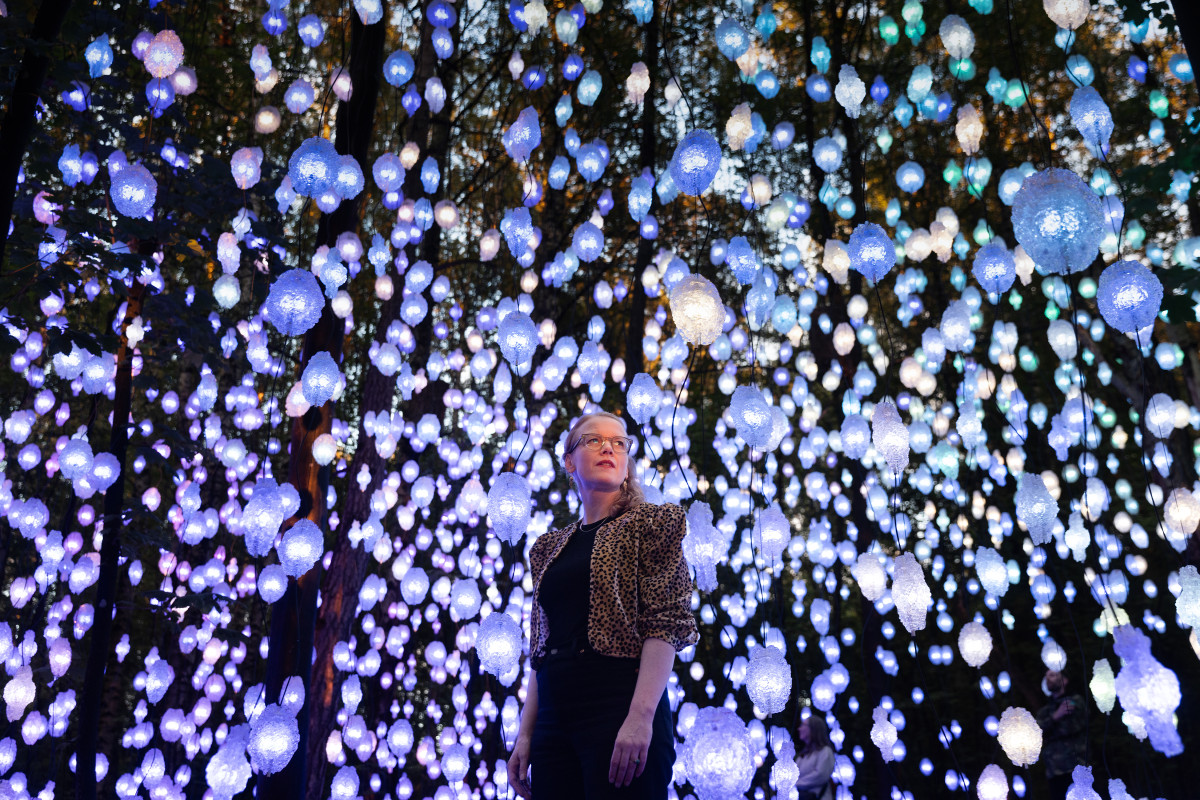
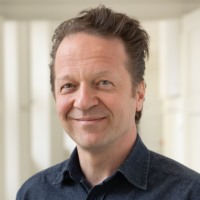
The wildlife of nature is both beautiful and playful – especially in Kristine Tjøgersen’s music. At the center of her new album Night Lives is the wild, unpredictable life of the night beyond the human domain. The album was created as part of the Ernst von Siemens Prize, which Tjøgersen recently received as the first Norwegian composer ever to do so.
The album is a seven-movement sonic version extracted from a staged work premiered at the Ultima Festival in 2023, and it works perfectly well as a standalone, semi-acoustic version performed by the Cikada Ensemble. The music ranges from playful, experimental, rhythmical soundscapes—full of rattling and crackling instruments – to intense, pulsating passages. Tjøgersen possesses a uniquely sensitive understanding of instrumental timbre, allowing her to morph seamlessly between acoustic and electronic worlds, cultural environments, and eras. From a simple, extended flute solo to a dancing computer universe – without blinking an eye.
Forty to fifty years ago, it was called postmodernism when old music appeared in new compositions as reused material. Back then, it made sense because many people had a mental library of historical classical music, a reflective space in which all new music was interpreted. Today, audiences’ minds are different. For example, Kristine Tjøgersen can easily use a completely straightforward Baroque movement as the album’s conclusion – serving as a starting point for music that gradually thins out and dissolves into a stunningly beautiful utopian world of acoustic strings and synthesizer. Without making you feel she is negotiating your sense of past and present. Natural sounds, imitations of nature, harmonies, and entire sequences are simply building blocks in her personal experimental lab. And what a lab it is!
English translation: Andreo Michaelo Mielczarek
When the Experiment Becomes Tragically Beautiful
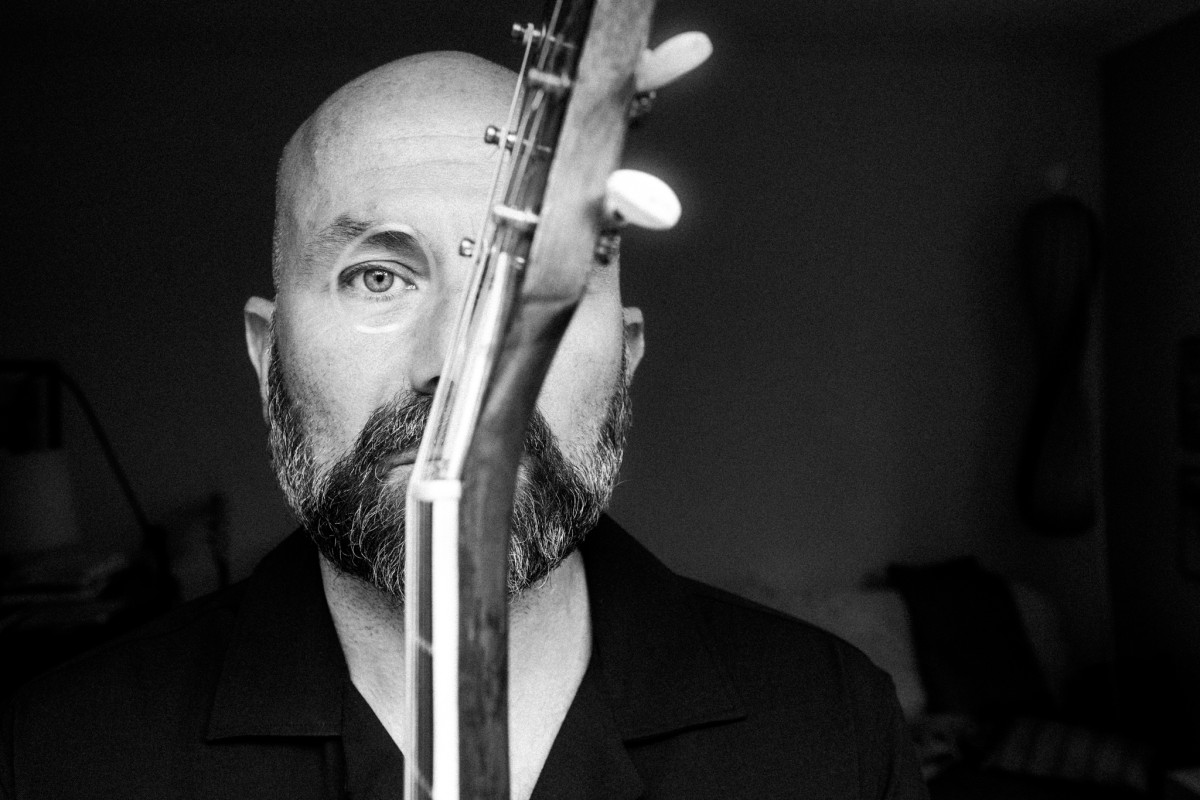
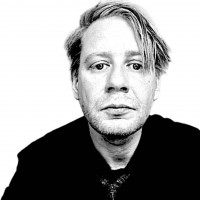
Normally, I avoid quoting press releases directly, but this description of the intimate and multifaceted Confluencia is hard not to echo. On this album, the Danish guitarist and experimentalist has assembled a small ensemble of musicians from the borderlands between neoclassicism and jazz. The real stars of the record are pianist Simon Toldam and – especially – Susana Santos Silva, whose trumpet bleats, breathes, and scrapes against the ear. She toots in ways rarely heard in postmodern experimentalism.
Confluencia seeks to reflect modern communication – a kind of communication that ought to transcend boundaries of race, gender, and other dividing forces – through instrumental music. A form that seems to be fading day by day in a haze of misinformation, miscommunication, and mistrust. Toldam’s piano leans toward eerie dissonance, while Solborg’s guitar adds a tender, almost vulnerable tone – especially on »Southern Swag«. The music is at its strongest when the instruments converge in conversation and unison moments, such as in the strange funeral ballad »Planes«, which teeters on the edge of collapse with ghostly piano figures and diabolical chimes.
Confluencia moves between jazz, folk, ambient, and avant-garde – with a chamber-like intimacy that insists on intensity, melancholy, and reflection. What makes the album truly powerful is precisely what many experimental releases lack: space for contemplation and dialogue with the listener. Tungemål dares to be experimental without overpowering itself – and paints with a broad emotional brush, where tragedy is always lurking on the horizon.
English translation: Andreo Michaelo Mielczarek
The Ever-Changing Waters Of the Mind


The sea is a powerful metaphor for the nature of identity – from stormy defiance to tranquil stillness, our individual traits drift in an eternally shifting ocean. On Original Spirit, French musician Les Halles drops anchor in the mutable waters of the mind, using pan flutes and dusty echoes as his compass.
The eight tracks are deeply rooted in the enveloping world of ambient music, and from the opening piece, »Angels of Venice«, the sound washes over the listener like gentle waves. Soft, bending synth textures accompany recurring flute runs, while echoes of the past flicker by like faded Kodak moments – faint glimmers of memory in a foggy inner landscape.
The word ambient can be traced to the Latin ambire, meaning »to go around«, and the genre is thus defined by music that »surrounds« the listener. Les Halles, also known by his real name Baptiste Martin, fully embraces this quality. The music is gentle, devoid of dominant melodies or rhythms – like a safe little bubble one can freely float in.
Like much ambient music, Original Spirit is free of lyrical frames of interpretation. However, the accompanying press text frames the album as a letter, written by Baptiste Martin during a disoriented period, including a stay in psychiatric care. As listeners, we’re invited to drift in a turbulent yet mirror-still sea of lost identities and lose ourselves in the warm current of consciousness the music creates. It certainly doesn’t break any ambient conventions – but it’s a pleasure to be swept away nonetheless.
Postcard From the Borderlands of Sound
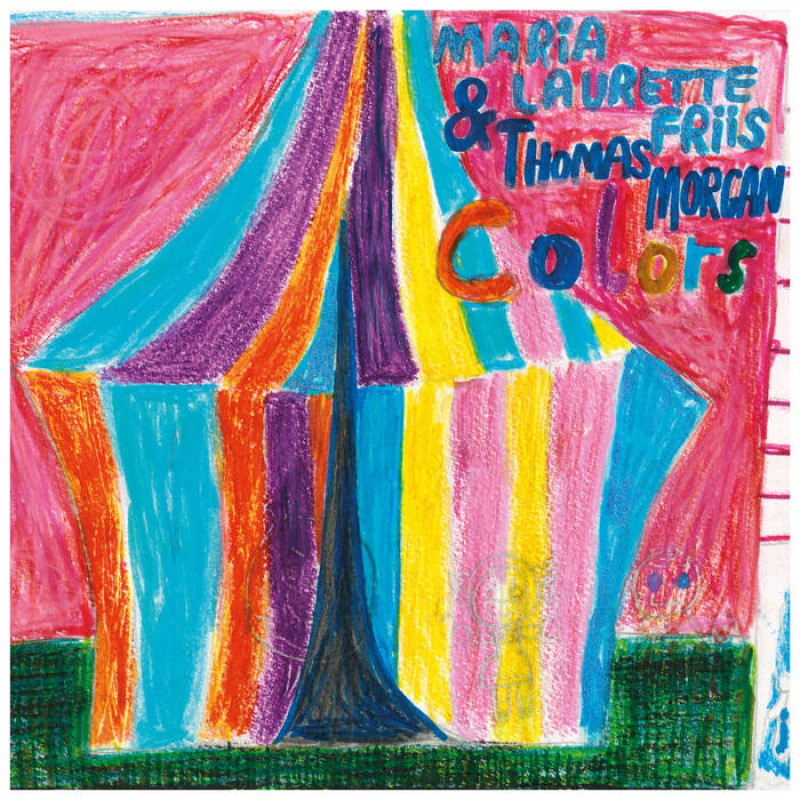
In the world of experimental music, it now takes quite a lot to be truly surprised – it’s a space where both treasures and old debts are often revisited. That’s why listening to Colors, the improvised duo album by Maria Laurette Friis and Thomas Morgan, feels like a fresh revelation. Pairing an experimental vocalist and composer (Friis) with an experienced double bassist (Morgan) and letting them improvise for three hours may not sound groundbreaking at first. Yet somehow, a rare and unique symbiosis arises between voice and double bass – a connection so special that one rarely hears anything quite like it.
Friis is a dazzling singer, and her wordless expressions draw on everything from Mongolian throat singing and jazz to Nordic darkness. She shifts effortlessly between pure singing and guttural sounds within a single improvisation. Morgan’s double bass provides an intriguing contrast, exploring the instrument’s outer edges without ever becoming unpleasant.
The three-hour recording session has been distilled into nine tracks spanning a total of 45 minutes, and the concept of using only voice and double bass is maintained throughout – despite both musicians’ backgrounds in vastly different musical expressions. The unique language that emerges is often both unsettling and deeply beautiful. When they give each other space – as in the seven-minute »Eight« – and when the bass plays alone, it’s impossible not to sway along, even without a proper beat. Colors proves that great art can still arise from nothing – in both the strange and the more familiar dialogues. That is exactly what Friis and Morgan achieve on this captivating postcard from another world.
English translation: Andreo Michaelo Mielczarek
Absurd Beauty in the Theatre of Noise
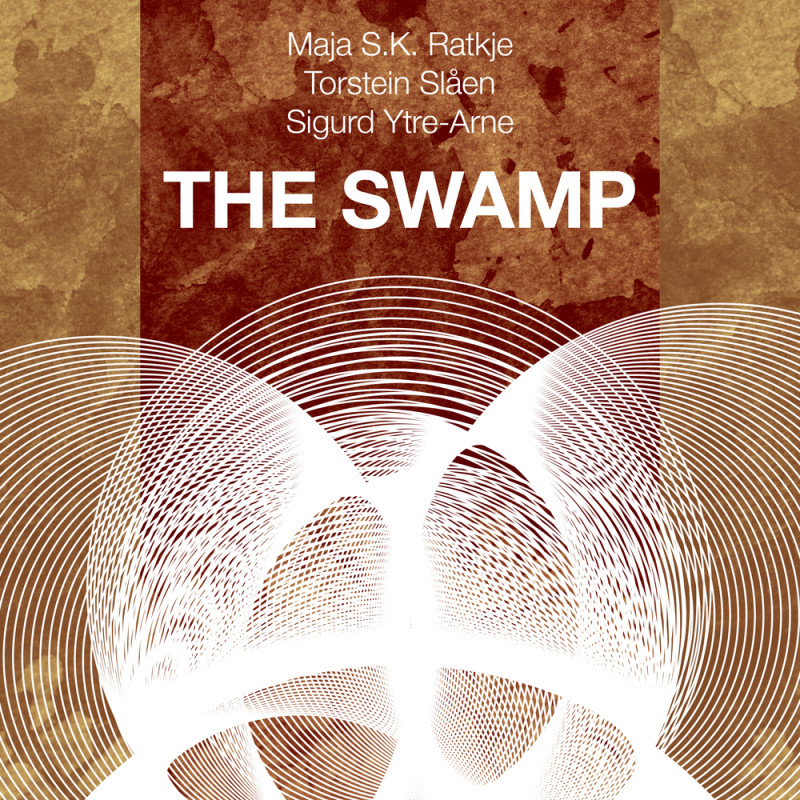
The term Dadaism must be used with caution – it easily risks becoming a cliché and trampling disrespectfully on its origins. Nevertheless, it’s hard to avoid Dada when listening to The Swamp, created by Norwegian experimental composers Maja Ratkje, Torstein Slåen, and Sigurd Ytre-Arne. The album is a 40-minute chaotic mirror of our times, shaped by merciless improvisation, noise drones, and Ratkje’s absurd vocalizations.
The music is raw, rancid, and deliberately un-beautiful – a constant stream of manipulated field recordings, reminiscent of a horror film foley studio. Bells, metallic clanks, white noise, and industrial sounds are warped together, driven by a syncopated, menacing rhythm and an underlying fuzz drone. Most fascinating is Ratkje’s voice, which appears as a riddle: is she singing in Celtic, Norwegian, or pure gibberish? The latter seems most likely and evokes the Dada poetry of Kurt Schwitters, particularly his 1932 Ursonate. At the same time, her vocal techniques dig deep into Nordic soil – conjuring the spirit of völva chants and Viking songs.
The combination of controlled noise and purposeful chaos elevates much of the album, with the opening track and the completely unhinged »Discomanic« standing out. The former is as close as the trio gets to something conventional; the latter borders on pure sound art. Only the two slower pieces – the seven-minute-long »Oligarchification« and »Lullaby for Trembling Hearts« – tend to drag a bit. Otherwise, the group manages to keep the material focused, sharp, and intensely trippy. It’s impressive how effectively it all works, even as the expression remains so relentless and challenging.
English translation: Andreo Michaelo Mielczarek