in brief
13.06.2022

Meditative kraftudladninger 

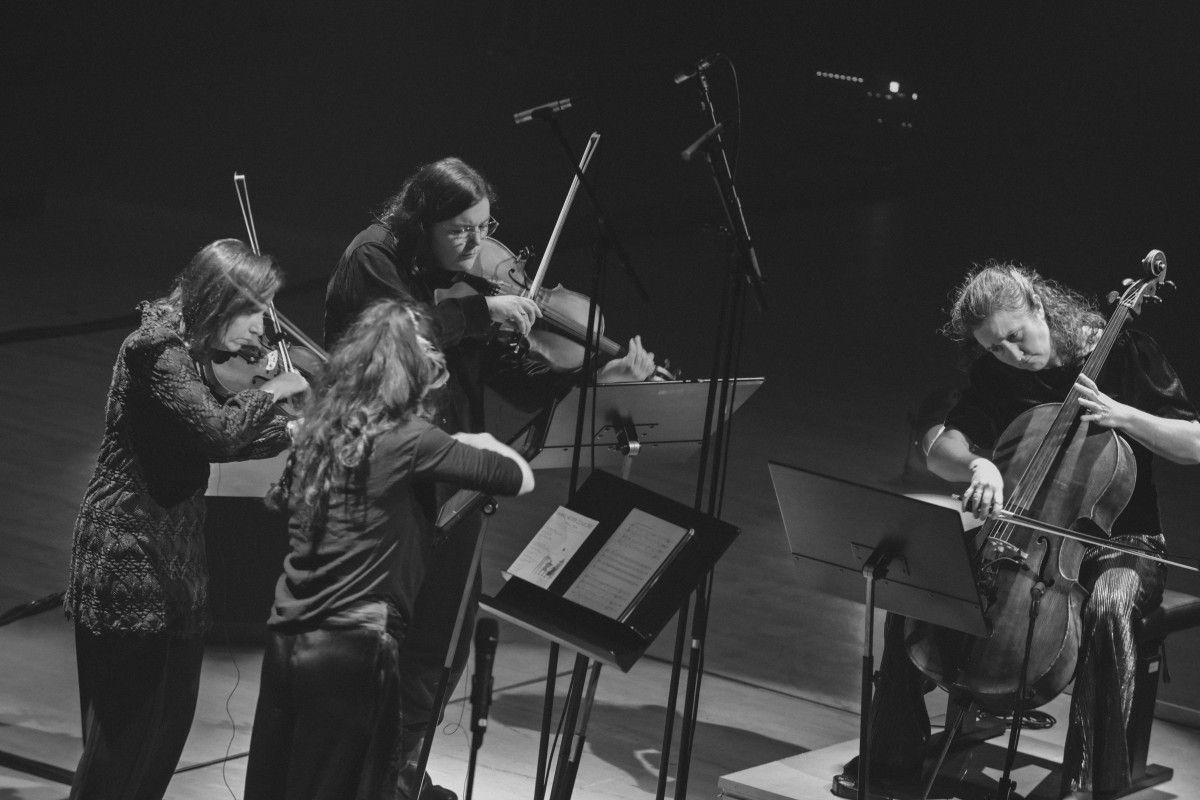
Klang Festival: »Xenakis 100« – Ekkozone
© Alexander Banck-Petersen

Tivolis Koncertsal var rammen for lidt af en begivenhed i dansk musikliv: Fem centrale kammermusikværker af den græsk-franske ærkeavantgardist Iannis Xenakis opført som jubilæumskoncert på dansk grund. Alt i alt af halvanden times varighed, fuldkommen suverænt kurateret og fremført af Ekkozone anført af Mathias Reumert. 

Xenakis' værker regnes med god grund for noget af det mest komplekse, der er skrevet i 1900-tallets anden halvdel, men de virker aldrig til at være skrevet med kompleksiteten som et mål i sig selv, sådan som man ellers har kunnet mistænke andre i hans generation for. 

Det indledende værk, en sats fra det marimba-dominerede værk Pléïdades (1978), fik mig til at ærgre mig over, at jeg ikke havde taget min fire år gamle dreng med: For han ville utvivlsomt have sat højlydt pris på værkets mylder af runde, mættede og meditative lyde, der lød som bløde kugler, som i en uendelig varm strøm flød hen ad gulvet. 

De to efterfølgende soloværker for henholdsvis percussion og klaver, Rebonds B/A (1989) og Mists (1980), blev opført attacca efter hinanden, dvs. uden pause. Det bidrog til at gøre deres ellers fundamentalt forskellige klangverdener forbløffende beslægtede med hinanden. I de første minutter af det sidste værk var det endda som om, at klaveret var blevet et slagtøjsinstrument. 

Koncertens ældste værk for klaver og fem koreograferede messingblæsere, Eonta (1964), blev her opført for første gang herhjemme. Dets tilsyneladende uforenelige modstilling mellem den pointilistiske, rationelle klaverstemme og de flydende, undertiden drømmende blæsere fik det næsten til at lyde som et kakofonisk remake af Charles Ives' The Unanswered Question. Værkets performative elementer, hvor blæserne ofte vandrede rundt på scenen, gav det samtidig et skær af noget fuldkommen uvirkeligt. Det værk ville jeg meget gerne se og høre opført igen. 

Endelig gav Okho (1989) for tre djember koncerten en medrivende afslutning. Anvendelsen af dette vestafrikanske instrument kan muligvis ses i et postkolonialt perspektiv, det vil sige som en kritik af Xenakis' adapterede hjemland Frankrigs stærkt problematiske historiske relation til kontinentet. I så fald lød værket som en dyster formaning om at lade kontinentet helt i fred. Og derved fik instrumentationen en selvironisk farve, der her blev skærpet af en langt senere tids Black Lives Matter-bevægelse. Jeg krympede mig i stolen, samtidig med at jeg var revet med af musikken og fremførelsen: Det var tæt på at være ulideligt.

Efter koncerten var mine ører godt gennembanket af al den lyd, men det var som om, jeg kunne have fortsat hele aftenen med at lytte til Xenakis' univers, spændt ud som det er mellem på den ene side aggression og raseri, på den anden tilbagelænethed og resignation. Jeg var overloadet og forklaret på samme tid. Og den følelse har for mig ellers været sjælden efter en avantgardekoncert.


»Music, to me, is true luxury and has always been an opening into a language without constricting categories, with room for both intimacy and impact. I don’t have a single tone in life, but I wish I did. When I work, music is a warm room I can barricade myself in, an ally that keeps me on track—not least in a time as destructive as the one we are in now. It can be a connection to difficult emotions, but also an excuse for a kitchen dance that makes me forget the world and myself. I actually constantly long for a new soundtrack (and more dancing), but if I’m completely honest, I’m also quite happy to take off the headphones and listen—not least to the non-human world’s differently calming compositions: all the other voices that we must include in the choir if there is to be human song and music in the future.«

C.Y. Frostholm (b. 1963) is a writer and visual artist who has published poetry and prose since 1985 and worked visually since 1991, including with photography, digital, and visual poetry. Together with composer Hans Sydow, he released the album Mellem stationerne back in 2000. Earlier this year, he took part in the exhibition Hybris! at Galleri Image in Aarhus, based on his latest book, Til den ven jeg aldrig har kendt (2023).

in brieflive
18.10

One Tone, Eight Breaths, and the Sound of Waiting

Elisa Kragerup, Louise Alenius, Vokalensemblet ÆTLA and others: »The Emperor of Portugalia«
© PR
© PR

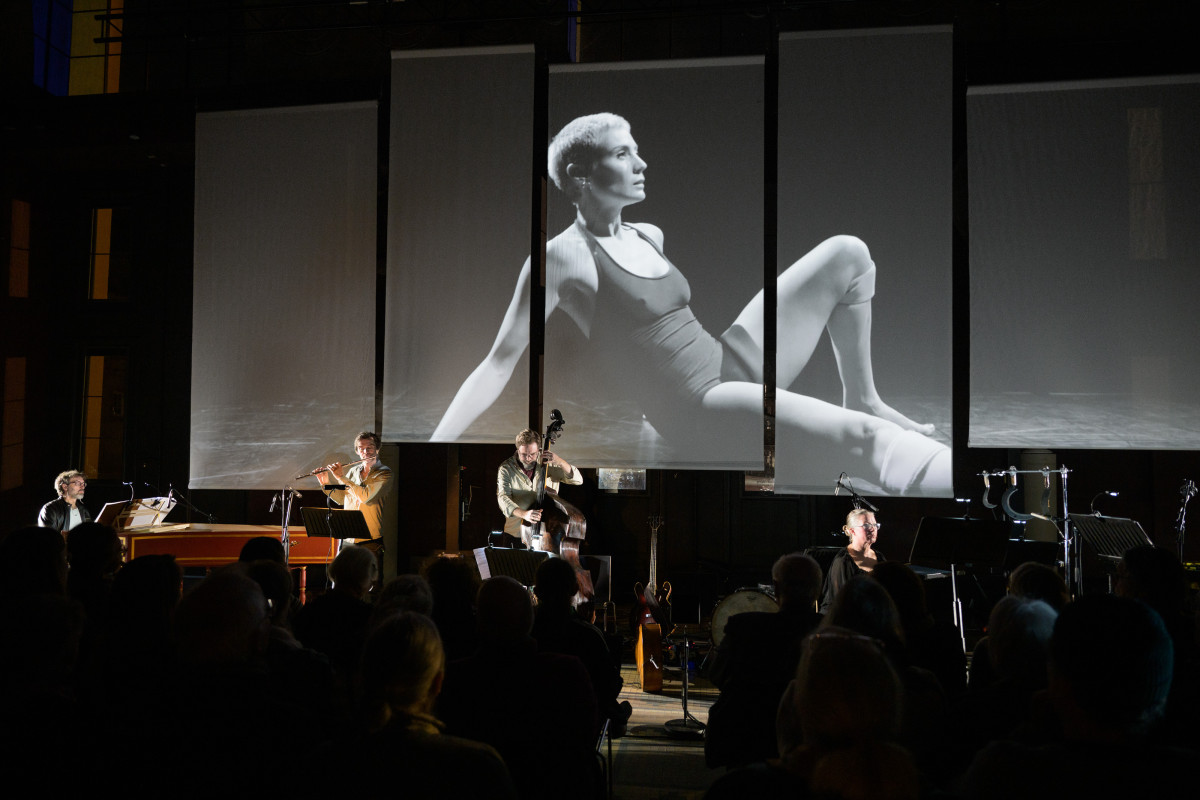
Only one actor appears on stage in The Emperor of Portugalia – surrounded by eight singers. In Elisa Kragerup’s tightly choreographed staging, Louise Alenius’ a cappella composition becomes a physical experience where breath and movement merge into one. The acoustic soundscape interacts eerily quietly with the deafening, mechanical noises that arise when, for instance, beams of light are raised and lowered on stage. It feels as if the relentlessness of existence here briefly finds a sonic expression that captures Selma Lagerlöf’s intentions.

The sparse – or rather ascetic – soundscape, together with the humble peasant costumes, reflects the harsh, monotonous life of a Swedish village before the world turned modern. And the plot? A poor farmer worships his daughter, but when she leaves for Stockholm as a young woman and never returns, his years of yearning drive him, in a Don Quixote-like fashion, to believe himself emperor of the imaginary land of Portugalia, with his daughter naturally imagined as its ruler. The father’s longing borders on madness, while the daughter’s neglect or thoughtlessness ultimately turns against her: in a Godot-like manner, he waits and waits for her – just as she, after his drowning, waits for him, unable to find his body.

The piece is carried by an almost unbroken drone in the choir (produced through collective breathing) – a single sustained tone that, as an artistic device, illustrates how music in theatre can be so minimal that sound itself becomes the message, and the absence of a musical narrative becomes the point. »One tone played beautifully is enough,« Arvo Pärt once said. Except that here, the tone is sung – and in this work, his statement is affirmed in the most radical way: a maximal expression achieved through minimal means, realised with striking precision by Vokalensemblet ÆTLA.

English translation: Andreo Michaelo Mielczarek

in briefrelease
16.10

A Microphone In the Nervous System

IKI: »BODY«
© Julie Montauk
© Julie Montauk

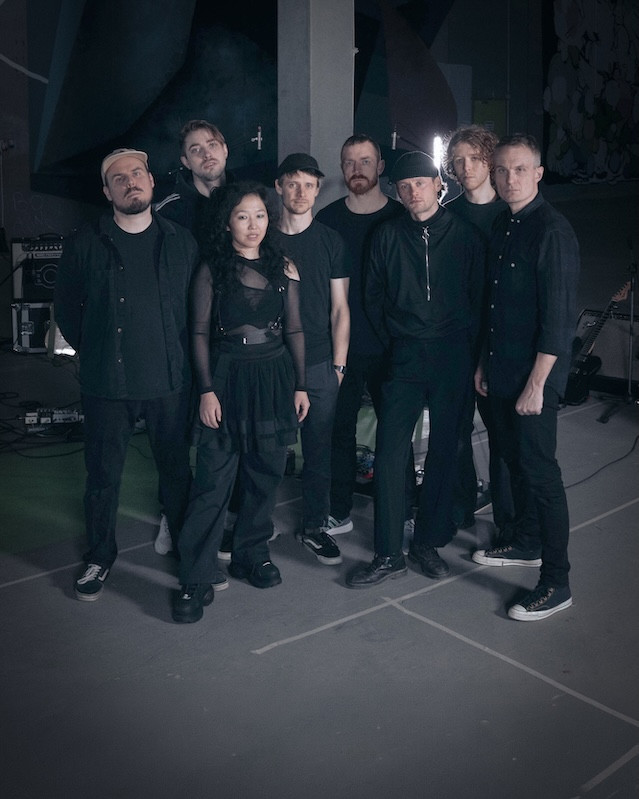
It sounds as if someone has placed a microphone directly inside the nervous system’s electrical impulses. The Nordic electroacoustic vocal ensemble IKI explores the boundaries between body and technology on their fifth, self-produced album BODY, where the five singers’ bodies merge into one large, organic rhythm box.

The tracks change form as the body breathes, dances, awakens, runs, wanders – in the imperative mood. The harmonically unison ripple of »Float« is countered by flickering modem-like sounds in »Regenerate«. Everything is framed by the recurring theme »Circuit«, which ultimately gathers the fragments into a single linguistic statement: »Are you gone when your body is not breathing?«

BODY demands concentration. IKI claims that all sounds on the album are created with the voice – a counterpoint to the electrically manipulated, a kind of reversed version of synthesizer sounds that imitate the human voice. It’s an incomprehensible mystery one keeps listening for: how can the voice produce the accordion-like sound on »Breath«, panned all the way to the left and slowly taking over the entire soundscape? Of course, it can’t do so on its own. The recording itself is an electronic mediation. The technological tools act as a microscope for vocal expression. It’s powerful because it asks about the transitions between human and machine, between life and afterlife. Yet the premise holds a paradox that never fully resolves.

English translation: Andreo Michaelo Mielczarek

Bjarke Niemann. © Frederik Barasinski

»Music is everything that can only be described far more poorly with words.«

Bjarke Niemann is the lead singer, songwriter, and producer of the Danish band Spleen United. The group broke through with Godspeed Into The Mainstream in 2005 and has performed at, among other places, Roskilde Festival and the Copenhagen Opera House. Bjarke Niemann has also composed and developed music for TV and video games – including the international game series Hitman – and has produced albums with artists such as Soleima, Statisk, Afskum, and Hugorm.

© Motis Necrojam

»Music is the pursuit of original failure...« 

Motis Necrojam is the singer and collager with the Noseflutes and The Clicking Stick, a pair of combos from the old English Birmingham times, adorned with new-times dedication to derailment, approved by Sir John Peel, via their four live sessions for his mighty BBC Radio programme, occasional treaders of the boards, musicians with alias obsessions. One thing Necrojam has is a digit on the diminishing pulse.