



An economics of audibility
Abstract
This article proposes an economics of audibility, arguing that the minimum audible margin for a given task often functions as a priced and permissioned resource. ‘Ear-time’ is named as the allocable share of that condition, framed as reception entitlements and emission permissions. Devices and metrics convert audibility into administrable numbers, enabling allocation through contracts and software. The argument traces acoustic, social, and juridical registers to ask how the economisation of audibility reshapes sonic citizenship – the capacity to occupy and receive the shared acoustic field in everyday life. The essay imagines a city over twenty-four hours, theorising the question across five scenes from pre-dawn sanitation to night logistics, passing through the commute and midday retail to the mid-afternoon office. Across these sites, measurement choices and etiquette translate into property-like claims, recoding disturbance and legitimacy while distributing fatigue and presence unevenly. Economisation reworks citizenship as access to ear-time, and algorithmic and architectural practices harden archival traces that diverge from lived audibility.
Introduction
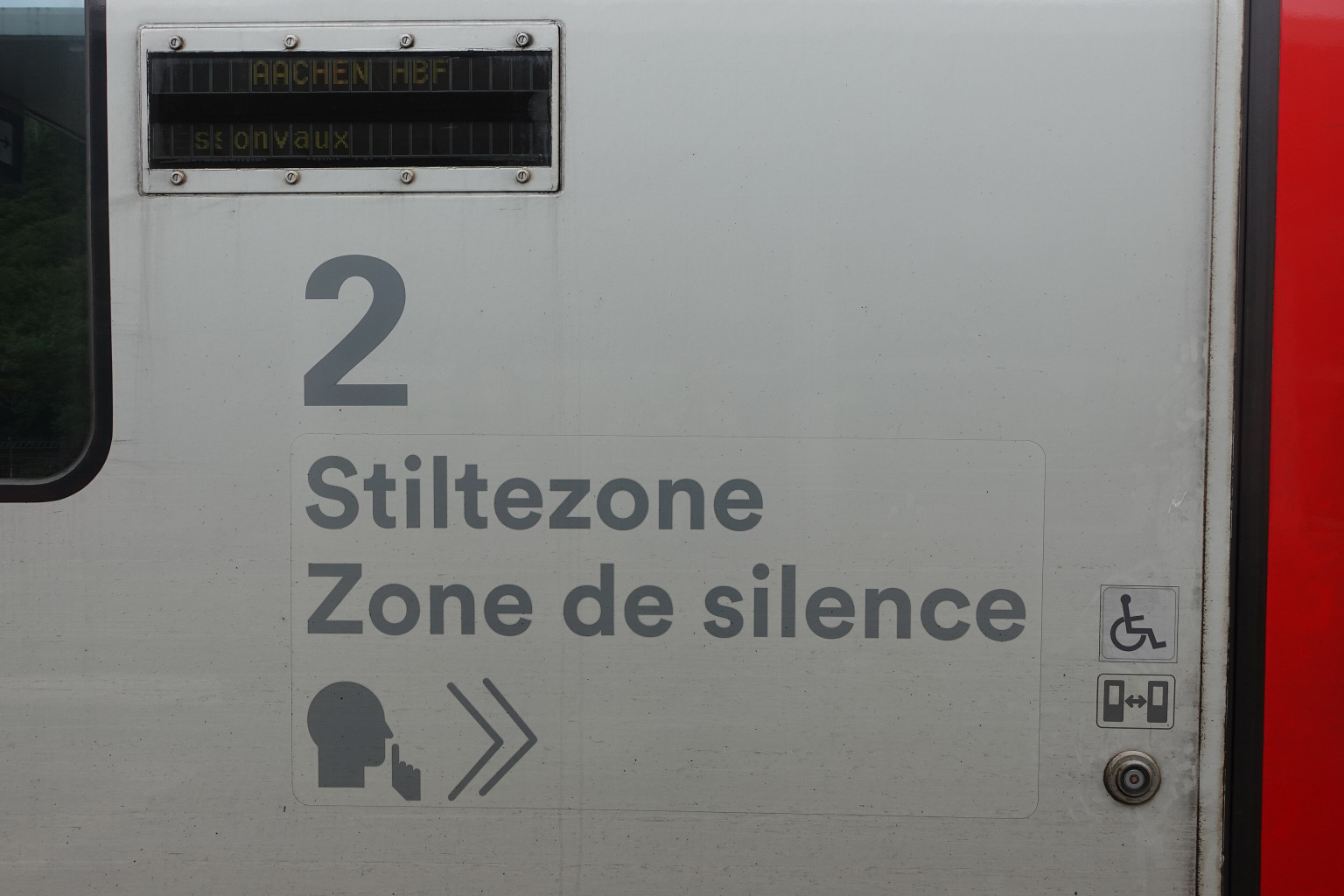
Urban sound is already subject to forms of economic reasoning which quietly structure everyday expectations of space (Martin 2025; Thompson 2004). Quiet is capitalised into housing values through hedonic valuation (Nelson 2008). Noise limits and exemptions are built into procurement and tendering for urban services and infrastructure (Kloth et al. 2008). Designated zones, signage, and behavioural rules organise access to spaces of quiet in public transport and workplaces (Babapour and Rolfö 2019; Deutsche Bahn n.d.). Conditions for hearing and for being heard emerge within these arrangements, and their distribution reflects decisions about value and obligation.
This article starts from this observation and asks a simple question: if urban sound is already economised, what do we gain by analysing it with economic tools? The aim is not to extend markets to sound, but to take seriously the fact that market logics, contract forms, and measurement devices already shape sonic citizenship – the continually renegotiated capacity to participate in shared space through sound (Højlund, Vandsø and Breinbjerg 2024).
I suggest that the most fruitful lens for this analysis is audibility, rather than sound or listening alone. Sound can accumulate without limit in principle, and listening is an action oriented toward that abundance. Audibility, by contrast, is a scarce condition: it describes those moments when a signal both reaches a body and is available to be made sense of, and when that signal is recognised as legitimate within a given social and legal order. Because audibility is limited by masking, attention, and convention, it is traded – often implicitly – between different people and activities.
To make this trade analytically visible, the next section develops a conceptual model of an economised audibility. I propose ‘ear-time’ as the allocable share of audibility available to a person or activity in a particular place and period. Reception entitlements and emission permissions describe distinct jural claims on that share. Acoustic, social, and juridical registers of audibility trace how these claims pass between material sound fields, cultural norms, and formal rules. Together these concepts provide a structure for examining the economisation of urban sound and its implications for participation in shared acoustic environments.
Subsequently, this conceptual model is heuristically applied to a series of scenes across a twenty-four-hour cycle in a composite Northern and Central European city. Many of the practices under discussion are characteristic of cities such as Berlin, Zurich, Copenhagen, and Vienna. These include quiet carriages on intercity rail services, sanitation schedules that rely on pre-dawn waivers, shopping centres with detailed acoustic brand guidelines, open-plan offices with adaptive sound masking and hybrid meeting technologies, and large logistics hubs that operate through the night. Across these scenes, ear-time emerges as a common thread. Reception entitlements and emission permissions appear in different configurations and the three registers of audibility move in and out of alignment. Economic concepts help to clarify how specific distributions of audibility generate rents, externalities, and forms of assetisation. The question of sonic citizenship provides a critical lens, asking who can call and be answered, and how institutions shape that possibility across the diurnal cycle of urban life.
An Economised Audibility
Audibility refers here not to every vibration in the air but to a task-specific subset which a body can parse and that a public agrees to recognise. It slips between the physics of sound and the intentions of listening, produced through social and technical conventions that decide which signals merit attention and which sink beneath the threshold (Sterne 2003). In Rancière’s (2006) terms, it belongs to the distribution of the sensible: a partition that decides which utterances arrive as speech and which fall as undifferentiated noise. The ‘listening ear’ names how that sorting is racialised in practice, as some timbres and accents are coded as disturbance even at identical levels, while others are heard as legitimate presence (Eidsheim 2019; Stoever 2016). Robinson (2020) shows how settler institutions extend the same logic, hearing Indigenous performance as ‘culture’ while filtering the jurisdiction and obligations that song articulates to land, and granting audibility only when recognition does not concede authority.
Alongside these social and political determinations sit acoustic and technical mediations. Architectural and urban acoustics tune rooms and streets, making the audible margin an engineered affordance shaped by design ideals and regulatory aims (Bijsterveld 2017; Blesser and Salter 2007; Thompson 2004). Psychoacoustic research on masking, later embedded in perceptual coding, turns audibility into a parameter that can be budgeted and traded, a history Sterne (2012) reconstructs through the MP3 as an industrialisation of perceptual thresholds.
Once audibility is organised socially and materially, it becomes calculable. Speech and hearing sciences, together with communication engineering, produce indices that quantify intelligibility and level, from the articulation index to later transmission measures, and tie them to standards, instruments, and tests (Tkaczyk, Mills and Hui 2020). Through such metrics, sensors, dashboards, and bylaws treat audibility as a quantity that can be targeted, verified, and assigned (Droumeva 2021). Quantification also places audibility inside broader regimes of evaluation where acoustic measures circulate as signals of value and governance, a dynamic that political-economy critiques have analysed across contemporary media and institutions (James 2019). Across these cases, audibility appears as both finite – bounded by masking and by attention, and political – bounded by norms that admit some voices and not others.
Scarcity, in turn, invites regulation. Norms, zoning ordinances, and platform policies ration the available margin between signal and din. Because the margin can be granted or withheld, it behaves as a resource whose distribution carries opportunity costs. Who obtains it, at what hour and on what terms are matters for economic as well as cultural analysis. Unlike bandwidth markets where technical scarcity is engineered, here scarcity travels through prevailing attitudes towards whose sounds count as intelligible or civil. The double bind of physical limitation and social sorting positions audibility as a useful lens for analysing how value and voice are linked. Calculation itself prioritises and reallocates the audible margin, because averaged levels and percentile measures functionally reorder the sounds they report (Callon and Muniesa 2005). Regulatory proxies such as those same averages turn the margin into administrable numbers, while etiquette and platform rules attach moral categories to the sounds they govern.
I distinguish three registers through which audibility is organised: the acoustic, social, and juridical. Acoustically, audibility appears as the effective difference at the ear between an intended signal and its background that permits comprehension or rest. In the social register, audibility is the status of being taken as a legitimate source rather than a disturbance. Juridical audibility is the trace that measurement devices, logs, and forms of law will recognise as signal or nuisance, often through proxies such as averaged levels, event maxima, or speech intelligibility scores (IEC 2020; ISO 2016). Infrastructure and measuring instruments translate among these planes and carry privilege from one into the next. A shift in one register can remake the others because a metric tuned for compliance can override felt disruption, while norms that reclassify a voice as out of place can shrink the acoustic allowance available to it. A designated quiet zone can improve acoustic audibility for one user while diminishing social audibility for another who now fears to speak, yet the same zone may read as fully compliant on the juridical trace because thresholds are averaged over minutes at a microphone near the ceiling. Following LaBelle’s (2019) account of ‘acoustic territories’, these zoned interiors function as sonic border regimes: they use etiquette and measurement to create spatial claims over audibility, reproducing social hierarchies in both acoustic design and juridical compliance.
Ear-time
If audibility is taken as the situated condition in which a signal can be made sense of and is taken as legitimate, then ear-time is the allocable share of that condition. Ear-time names a time-bound entitlement to a workable envelope of intelligible signal or restorative quiet for a particular task in a particular place. Analytically, it has two jural forms: reception entitlements (rights to receive a minimum audible margin for quiet or intelligible announcements), and emission permissions (licensed occupation of the channel by sound sources). Because many people can seek the same envelope at once, ear-time can become rival and congestible. When many actors pursue it at once, masking rises and the envelope degrades, so exclusion becomes feasible through doors, reservations, and permits that grant emission or access. That quality aligns ear-time with the logic of club goods in Buchanan’s (1965) sense, where access can be limited by membership or price and where individual benefit falls as the group becomes crowded. Ear-time becomes positional once engineered scarcity lets possession of quiet confer advantage, while open streets where traffic and protest overlap retain common-pool dynamics because no single administrator can fully cordon sound (Hirsch 1976; Ostrom 1990). Ear-time can also be rendered comparable within particular measurement and governance regimes: once a setting specifies a task and a proxy (such as an averaged level, an event count, or an intelligibility score), different acoustic sequences can be treated as equivalent for the purposes of allocation, compliance, or scheduling. This comparability is limited because thresholds differ by task, hearing status, language, and fatigue, and because the frequency content that sustains one body may fail another.
Where audibility describes whether a sound reaches a body, is recognised as legitimate, and is counted as lawful, ear-time turns that passing quality into an allocable slice of time. Reception entitlements and emission permissions travel together but not identically: one secures the ability to hear, the other the permission to be heard. Once such claims circulate, they reorder audibility for everyone else, because granting one party a clearer channel often raises the noise floor or narrows tolerance for others, recoding certain uses as nuisance. In that feedback loop, audibility becomes the socio-perceptual ground, and ear-time the economic instrument that parcels and prices access to it.
Ear-time becomes tradable when instruments exist to allocate it. Municipal bylaws set decibel ceilings then authorise waivers for nightlife districts or refuse collectors. Transit operators advertise quiet carriages and embed the promise in booking software that prices hush or leaves it to first-come queuing. Commercial leases bundle ambience stipulations with floor area and oblige tenants to adopt prescribed playlists or ceiling treatments so quiet becomes a leasehold attribute. Across these arrangements, the operative relations are Hohfeldian – concerning privileges to emit, powers to exclude, duties of notice, and claims for compensation (Hurd and Moore 2018). Contracts and code convert an atmospheric quality into property-like claims that can be exchanged, hoarded, or segmented. Once audibility is measurable, excludable, and enforceable, it can be priced differently, enforced unevenly, and used for data extraction – embedding audibility in rent and discrimination even before formal markets appear.
Once ear-time is measurable, excludable, and enforceable, rent logics appear. Quieter frontage, premium acoustic zoning, or building fabric upgrades raise the income that a site can command and feed differential and ground rent. Workplace platforms convert ear-time into recurring revenue by gating quiet rooms, masking controls, and AI suppression behind logins and plans. Insurers and public health agencies discount future productivity losses from hearing damage into present lump sums, turning exposure into an asset that employers hedge. Assetisation follows as quiet becomes collateral for real estate finance or a design variable in private equity valuations of shared offices, while noise becomes a revenue stream for tinnitus relief and masking applications (Birch and Muniesa 2020). Prices and rents do not exhaust the story. Their significance lies in the power they hold over who acquires audible presence, and the distribution of those gains and losses is uneven because ear-time remains heterogeneous across tasks, bodies, and times of day.
Sonic Citizenship in Economised Environments
Sonic citizenship names the shifting capacity to occupy and to receive the shared acoustic field. Højlund, Vandsø and Breinbjerg (2024) locate this capacity in ceaseless negotiation where bodies, norms, and devices attune to one another while never settling into equilibrium. Citizenship is not granted through formal status alone. It crystallises through sensory reciprocity that must be continuously maintained, tested, and redeemed. When audibility is recast as an economic variable, the terms of this reciprocity shift. Where meters, tariffs, reservation systems, or enforcement protocols are used to manage sound, participation in the acoustic commons can become explicitly or implicitly priced. A question therefore sharpens around how marketised ear-time alters the social contracts that may otherwise rest on mutual audible presence.
When audibility is allocated economically, its distribution tends to follow incentives that can diverge from the reciprocal ethos of sonic citizenship. Incomplete contracts, asymmetric information, and externalised harms narrow the horizon for collective attunement. Thresholds are not uniform, and differ by hearing status, language proficiency, age, and fatigue, which means that identical environments deliver unequal participation. Algorithmic and archival practices can further narrow what counts as heard by fixing traces that diverge from lived audibility, making governance of records part of citizenship’s sensory bargain (Birdsall and Tkaczyk 2019). Yet because citizenship entails ongoing contestation, the imposition of price does not finalise hierarchy; it supplies a new terrain upon which negotiations over recognition, silence, and presence reappear.
Methodological Approach
The analysis that follows treats the city as a sonic ecology in Atkinson’s (2007, p. 1905) sense, a ‘relatively persistent and chronologically ordered’ patterning of sound across urban space. I adopt a rhythmanalytic stance, following Lefebvre’s (2004) proposal to analyse everyday life through the interplay of cyclical and linear rhythms that bind time and space together. The twenty-four-hour sequence samples this ecology at five points – pre-dawn, morning commute, midday retail, mid-afternoon office, and night logistics – in order to track how ear-time is allocated and contested as urban rhythms shift.
The opening italicised paragraphs of each section function as composite vignettes, written as short-form narratives that synthesise multiple sources into an ideal-typical scene in order to convey recurrent patterns rather than individual biographies (Spalding and Phillips 2007). Each vignette is constructed from the same archive that informs the analytical discussion, which includes published case studies in sound studies and urban research, technical standards, industry material, and regulatory documents. Specifically, case studies inform the institutional arrangements and everyday practices that appear in the scenes, while relevant European technical standards, industry documents, and regulations are discussed in the subsequent analysis. Sensory cues supply a minimal setting, reflecting recurring features of the infrastructures addressed, supported where possible by the same documentary sources and otherwise by widely shared features of everyday urban environments.
The scenes operate as stylised ideal types in Weber’s (1949) sense, constructed through one-sided accentuation of selected relations that organise audibility and ear-time under particular institutional conditions. The composite city provides a comparative frame for Northern and Central European settings where similar regulatory instruments, infrastructural schedules, and platform policies shape the urban acoustic field. The vignettes illustrate claims about allocative mechanisms and their distributional effects, while allowing for variation across cities, neighbourhoods, and days. Each hour functions as a heuristic sampling point within a diurnal cycle, and each scene stages a plausible configuration of arrangements that are documented across multiple settings.
The analytic paragraphs that follow each vignette establish the warrant for the claims under discussion by citing the materials that support the institutional arrangements, measurement settings, and governance practices introduced by the vignette. Source attribution therefore appears in the analytical sections, while the composite vignettes present the same mechanisms in narrative form. Across the sequence, the methodological commitment is therefore to theoretical inference from composite, empirically anchored scenes: using rhythmanalytic composite vignettes of ear-time to test how far an economics of audibility can account for the distribution of sonic citizenship across the urban day.
05:00 Pre-dawn
Amber strobes flash on brick as a refuse compactor backs into a tiled courtyard, engine idling. The lifter grabs the bin; metal hits metal and the impact carries up the stairwell. The reverse alarm ticks steadily. A window opens; otherwise the street is empty. On a mounted tablet, the route arrow shifts to the next alley. The soundscape reflects an arrangement that promised reductions in daytime delays and fuel use. Kilometres and litres are tracked, but there is no metric for undisturbed sleep.
The contested good here is ear-time: a time-bound share of the minimum audible margin needed for a task to proceed. Two jural claims meet in the same channel. Residents hold a reception entitlement to a margin sufficient for sleep; the operator holds an emission permission broad enough to hear reversing alarms and spotters’ shouts over the mechanical floor. Which claim prevails is determined as much by ordinance and contract as by physics. Acoustically, impulsive peaks from the lift and low-frequency idle migrate through glazing, doors, façades, and ventilation panels (ISO 2021). Where courtyards and schedules gate access, hush takes on club good properties; on open streets it behaves as a positional amenity within a governed commons. Socially, the compactor is coded as legitimate civic labour while wakeful complaint is recast as private fragility, a selective inversion of the aesthetic moralisation of noise described by Thompson (2017). Thompson’s account shows that what counts as ‘unwanted sound’ is an ethical sorting of bodies and purposes rather than an acoustic fact; value judgements about sound align with a normative social order that polices comportment and individualises response, rather than registering the social production of audibility. Juridically, a pre-dawn waiver rests on measurement devices which encode value decisions into figures (ISO 2016).
Scarcity is allocated in the administrative interval between these claims, then ratified into policy by instruments of measurement. Many municipal loggers apply the A-weighting curve, mirroring average otological sensitivity while down-weighting the low-frequency energy where diesel engines concentrate their power; using C-weighting can surface a remainder that A-weighting suppresses (Leventhall 2004). Goodman’s (2012, p. 189) politics of frequency clarifies why that surplus is felt in bodies even when it disappears on A-weighted traces: low-end drones exert vibro-political force that administrative audition tends to discount. Equally consequential is the averaging window: a one-minute LAeq,T (A-weighted sound level over time) figure can fold an Lmax (sound level peak) into administrative compliance (ISO 2016). Night limits tighten by statute, and guidance from European noise action planning projects notes that waste collection in many cities is scheduled during evening or early morning hours in order to avoid daytime congestion, which transposes heavy vehicle noise into periods otherwise designated for sleep (Kloth et al. 2008). Quantification performs a double translation: it converts vibration into numbers that travel through procurement, and it sets priorities that reallocate the audible margin to fit the legal number. Parameters that read as technical – weightings, windows, waiver hours – encode choices about whose senses matter and when, and together they can codify a legal quiet that sits at odds with felt disturbance. As Mattern (2020) notes, our tools for urban listening embody specific ways of knowing, and thus governing, the city; when municipal ears are algorithmically A-weighted and averaged, they produce the very urban subjects and schedules they purport to neutrally measure.
Once quiet is priced or permissioned, its yield accrues unevenly. Quieter mornings capitalise into higher sale prices through hedonic valuation that treats reduced noise as an amenity akin to floor area (Nelson 2008). Where municipalities subsidise electrified fleets or defer pickups, incremental hush lifts differential rent along eligible frontages while exporting drone and peaks to districts unable to pay. Ground rent follows as landlords appropriate the premium through higher leases. Renters in multifamily housing near alley pickups, shift workers whose night unfolds at other hours, those in overcrowded rooms, and people with sensory sensitivity absorb the largest fatigue for the smallest political return. Operators, meanwhile, bank operational savings: pre-dawn rounds avoid congestion, route density rises, fuel burn falls, and fleet utilisation improves. These gains appear on balance sheets, while the cost of interrupted sleep migrates to bodies and public health budgets. The ledger records private benefit and leaves shared loss off the page.
The waiver that authorises pre-dawn collection articulates citizenship in the negative. Those whose sleep coincides with the truck’s arrival are obliged to listen without any practical means to influence the schedule; rest is treated as a private consumption choice rather than a shared entitlement. Triple glazing and internal courtyards insulate their occupants from the acoustic record, establishing an apparent norm of quiet that the ordinance then protects. In adjacent walk-ups the same regulation converts wakefulness into an externality that can be neither invoiced nor refused. Lacey (2013) observes that listening carries moral weight only when it can be answered, yet the resident at the open window must receive the alarm without reply. The gap in reciprocity reverberates beyond the moment as chronic fatigue erodes the energy required for civic participation the following day. Rest, once a background condition of engagement, becomes a positional good secured through property and insulation, and collective attunement erodes less through overt censorship than through the gradual depletion of attention.
08:00 Morning Commute
As morning light comes through the carriage windows, commuters settle into upholstered seats beneath a decal marked Ruhebereich. A finger-to-lips pictogram sets the terms: conversation and audible device alerts are suspended. Wheels hiss under the carpeted floor. A public-address tone sounds, followed by a calm station list. Two carriages away, a passenger taps a phone to reserve the last unclaimed seat in the quiet zone. When required, a small surcharge or class upgrade turns quiet from a shared courtesy into a paid entitlement, moving the carriage toward managed access.
Ear-time here is an envelope of signal-to-noise wide enough for reading, planning, necessary orientation, or simple recovery before work. It is not the absence of sound, but a workable difference between an intended signal and the ambient background. Physically, the envelope must sit a few decibels above wheel roar and ventilation; socially it must appear as legitimate occupation of the channel rather than intrusion; juridically it must fit carrier conditions that empower crews to enforce or relax silence. A traveller seeking quiet is cast as steward of order, whereas a traveller negotiating medical instructions by phone is recoded as intrusion, even when their spectrum is narrower than the public address. Such reclassification illustrates how social audibility rests not on amplitude alone but on the moral category attached to a voice. The decals produce that category in advance by signalling that this interior is dedicated to restraint. A printed quiet icon converts an acoustic preference into a quasi-property claim. Where quiet is scarce, it acquires positional value because calm gains meaning when adjacent riders lack it (Hirsch 1976). The triad of audibility operates as an allocation mechanism, turning ordinary conversation into an externality the operator mediates through etiquette, staff discretion, or small transactional frictions. The rider confronts a choice that collapses to paying, complying, or relocating.
Allocation runs through small instruments that translate etiquette into quasi-property claims over ear-time. On some Intercity services, a seat reservation in the Ruhezone builds on the operator’s designation of quiet areas in which phone calls, ringtones, and other noisy activities are discouraged, and in practice functions as a contract for reception entitlements that secures a workable margin for reading, planning, or recovery (Deutsche Bahn n.d.). The same entitlement is materialised juridically in the booking interface where a greyed seat writes a contingent right onto the QR ticket, while the corresponding emission permissions are specified through prohibited acts (conversation, speaker use) rather than through decibel limits. On Swiss Federal Railways, quiet zones are often bundled into first-class, so the same margin is accessed through a fare differential that packages acoustic benefit with additional space and services, converting the carriage into a club good whose congestion is managed by price and class rather than by meters (SBB CFF FFS n.d.). Once aboard, decals and repeated announcements align the social register with the juridical one by pre-classifying speech as breach, inviting peer enforcement and conductor discretion to police the channel. At the same time, the operator retains a privileged emission permission to broadcast safety and station information, treated as legitimate signal irrespective of the quiet covenant. Design stabilises the acoustic margin; tickets, icons, and announcements stabilise the claims upon it. Ear-time is partitioned by code and contract, then enforced through the moral economy of the ‘quiet’ passenger.
Once quiet is transacted through bookings and classes, small but systematic rents appear. Where quiet is bundled with first-class travel or sits behind a reservation fee or loyalty credential, the operator captures platform rents attached to allocation rather than to a new cost of production, and the verification system becomes a toll point for an experience built on disciplined co-presence. Prices need not be high for the logic to take effect. Even when quiet is unpriced, scarcity remains and is rationed by digital fluency, queue position, and the ability to adjust travel times. Those who must speak in order to travel safely – carers, interpreters, support workers – are pushed towards designated phone areas or into non-quiet carriages, where crowding and announcement audibility can worsen; the obligation to communicate becomes a cost charged to already constrained time. Riders who need to hear rely on announcements that must remain intelligible over crowd noise. If the quiet car becomes the preferred place for work, the non-quiet car becomes the residual zone for chatter, school groups, and spillover. That partition is not punitive by design, yet it performs a routine sorting of sonic citizenship by classed time and by the elasticity of one’s schedule. The externality ledger runs towards those with less control over either.
Accessibility clarifies how juridical audibility attaches reception entitlements to a normative body, then distributes failures as externalities. Rules of equivalent effect nominally entitle passengers to critical information regardless of hearing status, yet where visual displays and staff support are inconsistent, that entitlement becomes contingent on crowding, line of sight, and the acoustic margin available at a given seat (Bigby et al. 2019). Mills’s (2011) histories of telephony, audiometry, and speech testing show how such entitlements are routinely calibrated through intelligibility indices and ‘normal ears’, often rendering deaf and hard-of-hearing users’ needs residual. Designs which take an idealised average as their reference body can render tranquillity a comfort for some and a deprivation for others (McGuire 2020). Installing redundant and maintained visual alerts is technically simple but breaks the quiet premium’s scarcity story by ensuring access without obliging sound. When hazards emerge, responsibility diffuses. Operators may point to signage inviting riders to seek staff, while staff may point to procurement budgets settled years before. Because accent, language, and racialisation shape who is approached first and whose explanation is believed, conductor discretion becomes a sensory border that assigns standing unevenly. Quiet-car governance therefore distributes reception entitlements and emission permissions asymmetrically: it narrows sonic citizenship to bodies able to remain silent, read screens, and time their travel around scarcity, while those who must speak in order to travel safely appear only as conditional presences.
13:00 Lunch Rush
Noon draws a mixed acoustic across a shopping centre. In the food court, sliding trays, fryer hum, clatter, and reflected speech fill the tile-and-glass space, while a playlist holds a steady presence above the crowd. Corridors carry footsteps and overlapping talk. In a quieter wing, fabric displays and carpet absorb reflections so sales conversations sit closer to the body. A staff call sounds, then fades as shoppers cross a vestibule where airflow and doors soften the change. Near the service entrance, a high-pitched tone comes from a small grille – the familiar teen-deterrent that switches on after school.
Noon retail treats audibility less as background atmosphere than as a managed allocation of ear-time because the shopper’s attention is a scarce condition that expands or contracts with the audible margin available. Simon’s (1971) account of bounded cognition frames this scarcity: ambient sound becomes a lever that compresses or relaxes the time available for decision. The centre works as what LaBelle (2019, p. 119) terms an ‘ambient architecture’, but here the coupling of music, surfaces, and public address functions across the three registers at once. Acoustically, harder floors and reflective corridors raise a bright noise floor that rewards swift throughput. Socially, the same zoning naturalises different emission permissions: exuberant chatter and clatter read as legitimate in food courts yet become disturbance when they leak into boutiques where quiet is coded as prestige. Juridically, brand guidelines and lease covenants translate these expectations into enforceable requirements – playlist specifications, allowable levels, announcement practices – so the audible margin becomes an administrable attribute tied to tenancy value. The result is a form of quality discrimination and two-part tariffing: entry is free, but comfort is rationed through fit-out, bundle pricing, and spatial sorting, making calm a positional amenity. Reception entitlements (to hear and converse) and emission permissions (to project music, to address customers) are unevenly assigned, and the externality of distraction is pushed toward those with the least ability to exit, complain, or buy their way into quieter acoustic territories.
Once the audible margin is priced or permissioned, the centre behaves as a multi-sided platform mediating externalities among tenants, customers, and insurers. Tenants negotiate permissible decibel thresholds in lease agreements, effectively internalising some spillover costs yet inevitably producing others. A burger operator raises turnover by letting music spill into the corridor, but that spill dilutes the tranquillity premium sold by a jeweller nearby. The negative externality echoes Coase’s (1960) railway sparks archetype: parties might bargain were transaction costs low, yet the landlord – acting as residual claimant – sets rules and collects differential and platform rents. Insurers and safety codes, meanwhile, specify announcement intelligibility and cap levels to maintain emergency audibility, indirectly regulating tenant behaviour. The centre thus brokers sonic interests, attempting to equilibrate opposing incentives within a platform economy (Rochet and Tirole 2003). Quiet is assetised through valuation practices, as acoustic amenities are factored into discounted-cash-flow models used by investors and landlords. Reduced noise boosts premiums attainable from higher-margin tenants whose customers exhibit greater sensitivity to acoustic comfort. Auditory quiet thus functions like an investable, tradable commodity whose yield is captured unevenly. Although tenants bear costs of acoustic fit-out, customers pay indirectly through higher prices attached to quiet environments, while spillover discomfort accrues disproportionately to those without the means to complain. In hedonic terms, audibility acts as a differentiating asset, spatially redistributing acoustic comfort and discomfort according to logics of return rather than civic inclusion.
Background music systems make the economisation of audibility explicit by turning an atmospheric quality into an administered allocation of ear-time. Playlists, zoning protocols, and intellectual property licensing operate as contracts over emission permissions: they specify who may occupy the channel with what catalogue, at what hours. Providers distribute music in precisely calibrated schedules (brighter tempos during peak retail hours, calmer ambiences outside them) and according to measured affective outcomes in shopper behaviour (Milliman 1982). These arrangements also assign reception entitlements, for instance as customers in premium zones are entitled to low-effort conversation and calm as part of the purchase experience. Licensing deepens the juridical asymmetry because the right to broadcast and the practical option to withhold broadcast are priced differently. Boutiques can purchase relative quiet through absorptive fit-out that preserves a speech margin without continuous playback, while mid-market tenants may default to constant music as the least costly way to fill space and mask crowd noise.
For staff, ear-time appears not as an amenity but as a production constraint; their auditory environments are structured around customer experience rather than employee wellbeing. Continuous sound exposure cumulatively exacts cognitive fatigue, eroding attentiveness and task accuracy (Jahncke et al. 2011). The costs, dispersed thinly yet persistently across staff productivity, rarely register explicitly within leasing or service charges, a diffuse externality notable for aggregate effect rather than per unit visibility. Intelligibility thus becomes a scarce resource, managed informally by employees retreating momentarily into quieter corridors or stockrooms for essential communications, effectively externalising sonic disruption into shared spaces. Ear-time for workers is rationed as a club good through back-of-house refuges, informal rotations and brief escapes that relieve overload for a moment while exporting distraction to those who remain on the floor. Workers are repositioned as auditory filters, expected to maintain functional clarity despite soundscapes optimised solely for consumers. For deaf and hard-of-hearing workers, curated ambiences can compete with hearing aids and cochlear processors, so access to redundant visual alerts and quiet corners becomes essential yet is not guaranteed. This stratification delineates sonic citizenship along labour lines. Customers are courted with carefully modulated acoustic comfort, while employees are tacitly required to bear sensory costs inherent to their position.
Selective exclusion is increasingly operationalised through sonic technologies and design choices operating at or just beyond the limits of regulatory scrutiny. High-frequency ‘teen-deterrent’ devices demonstrate how juridical audibility can be tactically bent: ultrasonic tones, perceptible mainly to younger ears, discourage lingering without breaching broad ambient limits and have been deployed at shopfronts and in other semi-public retail settings to displace young people (Akiyama 2010; Goodman 2012, p. 22). Codes built around A-weighted averages and general thresholds may miss these targeted discomfort effects, yielding an age-sorted audibility in practice. Directional loudspeakers, including commercial systems such as Audio Spotlight, can target customers at specific floor markers and deliver tailored messages with narrow acoustic beams that minimise spill into surrounding space, a strategy explored in mall installations such as the Gallerian soundscape project in Stockholm (Hellström et al. 2018; Ikoniadou 2014, p. 61). Shoppers outside these focal points ideally remain unaware, preserving acoustic comfort for premium boutiques nearby, thereby quietly encoding spatial hierarchies through acoustic zoning. Pistor’s (2019) notion of legal coding clarifies this process, emphasising how technical device classifications translate subtle sonic tactics into de facto spatial regulations that distribute access without overt legal breaches. Citizenship thus emerges contingently, modulated by whether an individual’s presence aligns with commercial preferences or conflicts subtly with prevailing economic logics.
16:00 Mid-afternoon
Mid-afternoon quiet settles over an open-plan office. Ceiling speakers emit low, speech-shaped masking noise that shifts with the level of activity. Glass pods glow muted green as availability changes on a booking screen. A staff member steps inside; the door closes. Outside the pod, conversation becomes harder to follow beyond a few desks as consonants fall into the masking. Upstairs, a hybrid call competes with keystrokes and ventilation until a faint syllable drops out and captions stumble. Noise-cancelling headsets sit in use across the floor, signalling privately managed silence.
The governance of audibility in offices increasingly mirrors cybernetic feedback systems. In its simplest mode, the cybernetic system loops through sensing, comparing, and adjustment, maintaining a variable within set bounds (Wiener 1948). Automatic level control for public address exemplifies this principle, where ambient sensors feed controllers that boost announcements as background noise rises, ensuring voices remain intelligible as conditions shift. Adaptive sound masking operates through similar feedback mechanisms, emitting carefully calibrated speech-shaped noise through distributed speakers, with microphones in some systems continuously sampling ambient levels to adjust masking output (Bergefurt, Appel-Meulenbroek and Arentze 2024). The target is not absolute quiet but a specific speech transmission index sufficient to render conversation unintelligible beyond a few metres while preserving local clarity. Beamforming microphone arrays in conference rooms extend the cybernetic logic further, with algorithms identifying active speakers through voice activity detection and steering acoustic gain patterns towards them while suppressing other sources (Da Silva, Braeken and Touhafi 2018).
In each case, ear-time is governed as a tolerance band. Reception entitlements to hear alarms, announcements, and local talk coexist with emission permissions to speak or broadcast. Allocation also proceeds through organisational access rules and internal accounting practices that attach scarce settings to eligibility criteria and time limits, and that render the use of rooms and pods legible within departmental cost allocation. Research on activity-based flexible offices shows that desk-sharing environments rely on explicit rules that limit use of scarce zones and regulate speech and phone conversations, and these rules shape who can sustain confidential or restorative audibility during the working day (Babapour and Rolfö 2019). Sonic citizenship follows these priorities. Safety announcements cut through because they are designated as privileged signals. Assistive paths such as hearing loops and maintained caption displays can be folded into the same infrastructure, widening participation when they are provisioned and kept in service. Masking confers a right not to be overheard that protects certain kinds of speech while asking other speech to withdraw. The ideal participant becomes one who speaks in the right place, at the right level, and through sanctioned paths that the loop can stabilise.
Two techniques organise the governance of audibility here: occlusion and saturation. Occlusion encloses voices so that intelligibility is high inside and low outside. Pods, laminated glass, and careful seals provide passive occlusion; active variants exist when devices increase isolation for the occupant. Saturation takes the inverse route. It raises the shared noise floor to thin out long-range intelligibility while leaving enough local difference for work to proceed. Adaptive masking exemplifies saturation, as do workers listening to music through earbuds to generate privacy through self-imposed masking. Occlusion allocates audibility inward and withholds it outward. Saturation distributes inaudibility outward yet preserves a local envelope. Their combination writes the ethics of proximity. Those with enclosure are licensed to speak fully; those in open bays are asked to keep their signal from carrying. The burdens are not symmetrical. Masking’s small cognitive load, often dismissed as negligible, aggregates across hours and is borne by those left in the open (Jahncke et al. 2011). For neurodivergent workers and for those recovering from illness or fatigue, that load may not be marginal but constitutive of whether work is possible, and it is rarely recognised in allocation (Landon, Shepherd and Lodhia 2016). Enclosures grant discretion as well as calm and so become a route to consequential speech. The economy at work is not a market for seats alone. It is a managed division of acoustic labour where audibility is rationed by spatial and technical affordance. Who books enclosure and who absorbs saturation tracks hierarchy, deadline, and role, then settles into habit until it reads as etiquette rather than allocation.
At the scale of the body, ear-time becomes portable and privately financed. Hagood (2019) names noise-cancelling headsets and related devices orphic media – tools that promise sovereign focus by enclosing the listener in a managed sound-world and converting what might otherwise be a collective reception entitlement into something one can purchase and carry. Active noise-cancellation measures the ambient field and emits an inverse wave through the earcups to reduce steady low-frequency energy while letting mid-band content pass, producing simultaneous occlusion (shielding the wearer) and saturation (raising a private mask against nearby speech). The effect redraws obligation. A visible headset signals ‘do not disturb’ (Bull 2015), narrowing others’ perceived emission permissions to interrupt, request informal support, or initiate low-stakes care. In some organisations, hybrid work policies and status indicators ratify the same signal by tying responsiveness to logged availability, so that not hearing becomes legible as compliance with focus norms rather than as withdrawal. The expense and risk of hearing management shift to individuals, creating a bring-your-own filter regime that normalises environments on the assumption that each worker will self-insulate to keep the loop stable. Self-hearing changes as well. The occlusion effect amplifies one’s own voice inside the head, and speakers adjust unevenly, some softening, others raising level to confirm presence against the mask. Moreover, because noise-cancellation targets external fields, tinnitus and internal sounds can be inadvertently foregrounded by the technology. The gains are real for fatigue and for concentration, yet the costs are distributed. Safety cues and soft calls for help are the first to vanish, not because no one cares, but because listening has been privatised and must be negotiated across devices rather than across a shared field.
Audibility is increasingly mediated by systems that listen, classify, and intervene at the level of the signal, so that the juridical trace of ‘what was said’ is produced by a model ear as much as by co-present listeners. Parker and Dockray (2023) trace how AI ‘machine listening’ crystallises around classification problems that sort sound into actionable kinds, drawing borders between speech and music so that models can decide quickly and at scale. Their point is not that machines now hear as humans do, but that a listening shaped by datasets, labels, and industrial aims becomes infrastructural, making certain auditory forms obvious and others residual. In the office, a model ear is embedded in suppression and transcription systems. Voice activity detectors decide in small windows whether energy is speech-like, then denoise and dereverberate to protect a hypothetical close-miked, steady, broadband voice, so the acoustic register is normalised toward a particular signal model. The social register is pulled into alignment if participants learn to perform that reference voice and to avoid overlap, while laughter, hesitation, and side confirmations become risky emissions because they fall below the model’s threshold of legibility. Voices that depart – whether breathy, accented, sibilant, or softly articulated – risk partial deletion or mis-rendering (Koenecke et al. 2020).
Because organisational memory now rests on recordings and captions, audibility converts into archival presence. What the model keeps becomes actionable; what it trims loses traction when decisions are reviewed. Economically, the platform reduces listening to classification under resource constraints, which creates a scarcity of algorithmic legibility. Sonic citizenship is most fully extended to those whose voices survive system thresholds and whose contributions translate cleanly into the action-item formats that dashboards can count. The residual may be heard live yet ends up uncounted when the record stands in for the meeting.
Finally, internal accounting mechanisms quantify and administer audibility, embedding acoustic management within broader organisational logics. Metrics like pod utilisation minutes, masking effectiveness indices, and analytics from conferencing software produce implicit prices for ear-time, subtly determining resource allocation. Strategic conversations secure acoustically insulated spaces, while routine interactions shift towards zones governed by masking or AI-mediated suppression. In James’s (2019) terms, these dashboards enact a mathematised sonic rationality – optimisation metrics that naturalise unequal distributions of audibility as organisational ‘efficiency’. Accessibility remains an awkward variable within these calculations, with masking technologies simultaneously preserving confidentiality and undermining speech intelligibility or caption accuracy that is critical to some participants (Crandell et al. 2022). Meeting established privacy or utilisation targets satisfies organisational metrics yet frequently erodes relational subtleties – overheard hesitations, spontaneous confirmations, informal checks – that underpin collective accountability. Economisation here does not solely monetise silence; it governs audibility through intricate feedback systems, threshold settings, and internal ledgers, reshaping sonic citizenship into a conditional status intertwined with hierarchy, technological compatibility, and algorithmic legibility. What falls away at this hour are the low-friction forms of accountability – the overheard doubt, the impromptu check, the soft refusal that need a commons thick enough to carry them.
23:00 Night Shift
Fluorescent strips light the distribution floor as conveyors run at a steady operating tone through stacks of cartons and shrink wrap. The background level is punctuated by pneumatic releases as packages change lanes and pallets drop. Forklift reversing alarms sit above the machinery noise while drivers exchange brief instructions in close proximity. Speech becomes difficult to understand over distance as the signal-to-noise ratio deteriorates across the floor. Workers use hearing protection in different ways, including foam earplugs and electronic muffs that are adjusted during short exchanges. Radio traffic provides intermittent coordination cues. For some, the morning quiet may carry a faint ringing not noticeable twelve hours earlier.
On night shifts, continuous machinery noise often sets the baseline against which usable audibility for work tasks is managed. Operational ear-time refers here to conditions in which workers can reliably understand safety calls and numerical instructions without accumulating excessive fatigue over the shift. These conditions vary across positions within the warehouse and across tasks. Enclosed vehicle cabs can reduce exposure for operators relative to open floor positions, while machinery noise can mask speech cues and introduce intermittent high-level events. The same environment can be described differently across registers. Acoustically, speech intelligibility declines rapidly with distance in high background noise. Socially, organisational roles influence which speech is treated as operationally necessary and which speech is treated as peripheral. Juridically, noise dosimetry typically produces time-weighted averages used in exposure assessment and compliance reporting, and those averages can attenuate the prominence of peaks and short events. Rancière’s (2006) distribution of the sensible applies here through role and shift timing, since institutional routines shape which voices are treated as salient and which recede in practice. In this regime, reception entitlements to hear alarms and instructions and emission permissions to operate machinery, alarms, and radios are distributed unevenly through equipment, rules, and work organisation.
Two safety objectives structure the soundscape and can introduce practical trade-offs. Exposure control aims to limit cumulative dose to reduce long-term risk of sensorineural damage, often through hearing conservation programmes that specify hearing protection requirements above defined thresholds. Intelligibility protection concerns whether alarms, instructions, and coordination remain comprehensible enough to reduce immediate accident risk. Implementation can generate tension between these objectives, including situations in which protection improves dose outcomes while reducing access to the spectral detail that supports speech discrimination, especially for consonant cues and number differentiation (Rocha et al. 2022). Radio systems can increase gain as ambient levels rise, which can raise in-ear levels inside protective equipment and complicate communication choices during the shift. Operational ear-time therefore depends on how much intelligible communication capacity is maintained at the moments when it is needed, and how risks are distributed when that capacity fails.
Measurement settings and device choices shape how ear-time is allocated and evidenced. A dosimeter configured with A-weighting can de-emphasise low-frequency conveyor energy that contributes to fatigue and masking, while alternative settings produce different traces and different apparent priorities (Leventhall 2004). Averaging windows can compress brief high-energy events into lower summary figures, while peak-sensitive records mark them as distinct hazards. Reversing alarms based on narrow tones cut through background noise and can interfere with nearby speech, while broadband alarms offer improved localisation and differ in their effects on communication, and they remain unevenly deployed (Laroche et al. 2021). Hearing protection also varies in performance and access. Foam earplugs provide attenuation that depends on fit and often reduces high-frequency speech cues substantially (Copelli et al. 2021). Level-dependent protectors can preserve audibility of quieter signals while limiting louder inputs, and they typically carry higher costs. Integrated communication headsets can support coordination while maintaining attenuation, and uneven access to these devices can translate into uneven communication capacity. These equipment classifications and parameter choices shape duties and permissions that later structure documentation, audit, and liability. Pistor’s (2019) account of legal coding helps to interpret how device categories and settings become operative forms that allocate responsibility and structure attribution of fault. Responsibility for audibility is operationalised through individual equipment and compliance practices within a workplace regime that is verified through records.
Financial circuits structure how acoustic damage transforms from immediate operational friction into deferred monetary flows. Workers’ compensation systems price hearing loss through ‘impairment’ gradings that assign values to audiometric shifts, converting irreversible physiological change into settlement figures (Huddle et al. 2017). These ratings typically require threshold shifts before compensation, so testing protocols matter; outcomes differ, for instance, depending on whether one tests speech-in-noise performance or pure-tone thresholds (Mills 2020). Self-insured employers create reserves based on actuarial projections of future claims, incentivising minimal compliance over genuine exposure reduction since compliant documentation limits liability regardless of actual communication conditions (Hutchinson, Dekker and Rae 2022). Experience rating adjusts premiums based on past claims, creating pressure to contest borderline cases or to structure employment through contractors who carry their own insurance. Capital budgeting decisions weigh acoustic enclosure costs against projected claim exposure, where accepted payouts may cost less than comprehensive noise control.
These dynamics follow from how risk is priced and how proof travels through occupational health systems. Where compliance documentation narrows the evidentiary basis for a claim, expected liability can decrease even when communication-related risks persist. The residual harm is then monetised as consumer demand for protection and remediation. In economic terms, costs associated with degraded ear-time can be absorbed during production through acceptance of high baseline noise, and they can later be shifted through individualised protection requirements and post-exposure compensation and treatment pathways. This distributional pattern shapes accountability because the harms that most affect day-to-day coordination do not always align with the harms that compensation and compliance systems measure.
Toward Sonic Citizenship as Ear-time
Urban sonic citizenship depends on conditions that sustain accountable audibility in shared environments. These conditions arise through institutional allocation of the audible margin, shaping recognition through response. Audibility then becomes civic in a specific sense, because institutional procedures determine which disruptions warrant response and which forms of evidence are recognised.
Administrative settlement of audibility often proceeds through documentary traces produced by measurement devices, logs, and platform records. These traces shape evidentiary standing across affected parties, and they set the boundary of what remains actionable within institutional processes. Measurement practices also impose commensuration since proxies can treat different acoustic sequences as equivalent within compliance regimes and within pricing regimes. Ear-time supports distributional analysis in this context by linking incidence across hours to the specific mechanisms that allocate audibility, while keeping the evidentiary and administrative conditions of that allocation in view. These dynamics align with regulatory and infrastructural arrangements prevalent in parts of Northern and Central Europe, and comparative application therefore turns on local enforcement practice as it interacts with material standards of the built environment.
A commitment to audibility as a common condition of participation implies changes in governance that move beyond private insulation and individual coping. The aim is not silence but a workable difference that lets instruction, warning, and refusal move without penalty. Such difference belongs to governance rather than private purchase, since it depends on design that protects nearby intelligibility while controlling exposure, on schedules that avoid stacking loud processes with instruction, and on records that register what bodies report. Authority over what counts as legitimate speech needs to sit with those who listen and speak in situ, so the acoustic, social, and juridical registers align rather than cancel one another. Value can still be made, yet not by consuming presence. Price ceases to decide who may enter the channel, and audibility is held open as a common condition of participation. In that settlement, urban ear-time becomes an obligation to sonic citizenship that institutions maintain through answerable listening, so that shared spaces carry accountable speech across differences that would otherwise fall below the threshold.
Keywords
Bibliography
Akiyama, M. (2010) "Silent alarm: The mosquito youth deterrent and the politics of frequency". In Canadian Journal of Communication, 35(3), pp. 455-471. doi: doi.org/10.22230/cjc.2010v35n3a2261
Atkinson, R. (2007) "Ecology of sound: The sonic order of urban space", In Urban Studies, 44(10), pp. 1905-1917. doi: doi.org/10.1080/00420980701471901
Babapour, M. and Rolfö, L. (2019) "Policies in Activity-based Flexible Offices: ‘I am sloppy with clean-desking. We don’t really know the rules'." In Ergonomics, 62(1), pp. 1-20. doi: doi.org/10.1080/00140139.2018.1516805
Bergefurt, L., Appel-Meulenbroek, R. and Arentze, T. (2024) "Level-adaptive sound masking in the open-plan office: How does it influence noise distraction, coping, and mental health?". In Applied Acoustics, 217, 109845. doi: doi.org/10.1016/j.apacoust.2023.109845
Bigby, C., Johnson, H., O’Halloran, R., Douglas, J., West, D. and Bould, E. (2019) "Communication access on trains: a qualitative exploration of the perspectives of passengers with communication disabilities", In Disability and Rehabilitation, 41(2), pp. 125-132. doi: doi.org/10.1080/09638288.2017.1380721
Bijsterveld, K. (2017) Mechanical Sound: Technology, Culture, and Public Problems of Noise in the Twentieth Century. Cambridge, MA: MIT Press.
Birch, K. and Muniesa, F. (eds.) (2020) Assetization: Turning Things into Assets in Technoscientific Capitalism. Cambridge, MA: MIT Press.
Birdsall, C. and Tkaczyk, V. (2019) "Listening to the Archive: Sound Data in the Humanities and Sciences", In Technology and Culture, 60(2S), pp. S1-S13. doi: doi.org/10.1353/tech.2019.0061
Blesser, B. and Salter, L.-R. (2007) Spaces Speak, Are You Listening? Experiencing Aural Architecture. Cambridge, MA: MIT Press.
Buchanan, J.M. (1965) "An Economic Theory of Clubs". In Economica, 32(125), pp. 1-14.
Bull, M. (2015) Sound Moves: iPod Culture and Urban Experience. London: Routledge.
Callon, M. and Muniesa, F. (2005) "Peripheral vision: Economic markets as calculative collective devices". In Organization Studies, 26(8), pp. 1229-1250. https://doi.org/10.1177/0170840605056393
Coase, R.H. (1960) "The Problem of Social Cost", Journal of Law and Economics, 3, pp. 1-44.
Copelli, F., Behar, A., Le, T.N. and Russo, F.A. (2021) "Field attenuation of foam earplugs". In Safety and Health at Work, 12(2), pp. 184-191. doi: doi.org/10.1016/j.shaw.2020.09.006
Crandell, H.A., Silcox, J.W., Ferguson, S.H., Lohani, M. and Payne, B.R. (2022) "The Effects of Captioning Errors, Background Noise, and Hearing Loss on Memory for Text-Captioned Speech". In Journal of Speech, Language, and Hearing Research, 65(6), pp. 2364-2390. doi: doi.org/10.1044/2022_JSLHR-21-00416
Da Silva, B., Braeken, A. and Touhafi, A. (2018) "FPGA-Based Architectures for Acoustic Beamforming with Microphone Arrays: Trends, Challenges and Research Opportunities". In Computers, 7(3), 41. doi: doi.org/10.3390/computers7030041
Deutsche Bahn (n.d.) "Handy- und Ruhebereiche im ICE". Available at: https://www.bahn.de/service/zug/ruhebereich [Accessed: 8 February 2026].
Droumeva, M. (2021) "The sound of the future: listening as data and the politics of soundscape assessment", Sound Studies, 7(2), pp. 225-241. doi: doi.org/10.1080/20551940.2020.1863121
Eidsheim, N.S. (2019) The Race of Sound: Listening, Timbre, and Vocality in African American Music. Durham: Duke University Press (Refiguring American music).
Goodman, S. (2012) Sonic Warfare: Sound, Affect, and the Ecology of Fear. First MIT Press paperback edition. Cambridge, MA: MIT Press (Technologies of Lived Abstraction).
Hagood, M. (2019) Hush: Media and Sonic Self-Control. Durham, NC: Duke University Press.
Hellström, B., Sjösten, P., Hultqvist, A., Dyrssen, C. and Mossenmark, S. (2018) "Modelling the shopping soundscape". In Journal of Sonic Studies, 1. doi: doi.org/10.22501/JSS.220808
Hirsch, F. (1976) Social Limits to Growth. Cambridge, MA: Harvard University Press.
Højlund, M., Vandsø, A. and Breinbjerg, M. (2024) "Sonic Citizenship: About the Messy and Fragile Negotiations With and Through Sound". In Journal of Sonic Studies, 26. doi: doi.org/10.22501/JSS.3032038
Huddle, M.G., Goman, A.M., Kernizan, F.C., Foley, D.M., Price, C., Frick, K.D. and Lin, F.R. (2017) "The economic impact of adult hearing loss: a systematic review", In JAMA Otolaryngology-Head & Neck Surgery, 143(10), pp. 1040-1048. doi: doi.org/10.1001/jamaoto.2017.1243
Hurd, H.M. and Moore, M.S. (2018) "The Hohfeldian Analysis of Rights". In The American Journal of Jurisprudence, 63(2), pp. 295-354. doi: doi.org/10.1093/ajj/auy015
Hutchinson, B., Dekker, S. and Rae, A. (2022) "Writing plans instead of eliminating risks: How can written safety artefacts reduce safety?", Safety Science, 151, 105738. doi: doi.org/10.1016/j.ssci.2022.105738
IEC (2020) IEC 60268-16:2020 Sound system equipment — Part 16: Objective rating of speech intelligibility by speech transmission index. Geneva: International Electrotechnical Commission.
Ikoniadou, E. (2014) The Rhythmic Event: Art, Media, and the Sonic. Cambridge, MA: MIT Press (Technologies of Lived Abstraction).
ISO (2016) ISO 1996-1:2016 Acoustics — Description, measurement and assessment of environmental noise — Part 1: Basic quantities and assessment procedures. Geneva: International Organization for Standardization.
ISO (2021) ISO 10140-2:2021 Acoustics — Laboratory measurement of sound insulation of building elements — Part 2: Measurement of airborne sound insulation. Geneva: International Organization for Standardization.
Jahncke, H., Hygge, S., Halin, N., Green, A-M. and Dimberg, K. (2011) "Open-plan office noise: Cognitive performance and restoration". In Journal of Environmental Psychology, 31(4), pp. 373-382. https://doi.org/10.1016/j.jenvp.2011.07.002
James, R. (2019) The Sonic Episteme: Acoustic Resonance, Neoliberalism, and Biopolitics. Durham: Duke University Press.
Kloth, M., Vancluysen, K., Clement, F. and Ellebjerg, L. (2008) Practitioner Handbook for Local Noise Action Plans: Recommendations from the SILENCE project. Brussels: SILENCE Project. Available at: https://www.polisnetwork.eu/wp-content/uploads/2019/06/silence_handbook_local-noise-action-plans-2.pdf [Accessed: 8 February 2026].
Koenecke, A., Nam, A., Lake, E., Nudell, J., Quartey, M., Mengesha, Z., Toups, C., Rickford, J.R., Jurafsky, D. and Goel, S. (2020) "Racial disparities in automated speech recognition". In Proceedings of the National Academy of Sciences, 117(14), pp. 7684-7689. https://doi.org/10.1073/pnas.1915768117
LaBelle, B. (2019) Acoustic Territories: Sound Culture and Everyday Life. Second edition. New York: Bloomsbury Academic.
Lacey, K. (2013) Listening Publics: The Politics and Experience of Listening in the Media Age. Cambridge: Polity Press.
Landon, J., Shepherd, D. and Lodhia, V. (2016) "A qualitative study of noise sensitivity in adults with autism spectrum disorder". Research in Autism Spectrum Disorders, 32, pp. 43-52. doi: doi.org/10.1016/j.rasd.2016.08.005
Laroche, C., Giguère, C., Vaillancourt, V., Marleau, C., Cadieux, M-F., Laprise-Girard, K., Gula, E., Carroll, V., Bibeau, M. and Nélisse, H. (2021) "Effect of hearing and head protection on the localization of tonal and broadband reverse alarms". In Human Factors, 64(7), pp. 1105-1120. doi: doi.org/10.1177/0018720821992223
Lefebvre, H. (2004) Rhythmanalysis: Space, Time and Everyday Life. Translated by G. Moore and S. Elden. London; New York: Continuum.
Leventhall, H.G. (2004) "Low-frequency noise and annoyance". Noise & Health, 6(23), pp. 59-72.
Martin, A. (2025) Intersectional Listening: Gentrification and Black Sonic Life in Washington, DC. New York, NY: Oxford University Press.
Mattern, S. (2020) ‘Urban Auscultation; or, Perceiving the Action of the Heart’, Places Journal. https://doi.org/10.22269/200428
McGuire, C. (2020) Measuring Difference, Numbering Normal: Setting the Standards for Disability in the Interwar Period. Manchester, UK: Manchester University Press (Open Access e-Books).
Milliman, R.E. (1982) "Using Background Music to Affect the Behavior of Supermarket Shoppers". In Journal of Marketing, 46(3), pp. 86-91. doi: doi.org/10.2307/1251706
Mills, M. (2011) "Deafening: Noise and the Engineering of Communication in the Telephone System". In Grey Room, 43, pp. 118-143. doi: doi.org/10.1162/GREY_a_00028
Mills, M. (2020) "Testing Hearing with Speech". In Tkaczyk, V., Mills, M. and Hui, A. (eds.) Testing Hearing: The Making of Modern Aurality. Oxford: Oxford University Press, pp. 25-47.
Nelson, J.P. (2008) "Hedonic Property Value Studies of Transportation Noise: Aircraft and Road Traffic". In Baranzini, A., Ramirez, J., Schaerer, C. and Thalmann, P. (eds.) Hedonic Methods in Housing Markets: Pricing Environmental Amenities and Segregation. New York: Springer, pp. 57-82.
Ostrom, E. (1990) Governing the Commons: The Evolution of Institutions for Collective Action. Cambridge: Cambridge University Press.
Parker, J.E.K. and Dockray, S. (2023) "'All Possible Sounds': Speech, Music, and the Emergence of Machine Listening". In Sound Studies, 9(2), pp. 253-281. doi: doi.org/10.1080/20551940.2023.2195057
Pistor, K. (2019) The Code of Capital: How the Law Creates Wealth and Inequality. Princeton, NJ: Princeton University Press.
Rancière, J. (2006) The Politics of Aesthetics: The Distribution of the Sensible. London; New York: Continuum.
Robinson, D. (2020) Hungry Listening: Resonant Theory for Indigenous Sound Studies. Minneapolis: University of Minnesota Press (Indigenous Americas).
Rocha, C.H., Lisboa, G., Padilha, F.Y.O.M.M., Rabelo, C.M. and Samelli, A.G. (2022) "Effects of hearing protector devices on speech intelligibility: the importance of individualized assessment". In International Journal of Occupational Safety and Ergonomics, 28(2), pp. 1227-1234. doi: doi.org/10.1080/10803548.2021.1880763
Rochet, J.C. and Tirole, J. (2003) "Platform Competition in Two-Sided Markets". In Journal of the European Economic Association, 1(4), pp. 990-1029. doi: doi.org/10.1162/154247603322493212
SBB CFF FFS (n.d.) "1st class for an even more enjoyable journey". Available at: https://www.sbb.ch/en/travel-information/services-on-train/comfort-classes/first-class.html [Accessed: 8 February 2026].
Simon, H.A. (1971) "Designing Organizations for an Information-Rich World". In Greenberger, M. (ed.) In Computers, Communications, and the Public Interest. Baltimore, MD: The Johns Hopkins Press, pp. 37-72.
Spalding, N.J. and Phillips, T. (2007) "Exploring the use of vignettes: from validity to trustworthiness". In Qualitative Health Research, 17(7), pp. 954-962. https://doi.org/10.1177/1049732307306187
Sterne, J. (2003) The Audible Past: Cultural Origins of Sound Reproduction. Durham: Duke University Press. doi: doi.org/10.1215/9780822384250
Sterne, J. (2012) MP3: The Meaning of a Format. Durham: Duke University Press (Sign, Storage, Transmission).
Stoever, J.L. (2016) The Sonic Color Line: Race and the Cultural Politics of Listening. New York: New York University Press.
Thompson, E. (2004) The Soundscape of Modernity: Architectural Acoustics and the Culture of Listening in America, 1900 - 1933. Cambridge, MA: MIT Press.
Thompson, M. (2017) Beyond Unwanted Sound: Noise, Affect and Aesthetic Moralism. New York: Bloomsbury Academic, an imprint of Bloomsbury Publishing, Inc.
Tkaczyk, V., Mills, M. and Hui, A. (eds.) (2020) Testing Hearing: The Making of Modern Aurality. Oxford, UK: Oxford University Press.
Weber, M. (1949) The Methodology of the Social Sciences. Translated and edited by E. A. Shils and H. A. Finch. Glencoe, IL: Free Press.
Wiener, N. (1948) Cybernetics: Or Control and Communication in the Animal and the Machine. Cambridge, MA: MIT Press.