The Comfort of Art
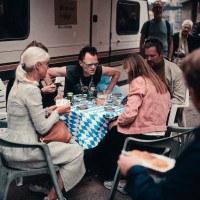
At Borealis in Bergen, community is everywhere. But when everything is filtered through safety and intimacy, the music risks losing its necessity – and its bite.
Use " " to search for an exact phrase. Use AND, OR, and NOT (in caps) to refine your search.
At Borealis in Bergen, community is everywhere. But when everything is filtered through safety and intimacy, the music risks losing its necessity – and its bite.
The major Danish composer festivals are starting to resemble each other more and more, but Pulsar Festival stands apart. Here, there is still more string quartet than performance art, making Pulsar an important alternative platform for new music – if only the festival itself would fully realize it.
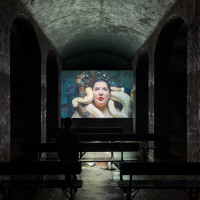
Marina Abramović lets herself be murdered, burned, and thrown to her death in »Seven Deaths« at the Cisterns – but the operatic canon voiced by Maria Callas tempers the radicality that has otherwise carried her art through an entire lifetime.
At the Barents Spektakel art festival, war, borders and vibrations are transformed into sound, conversation and art at Europe’s northernmost edge.
Dark Music Days in Reykjavík offered everything from Bára Gísladóttir’s orchestral darkness to noise, seaweed and quiet song in Harpa – in a music scene where community matters as much as the export adventure.
Sebastian Fagerlund’s »Morgonstjärnan« transforms the novel’s existential unease into a powerful, collective musical drama.
Sacrum Profanum in Kraków offered intense sonic experiences and musical battles – but also performances where the idea outweighed the music.
Revivals have moved onto the agenda among Danish composers, and this month two violent operas by Matias Vestergård benefited from the trend. What is it that makes him so good at writing precisely that kind of work?
Local traditions play a central role in the second-ever Faroese opera, in which Sunleif Rasmussen reclaims a local story made famous by Wagner.
From cyborg kinships and alchemical wonder to masculine fragility and Anthropocene ecstasy – MINU showed that art still holds space for vulnerability, ferocity and strange beauty.
Charlottenborgs hyldest til Mika Vainio vil være en lydbiograf, men uden ordentlig volumen, mørke eller kontekst ender installationen som en oplevelse, man hurtigt glider ud af.
Current Resonance turned the idea of work inside out in an absurd, sweat-drenched performance that pulled the audience into a hard-pumped ritual of labour.
Unsound in Kraków is still more than a festival – it’s an echo of our own search for connection in the age of noise.
At the Musica festival in Strasbourg, everything from children’s concerts to organ storms and performative string quartets turned into a playful exploration of sound, body, and community.
Ostrava Days transformed the old mining town into a laboratory of sound, where contemporary music pressed its way out between dust, drones, and Dadaist madness.<br />
This year’s Rued Langgaard Festival set out to open the gate to Danish mysticism, but at times disappeared itself into a haze of filler and gimmickry – though a few concerts stood strong.
Copenhagen Opera Festival 2025 turned away from opera’s classical themes of fate and instead gave space to intimate music-dramatic experiments on queer identity, domestic violence, climate crisis, and mental illness.
Struer Tracks showed that even municipal branding can open new worlds when sound art gets involved – from glitching rat voices in the basement of the music school to subwoofers that shook the harbor.
Savonlinna’s castle festival lets Finnish national opera resonate between stone, lake, and summer night – and shows how dark dramas can mirror the soul of a people.
At its best, the ambitious sound art walk »Witness Stand« at Refshaleøen pierces right into Copenhagen’s gentrification of the old industrial area. But does it realise that it is itself part of the problem?
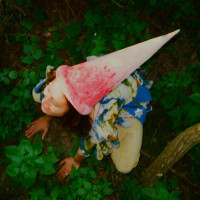
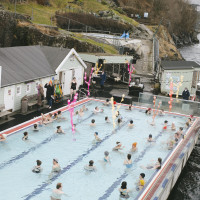
Borealis in Bergen promises experimental music but falls short when it comes to traditional concert formats. Instead, magic emerges when the audience is invited out into the forest or into floating sound saunas.
From digital melancholy and ritual noise assaults to pure silence – MaerzMusik explored the tactile forces of sound and the boundaries of the body.
The Only Connect festival in Stavanger transformed the city into a landscape of noise, poetry and bodily vibrations.
Katsuko Tsujimura sought to dissolve the body in postwar Japan. Now, new voices are gently piecing it back together.
The MOMENTUM biennial in Moss, Norway lets sound art speak, guiding the audience into the borderlands of the senses – where even a toilet resonates like an echo chamber.